Prepared Foods logo
search
cart
facebook twitter linkedin youtube
  • Sign In
  • Create Account
  • Sign Out
  • My Account
Prepared Foods logo
  • TRENDS
    • Prepared Foods The Year Ahead
    • Innovation Month
    • *Sustainability*
  • PRODUCTS
    • Bakery
    • Beverages
    • Breakfast, Cereals & Bars
    • Candy
    • Cannabis
    • Dairy
    • Meals & Sides
    • Meat, Poultry & Seafood
    • Sauces & Marinades
    • Snacks & Appetizers
    • Soups
  • INGREDIENTS
    • Antioxidants & Nutritionals
    • Colorings
    • Dietary Fiber
    • Emulsifiers, Fat & Oils
    • Flavors, Seasonings, Spices
    • Flours, Grains, & Pasta
    • Fruits, Vegetables and Nuts
    • Gums & Starches
    • Phosphates & Acidulants
    • *Proteins*
    • Sweeteners
  • FORMULATION
    • Allergens & Intolerance
    • Authentic & Ethnic
    • Cost Reduction
    • Fat Reduction
    • Gluten Free
    • *Immunity*
    • *Natural / Organic*
    • *Plant Based & Vegetarian*
    • R&D Lab Tech / QA-QC / Food Safety
    • Shelf Stability
    • *Sugar Reduction*
  • BETTER FOR YOU
    • Functional New Products
    • Functional Ingredients
    • Functional Benefits
  • FOOD MASTER
  • MEDIA
    • Podcasts
    • Videos
    • Infographics
    • First Person Q&A
    • Favorite Products Poll
    • Play With Your Food Game
    • Webinars
  • STORE
  • EVENTS
    • Spirit of Innovation Awards
    • Industry Events
  • EMAG
    • eMagazine
    • Archive Issues
    • Advertise
  • SIGN UP!

A Synergistic Coloring Combo
By Fran LaBell
December 8, 2003
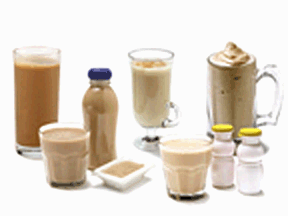
With their promise of refreshment, beverages entice thirsty consumers. Eye-pleasing colors help make drinks look even more appealing and are associated with certain flavors. Whether it is the rich brown of cola or the bright red of a fruit punch, the right color helps sell the product.

“Natural color is a growth industry,” says Ted Nixon, president, D.D. Williamson, Louisville, Ky., a producer of caramel colors. Europeans and Asians have focused on it. All food categories that currently use caramel colors can also benefit from natural colors. “We have done many [caramel-natural color] blends,” says Nixon. “That's how we began our partnership with Anaheim, Calif.-based ColorMaker, a producer of natural colors. For example, we would work with a caramel color customer who wants a redder brown.”

“Caramel dovetails with what natural colors can do,” says Stephen Lauro, director, technical services, ColorMaker. “Caramel color added to basic natural color systems gives a deeper, richer, more intense color sensation.” For example, if a customer wants a strawberry red, they can use beet powder, anthocyanins or carmine to get red, but all these colors have blue tones. Adding a yellow caramel color adds depth and produces a strawberry red color.

Caramel, The Color of Stability

Caramel colors can furnish hues ranging from yellow to amber to red to deep brown. They are made by heating sugars and are considered non-certified colors with their own Standard of Identity. There are four classes of caramel colors. Class IV, sulfite-ammonia caramel, is the type used in soft drinks. It includes a wide range of hues, from yellow to red to brown. “Most beverages are on the slightly acidic side, which is compatible with caramel. “Caramel color is stable in a wide pH range,” says Owen Parker, vice president, D.D. Williamson. Water soluble, the colors may be supplied in liquid form or spray dried powders. The industry has established a Hue Index, a numerical value to indicate the degree of yellow or red in the color.

“Now we can also go on-line with our customers and show them the color range,” says Parker. “It enhances verbal comparisons.”

Caramel colors are functional, as well as aesthetic, ingredients in colas. They act as an emulsifier for oil-based flavors, and also protect the flavors from UV light degradation. Lemonade or iced tea versions of sports drinks may also use caramel colors, which are compatible with the vitamins and minerals added to the drinks.

Root beer, ginger ale, cream sodas, peppers, apple and guarana sodas may also include caramel coloring, as well as coffee or chocolate drinks.

A Natural Challenge

While caramel colors are noted for their pH stability, natural color application requires well-trained food scientists who understand how the colors may behave in a particular product, process or package.

Natural colors are derived primarily from plant sources. (Carmine, a red color, is made from insects.) They are GRAS substances listed as exempt from FDA certification and are sensitive to changes in pH, heat and other processing conditions, and light.

For example, the acid level in a soft drink can affect the hue if red colors are used. Colors from anthocyanins, (purple carrot, rubini and red cabbage) look red at pH 3, but take on more blue tones as pH rises. At pH 7 they have purple hues resembling Concord grapes.

The color shift is less noticeable in yellows and oranges. Carotenoid colors are stable over a wider pH range.

Some natural colors are heat and/or light sensitive. For example, beet juice is destroyed by heat. Turmeric, on the other hand, is heat-stable and gives a bright yellow color, but breaks down in a few days under UV light. To protect a beverage's color, many soft drink manufacturers use tinted bottles or UV protective overwraps.

Single color systems will work with simple processes, but more sophisticated processes require natural color blends. With the proper emulsifiers, diluents and buffer systems, these natural blends can attain a shelf life stability of at least six months.

“Natural colorants have been around for centuries; what is unique is how we put them together,” says Lauro. By considering the technical parameters of a beverage system, caramel colors and natural colors can be used together to create visually appealing, shelf stable products. “That is what the partnership between D.D. Williamson and ColorMaker is all about,” he states.

The companies will serve the industry from ColorMaker's research and manufacturing center in Anaheim and D.D. Williamson's seven facilities around the world, including Kentucky, California, Puerto Rico, Ireland, China, Swaziland and Brazil.

D.D. Williamson.
ColorMaker.

Share This Story

Looking for a reprint of this article?
From high-res PDFs to custom plaques, order your copy today!

Field Technical Editor

Recommended Content

JOIN TODAY
to unlock your recommendations.

Already have an account? Sign In

  • Women in beverge isle

    Ingredient Demonization May Not Drive Consumer Behavior

    While tracking cultural conversations around demonized...
    2025 Food and Beverage Trends
    By: Prepared Foods Editorial Staff
  • Bubs Candy Packages

    Sweden’s Viral Candy Brand BUBS Lands in US Retail Nationwide

    TikTok videos of BUB's unique chewy-meets-marshmallow...
    Candy
    By: Prepared Foods Editorial Staff
  • Innovation Month Logo Orange

    Introducing Innovation Month: A Deep Dive into the Future of Food & Beverage

    The next wave of food innovation is here. Dive into the...
    Innovation Month
    By: Prepared Foods Editorial Staff
Manage My Account
  • eMagazine Subscription
  • Newsletters
  • Manage My Preferences
  • Online Registration
  • Subscription Customer Service

More Videos

Popular Stories

General Mills US250 Packages

General Mills Launches 79 Limited-Edition Summer Products

Circana Pacesetters 2026

Circana Highlights 2025 CPG Pacesetters

Bushs Baked Beans LTO Flavors

Bush’s Beans Debuts Summer-Inspired Flavors

PF Webinar sponsored by FoodChain: Signals to Shelf: Turning Consumer Insight into Executable Innovation

Events

June 18, 2025

Master the Art of Plant-Based Dairy

ON DEMAND: Whether you're in R&D, formulation, or innovation, this session will provide enzyme-driven insights to improve your plant-based dairy portfolio.

June 25, 2025

Market in Motion: Active Nutrition

ON DEMAND: Once targeted at athletes, active nutrition products with benefits like energy, focus, hydration, and protein are now winning over everyday consumers seeking support for their busy lifestyles.

View All Submit An Event

Products

Recent Advances in Ready-to-Eat Food Technology

Recent Advances in Ready-to-Eat Food Technology

See More Products

CHECK OUT OUR NEW POWER TRENDS

Immunity Logo
Natural & Organic Logo
Plant Based Logo
Protein Logo
Sugar Reduction Logo Sustainability Logo

Related Articles

  • A Unique Whey Plus Soy Combo

    See More
  • Almonds and Chocolate—A Perfect Combo

    See More
  • Top 20 Companies: Synergistic Acquisitions Pay Off

    See More
×

Unlock the Future of Food and Beverage Innovation

Are you a leader in research & development? Stay ahead of the curve with Prepared Foods, the premier source of information and insights for today's trend leaders and taste-makers in food and beverage manufacturing.

JOIN TODAY
  • Resources
    • Advertise
    • Contact Us
    • Food Master
    • Store
    • Join
  • Sign Up Today
    • Create Account
    • eMagazine
    • Newsletters
    • Customer Service
    • Manage Preferences
  • Services
    • Marketing Services
    • Reprints
    • Market Research
    • List Rental
    • Survey/Respondent Access
  • Stay Connected
    • LinkedIn
    • Facebook
    • Instagram
    • YouTube
    • X (Twitter)
  • PRIVACY
    • PRIVACY POLICY
    • TERMS & CONDITIONS
    • DO NOT SELL MY PERSONAL INFORMATION
    • PRIVACY REQUEST
    • ACCESSIBILITY

Copyright ©2026. All Rights Reserved BNP Media, Inc. and BNP Media II, LLC.

Design, CMS, Hosting & Web Development :: ePublishing