Osteoporosis, A Man's Issue

Osteoporosis gradually weakens bones and can lead to painful and debilitating fractures. It is characterized by low bone density (how solid bones are) and structural deterioration of bone tissue.
Often called the “silent disease,” osteoporosis usually progresses without symptoms until it is diagnosed following a fracture.
Osteoporosis is seen less often in men than in women because men generally have larger, stronger bones, and because men don't usually experience the abrupt and substantial hormonal changes that women do following menopause. Also, bone loss begins later and advances more slowly in men than in women. However, the National Institutes of Health says that the problem of osteoporosis in men recently has been recognized as an important public health issue, especially in light of estimates that the number of men above age 70 will double between 1993 and 2050.
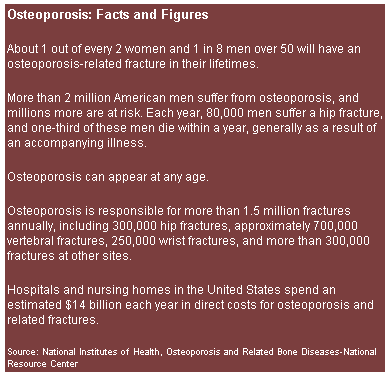
But changing attitudes and improved technology are brightening the outlook for men with osteoporosis. Although some bone loss is expected as men age, osteoporosis is no longer viewed as an inevitable consequence of aging. Diagnosis and treatment need no longer wait until bones break. New products are becoming available specifically to treat men with osteoporosis.

Bone Life
Bones grow in length and density during a person's younger years. Bone density relates to the mineral content of the tissue. People reach their maximum height during their teens, but bone density continues to increase until about age 30. After that point, bones slowly start to lose density and strength. Throughout life, bone density is affected by heredity, sex hormones, physical activity, diet, lifestyle choices, and the use of certain medications.In their 50s, men do not experience the rapid loss of bone mass that women have in the years following menopause. “But some men do have a hormonal drop-off in testosterone, with skeletal consequences that are similar to those seen in women following reduction of estrogen,” explains Bruce Schneider, a medical officer in the FDA's Division of Metabolic and Endocrine Drug Products. Testosterone may diminish as a result of hypogonadism, a condition marked by decreased function of the testicles. Testosterone levels also may decrease naturally as a man ages. This loss of sex hormone eventually can result in accelerated bone loss. Whether bone loss at this point translates into osteoporosis, however, depends on how much bone a man has when the loss begins, and how quickly he loses it.
By age 65 or 70, men and women lose bone mass at similar rates, and the absorption of calcium, an essential nutrient for bone health throughout life, decreases in both sexes.

Prevention, Diagnosis and Treatment
In men, there are two main types of osteoporosis: primary and secondary. In primary osteoporosis, there may be no identifiable cause (idiopathic) or it may be the result of age-related bone loss. Often, these two conditions overlap, and distinguishing between them is arbitrary. Secondary osteoporosis in men can be due to a variety of causes. Low testosterone (hypogonadism), medications such as prednisone that can lead to steroid excess, and alcoholism are among the important causes of secondary osteoporosis in men.Once bone is lost, it cannot be completely replaced using currently available therapies. Therefore, it is essential that men be evaluated and treated before significant bone loss has occurred. Building strong bones during childhood and adolescence can be the best defense against developing osteoporosis later.
Although it cannot be cured, osteoporosis can be slowed down, and steps can be taken to help prevent the disease. A special kind of X-ray, the bone mineral density (BMD) test, is a safe, accurate, quick, painless, and noninvasive way to diagnose osteoporosis, detect low bone density, monitor the effectiveness of treatments, and predict the risk for future fractures.
Mone Zaidi, M.D., Ph.D., director of the bone program at the Mount Sinai School of Medicine in New York, says that men should get a BMD test if they have a bone fracture, experience lower back pain, or notice height loss.

In 2001, the FDA approved Fosamax (alendronate) to increase bone mass in men with osteoporosis. Fosamax works by reducing the activity of the cells that cause bone loss. The drug was already approved to prevent and treat postmenopausal osteoporosis in women based on studies that indicated it not only increased BMD, but also reduced fractures related to a loss of bone mass. The study in men was designed only to examine the effect on BMD, not on fracture risk. However, it is believed that ultimate fracture benefits are likely to occur in men who experience increases in BMD with treatment, although the relationship between BMD increases and fracture benefits may differ between the genders.
More recently, a novel approach to treating osteoporosis in postmenopausal women and in men with primary or hypogonadal osteoporosis is being investigated. The active portion of human parathyroid hormone (PTH), which regulates normal calcium and phosphate metabolism in bones, has been administered by daily injections and shown to stimulate new bone formation, leading to increased bone mineral density. Post-menopausal women treated with this agent showed a reduction in the incidence of osteoporotic fractures relative to those treated with calcium and vitamin D alone. Like Fosamax, the trial of parathyroid hormone in men was not designed to test the effect of treatment on the risk of fractures. However, based on the study in women, some beneficial effect on fracture risk reduction is likely.

Tailored to the particular reason for bone loss, the treatment plan for men with osteoporosis will include proper nutrition, exercise, and lifestyle modifications for prevent-ing bone loss and, if needed, one of the FDA-approved
osteoporosis medications. Doctors may want to monitor bone density and testosterone levels, recommending testosterone replacement as necessary, and may suggest changes to the current steroid dosage if they feel bone loss is due to steroid use. Finally, maintenance of adequate calcium and vitamin D intake is very important in the treatment and prevention of osteoporosis.
Website Resources
www.fda.gov/fdac/fdacindex.html — Website of FDA Consumer magazinewww.nof.org — National Osteoporosis Foundation
www.preparedfoods.com/archives/2002/2002_10/1002calcium.htm — Recently introduced products with calcium
www.PreparedFoods.com — Prepared Foods' homepage, with a keyword search field for six years of archived editorial. Use search words such as osteoporosis, “calcium fortification,” etc.
Looking for a reprint of this article?
From high-res PDFs to custom plaques, order your copy today!