Ingredients in Use: Calcium

Selling Cereal
Kellogg USA, Battle Creek, Mich., lowfat Nutri-Grain Yogurt Bars provide 20% of the Recommended Daily Intake (RDI) for calcium. Nonfat yogurt powder in the filling and nonfat dry milk in the exterior cereal portion help provide some calcium, but calcium carbonate is the main fortifier.Breakfast cereals generally list their nutritional contribution to the diet in two ways: what the cereal provides on its own, and what the total would be with milk.
However, cereals are increasingly enhancing their own calcium content; this trend particularly benefits the “cereals are snacks” crowd whose lips may never touch milk.
Calcium appears to be a basic requirement in any product targeting women. For example, PepsiCo's The Quaker Oats Company, Chicago, line of Nutrition for Women instant hot oatmeal-based cereals are fortified with calcium carbonate. The new Apple Cinnamon flavor contains 35% of the RDI for calcium.
Hy-Vee Manufacturing, West Des Moines, Iowa, adds Choco Chippers Cereal to the broad line of products under this brand name. A burst on the front notifies consumers that the product is a good source of 12 vitamins and minerals and calcium (satisfying 10% RDI). www.hy-vee.com
Building Calcium into Beverages
Drinkable products such as fruit juices, smoothies, dry cocoa mixes, soy milks and even water, are all candidates for calcium fortification. Indeed, 27% of the products tallied from the GNPD database are beverages (January to August 2002).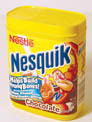
In 2002, a number of bottled waters became “value-added” through the addition of calcium. Municipal Water Supply, Mableton, Ga., introduced waters containing calcium chloride and potassium bicarbonate under the Hinckley Springs and Kenwood Springs name. The 25mg calcium per serving meets 2% of the RDI. Calcium carbonate was the fortifier of choice for several bottled water brands introduced by Calcium Springs Water, Park City, Utah. The Suntory Water Group's, El Paso, Tex., Suntory branded Calcium Water, says it provides 21% of the RDI.
Apple Beer, Salt Lake City, Utah, introduced root beer with calcium lactate earlier this summer. It contains less than 1% of the RDI for calcium, however. About the same time, Shanghai Mila Brew Company (that's Mila, not Miller), in China, launched a “healthful” calcium beer.
In many of the juice-based drinks, the calcium form also plays a role in the flavor profile and buffering system. Last year, for example, calcium fumarate graced the ingredient legend of Crystal Light Calcium drink mixes from Kraft Foods, Glenview, Ill. Calcium and tricalcium phosphate, calcium gluconate, calcium citrate and calcium lactate all commonly appear in these products' ingredient legends.
If You Got It, Flaunt It
Dairy products, the primary source of calcium in many American's diets, have not been left behind in the calcium craze. This extends from calcium-contributing, milk-derived ingredients to dairy foods themselves.“All dairy-derived products, with the exception of butterfat, contain calcium,” says Mike LaPolla, director of dairy ingredients marketing for DMI's Do it with Dairy® program. “That includes nonfat dry milk and whey powder, as well as cheese solids and powders.”
“Nonfat dry milk is probably the most popular way to fortify a product with calcium using dairy,” he notes. “It's the least expensive of the dairy-derived products and contributes the least number of off-flavors.”
However, the amount of calcium contributed depends on the specific ingredient. “A general rule is: the higher the fat content, the lower the calcium content. Also, the lower the mineral content, the lower the calcium content,” says LaPolla.
Dairy foods hyping their calcium content range from those based just on milk to fortified products.
Safeway, Pleasanton, Calif., earlier this year launched Lucerne Yo on the Go Portable Yogurt that touts its calcium content. Its 10% RDI of calcium comes from cultured milk, nonfat dry milk and a touch of tricalcium phosphate. An 8-ct. paperboard box of strawberry and blueberry flavors retails for $2.19 in Safeway-supplied supermarkets.
Earlier this year, Dairy Farmers of America, Springfield, Missouri, introduced Borden String Cheese. It is “100% natural and an excellent source of calcium” with a 0.83 ounce serving providing 20% of the RDI of calcium—all from the pasteurized part-skim milk. Late last year, Kraft Foods introduced Shredded Cheese, with each 1/4th cup serving (about 1 oz.) providing “more calcium than an 8-oz. glass of milk.” Here, multifunctional calcium sulfate adds a bit of the mineral to the main calcium source—reduced fat milk. The product gives consumers 40% of the RDI for calcium, along with only about 80 calories.
Believing the adage “more is more,” a number of companies have further fortified milk with calcium. Wessanen USA's Crowley Foods, Binghamton, N.Y., launched Skim Deluxe Milk this year. Pasteurized at an ultra-high temperature, the product is “enriched with more protein and calcium than regular skim milk, making it 'feel' like 2% fat milk,” notes the company. It retails in a 0.5-gal. carton for $2.79 in supermarkets in certain areas of New York and Pennsylvania.
Darigold, Astoria, Ore., just extended its line of single-serve, calcium-enhanced milk to include a vanilla flavor. It is sold in a 12-fl. oz. plastic bottle in supermarkets along the West Coast. Calcium-contributing ingredients include reduced fat milk, nonfat dry milk and tricalcium phosphate.
Lastly, dairy is not just from cows. In the summer of 2001, Old Chatham Sheepherding, Old Chatham, N.Y., introduced Whole Sheep's Milk Yogurt. Made with pasteurized, unhomogenized sheep's milk, it “is made with no gums, stabilizers, or other artificial thickeners,” says the company, and it claims sheep's milk contains 30% more calcium than other milk sources. The yogurt is available in 6-oz. plastic cups in gourmet stores nationwide.
www.bordenfamily.com
www.blacksheepcheese.com
Banking on Bakery
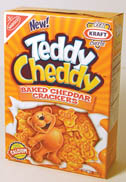
Bakery products traditionally have not been a primary target for calcium fortification. Recently, however, several major companies have introduced crackers with nutritional boosts. Teddy Graham crackers from Nabisco, East Hanover, N.J., “went dairy” with a cheddar variety that proclaims its “real Kraft cheese content.” Although cheese is a good source of calcium, the 10% calcium RDI in this product is primarily from the calcium carbonate. Kellogg USA's Keebler, Elmhurst, Ill., introduced similarly fortified Sesame Street Animal Crackers earlier this year.
Last year, Dare Foods Canada, Kitchener, Ontario, reformulated its Simple Pleasures Spice Snaps Cookies to provide 21% of the daily recommended calcium intake.
www.keebler.com (Editor's warning: Loud music from this website may catch one off-guard.)

Emulsify It
In margarine-type products, calcium-fortifiers are asked not only to improve the nutritional quality of these “water-in-oil” emulsified products, but also to assist with stabilizing the emulsion. Calcium phosphate forms are the additives of choice. Back in mid-2000, Unilever Foods, Greenwich, Conn., introduced Shedd's Spread Country Crock Margarine with Calcium. Tricalcium phosphate and calcium disodium EDTA (a chelating agent) pitched in to help one tablespoon serving (14g) of the product provide 10% RDI of calcium. In January of this year, the product was additionally enriched with vitamins A, D, and E.
ConAgra's Beatrice, Chicago, introduced Parkay Plus with Calcium around August of 2001. It possesses a similar nutritional profile in regards to calcium and vitamins, and also uses helpful tricalcium phosphate and calcium disodium EDTA.
www.unilever.com

Sidebar: Connecting with Calcium
Marketers are quick to exploit gaps in the array of products offered to consumers. This extends to high-profile nutritional gaps in diets, also. Calcium is one of the most notable of these. Even as research continues to show the importance of this mineral for health, consumers' diets generally provide inadequate amounts.To gain insights into the market's direction in regards to calcium fortification, tallying calcium-containing products is not useful. Dairy products, corn tortillas (masa is made from corn soaked in calcium carbonate) and broccoli are innately high in calcium. Calcium also shows up in the salt form of additives such as the preservative calcium proprionate, the dough conditioner calcium peroxide and the vitamin calcium pantothenate. While the primary function of these ingredients is not calcuim fortification, they all contribute to the calcium content of a product.
So what products are touting their “calcium connection?” Happily, Mintel International's GNPD addresses the issue by flagging products positioned for their calcium content. In the first eight months of 2002 in Canada and the U.S., the dairy category contains the most “calcium conscious” products followed by the beverage category and then the snack category.
Sidebar: a Going Global
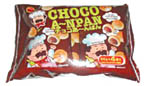
Stepping on the calcium fortification bandwagon with unconventional products is a worldwide practice. Japan-based Bourbon Corporation introduced Coco Anpan branded bite-sized chocolate-filled bread dough with added calcium and vitamin D. Launched in early summer 2002, the sources of calcium seen on its ingredient legend include whole powdered milk, skimmed milk and a “calcium fortifier.”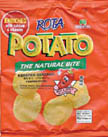

Under its Fitness brand, Nestlé, Petach-Tikva, Israel, has introduced a multi-grain cereal enriched with vitamins, minerals and calcium. The 390g box retails for an equivalent of US$ 6.09 and is fortified to contain 269mg calcium per 100g of product. A somewhat similar concept introduced under the name Fitness & Fruits also was launched this summer in Austria by Nestle, Vienna. The cereal is lowfat with whole grain wheat and rice flakes, 27% fruits and is calcium carbonate fortified. The final product has 400mg calcium per 100g. Nestle in Istanbul, Turkey, launched a calcium-fortified RTE cereal under the Nesfit brand.
Links
- Calcium forms for fortification
- Abstract of paper on yogurt fortification with calcium salts
- Commercial sites on fortification
- Commercial sites on fortification
- Abstract on study of bioavailablility of calcium in fortified soymilk
- Interactions of precipitated calcium carbonate (PCC) with proteins
- 21CFR104.20 regulations that guide fortification
- Calcium fortification forms
Looking for a reprint of this article?
From high-res PDFs to custom plaques, order your copy today!
 Claudia Dziuk O'Donnell is Chief Editor and Associate Publisher of Prepared Foods magazine including its NutraSolutions and Culinary sections. Her responsibilities include determining the editorial content of the print publication and the New Products Conference.