Formulating in Sweetness
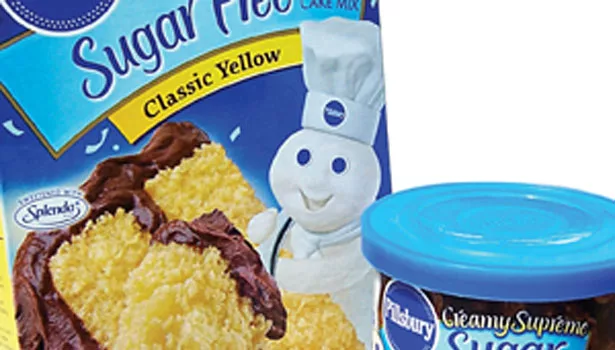
IMAGE COURTESY OF: Pillsbury
Sugar is Great, but What Else is There?
According to Mintel, 45% of consumers acknowledge interest in low-sugar diets, in order to control calorie intake and to prevent diabetes and other health issues related to it. Recognizing this trend is here to stay, the food industry started looking for and/or developing a range of alternative sweeteners that provide more or less similar functionality, while cutting down on calories. These sweeteners are now found both on the list of ingredients of an ever-increasing number of food products and as stand-alone, tabletop sweeteners. Consumer interest for “natural” ingredients has modulated this trend, driving demand towards natural, low-calorie sweeteners, according to the report, “Rebaudioside-A Market Analysis,” FACT research, April 2011. While sugar and traditional sweeteners still dominate the market with a global sales volume of about 72 million metric tons in 2009, as opposed to about 0.9 million tons for other bulk and high-intensity sweeteners, this latter group has enjoyed more than double growth over the last four years.
Industry and consumers now can choose from a fairly wide range of sweeteners. Bulk sweeteners are typically used in relatively large quantities (hence the name), as they have sweetness intensity comparable to or lower than sugar. (See chart “Selected Popular Bulk Sweeteners.”) Some of these also provide additional functionality in food products, depending on the nature of the sweetener and the food application considered. Most bulk sweeteners are saccharides or polyols; given their high usage level, they sometimes significantly contribute to the calorie content of food applications in which they are used. In contrast, high-intensity sweeteners (HIS) are at least 50 times sweeter than sugar, so they are used in small quantities. (See chart “Common High-intensity Sweeteners.”) Therefore, they do not significantly contribute calories or provide any functionality--other than sweetness.
These alternatives fueled the launch of low-sugar and sugar-free foods, which currently account for a sizable portion of the market. These products were typically developed starting from existing sugar- or HFCS-based products, in which the formulator aimed to partially or totally replace sugar or HFCS. In most cases, however, simply replacing sugar with a HIS did not maintain products’ original quality.
Caveats When Replacing Sugar
Sweetness typically drives the choice and usage level of the sugar replacement system, but, depending on the nature of the product and sugar’s functionality, other factors may need to be addressed. Some aspects to be considered when substituting sugar in food applications are discussed as follows.
Sweetness. The ingredient(s) replacing sugar in food applications need to provide a similar sweetness level as in the original formula. The “Selected Popular Bulk Sweeteners” chart in this article shows that, if replacing sugar with any bulk sweetener other than fructose, the quantity required to reach the same sweetness will increase, as most bulk sweeteners are less sweet than sugar. This approach might be costly, and the additional bulk might impact other attributes of the end-product, such as viscosity and water activity. Conversely, the quantity of sweetener will be much lower, if replacing sugar with a high-intensity sweetener, due to their significantly higher sweetness. The lower quantity may not have a large impact in something like yogurt, but it would definitely impact the quality of a cookie.
Replacing sugar with a blend of sweeteners is not unusual, especially if the components are synergistic in terms of sweetness, or if they complement in terms of temporal profile. Synergism is beneficial, as the same sweetness would be reached with fewer ingredients, which cuts down costs and may minimize off-notes.
The temporal sweetness profile is of interest, as some sweeteners have a very fast onset (e.g., fructose), while others have a slow onset or a long linger (e.g., aspartame). (See the figure “Temporal Sweetness Profiles of Selected Bulk and High-intensity Sweeteners.”) If the sweetener used to replace sugar has a significantly different temporal profile than sugar, and the application is conducive to consumers noticing the difference, then often another sweetener is added to the blend to address the difference. This explains the popularity of using acesulfame K plus another high-intensity sweetener; acesulfame K has a fast onset, while the sweetness of the other HIS (frequently aspartame or sucralose) builds up later. Furthermore, aspartame and acesulfame K have a fairly strong synergy.
Off-notes. Sometimes, consumers are able to identify the sweetener used in a given application based on taste, as various sweeteners have specific off-notes: slight metallic note for some artificial HIS; bitter/licorice note for steviol glycosides; and a certain level of coolness for polyols. Choosing sweeteners with compatible off-notes to the product being developed is probably the simplest and best approach (for example, polyols are a logical choice for chewing gums, where the coolness imparted is beneficial to the end-product). A more recent approach to formulating with HIS is using masking systems, which are able to “cover up” the undesirable off-note. For example, many flavor houses now provide masking solutions designed specifically for stevia-based sweetener systems.
Other functionality. Besides providing sweetness, sugar and HFCS have additional functionality in some applications. They may contribute to color, texture, moisture retention, shelflife, etc. Ideally, sugar replacement systems would make up for the lost functionality. If restoring bulk is important for the application, the replacement system will include bulk sweetener(s) and/or bulking agents. In applications where sugar contributes to color, sweeteners that participate in color reactions (such as dextrose in the Maillard reaction) might be of interest. Since the effects of sugar and/or HFCS on texture and/or viscosity are system-dependent, the replacement solutions will be system-dependent as well; various texturizers, thickeners or hydrocolloids might prove useful, when trying to mimic “full sugar” products. However, these ingredients may differ from sugar in other properties, which may be relevant or not for the product developed. For example, particle size may impact significantly the uniformity in dry blends; solubility may influence the temporal sweetness profile; and hygroscopicity might modify moisture retention compared to sugar-based formulas.
Health and Cost Considerations
Sugar replacement systems need to be safe and innocuous and provide fewer calories. Most bulk sweeteners provide 2-4Kcal/g, so replacing sugar in applications with low levels of sugar probably will not lead to significant calorie savings. Notable exceptions are erythritol (0.2Kcal/g), some resistant maltodextrins and fibers (1-1.5 Kcal/g), HIS (negligible calories due to low usage) or mixtures thereof. However, even when using these ingredients to replace sugar, depending on serving size and calculation rounding, the nutritional label of the final product may not change.
If considering polyols or fibers, one needs to consider the laxation threshold. Most polyols have a daily limit of 50-100g, which is hard to reach even via repeated consumption, but some fructo-oligosaccharides have a threshold of only 15-25g per day.
The glycemic index (GI), which reflects the rate of glucose release in the blood after the ingestion of a food, is another aspect to be considered, especially for diabetic-friendly foods.
Most alternate sweeteners are more costly than sugar on a weight basis, but cost analysis must consider equivalent sweetness levels. For example, while sucralose costs about 150 times more than sugar, it provides around 600 times more sweetness; so, on an “equisweet” usage basis, it is around four times less costly than sugar. Of course, bulking agents (if required) and additional processing, such as blending to achieve homogeneous distribution, add to the sugar replacement cost. As functional ingredients are relatively costly, corresponding sugar replacement systems may end up being more costly than sugar. In such cases, market/consumer studies are often employed to understand whether the consumer is willing to pay the difference for the additional benefits.
OK, So How to Do It?
The replacement of sugar in a yellow cake mix has been used as a case study that illustrates some key aspects to be considered in such an exercise. The objective was to develop a low-sugar product as good as sugar, while replacing as much sugar as possible. All the sugar in the mix was replaced with sucralose. Compared to the control cake made with sugar, the resulting cake exhibited significant non-desirable changes, including loss of color, volume, porosity and bulk, and excessive dryness.
This experiment indicated the sugar replacement had to be a blend of HIS and bulking agents to restore the desirable attributes that were lost when replacing sugar. The components of the mix were decided upon as follows:
* To address the loss of bulk, it was decided to replace sugar at a ratio of approximately 50% (1g replacement blend to replace 2g sugar), so the blend had to include HIS and bulk sweetener(s).
* The HIS of choice was sucralose, because of its good stability during baking.
* The bulk sweeteners included dextrose and maltitol, due to their good humectant properties, which would mitigate the cake dryness. DATEM, a dough tenderizer, was also considered in this particular case.
* Since dextrose is a reducing sugar, a small amount of glycine was added to provide substrate for the Maillard reaction, bringing back some color to the finished baked product.
* Isomaltulose and inulin were added as low-GI components, to partially compensate for using dextrose.
* Maltodextrin and polydextrose were considered as relatively inexpensive bulking agents to compensate for the use of the costly ingredients mentioned above.
The levels of some of these components were determined based on practical considerations (cost, calories, sweetness, etc.) and confirmed via preliminary tests. An experimental design mixture was then used to identify the optimal levels of other ingredients, and follow-up experiments confirmed that the resulting mix produced a cake much closer to the traditional, sugar-based, control formula.
The search for the perfect sweetener will surely continue, with natural options gaining more traction. Stevia-based products are already well-represented, and lo han extracts might follow a similar path. But, these will require bulking agents, so natural and healthy bulk sweeteners will also be investigated. One thing is for sure: consumers’ sweet tooth will still be there. pf
Looking for a reprint of this article?
From high-res PDFs to custom plaques, order your copy today!