Formulation Challenge: Layering Flavors in Breaded Foods
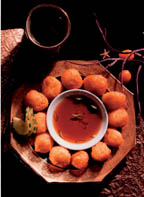
Processed chicken, fish, onion rings, and hush puppies have been popular in the breaded category for years. Today, appetizers are a growing category of breaded products that include cheese sticks and vegetables such as jalapeno peppers, mushrooms, okra, corn, zucchini, broccoli, cauliflower and even dill pickle spears.
Both flavorings and texturizing ingredients impact the flavor of coated foods. (Texture and batter adhesion will be addressed more in the September issue of PF.) Cooking methods also impact the flavor potential of coated foods—whether they are fried, baked or microwaved makes a big difference as to finished flavor.
Flavor may be built into the coated food product through marination techniques or by adding flavorings to pre-dusts, batters and breadings. Color affects taste perception. A brighter food product will be perceived as tastier and juicier, compared to a duller-colored product. Condiments are a major factor in the overall acceptability of breaded products. Dips and sauces add flavor to an otherwise bland product.
Layering-on Flavor
A typical battered and/or breaded product consists of various layers. Different parts of a coating system are subjected to various conditions. Because the outer layers are more prone to the effect of heat, light and oxygen, it is wise to build the flavor in the inner layers where the flavor is more protected.Flavorful coating systems are created by adding spices, seasonings, and flavorings.
“By adding flavor in more than one layer, you can actually lift the overall flavor of a product,” says Andy Oxley, development director of coating systems at an ingredient supplier. “When you add complementary visual particulates or color in the outer layers you can create a good-tasting product that also visually tells the consumer how the product is going to taste.”
Typically, a breaded product starts with an inner (meat, cheese, vegetable etc.) layer, followed by a pre-dust on top, a wet batter, and then the breading.
The meat is probably the best place to provide flavor to the end product, says George Tucker, technical sales, at a Midwestern ingredient company.
“With marination, the flavor is in the most insulated portion during frying—the temperature inside here will not usually get much above 165-180º F.” Meat/poultry broths that are water-soluble and, therefore, easily dispersible, can be used as part of the marinade to boost overall flavor.
Pre-dusts, which improve batter adhesion, can be flavored with a light seasoning to improve the natural flavor of the base (such as fish or poultry). The pre-dust has the protection of both the breader and the batter, so flavors will not usually flash off. Using lemon, vinegar or mustard powder in the pre-dust, for example, can give the finished product a tangy flavor. Flavors such as cheese, chili, garlic, meat, fish, poultry and fried flavors (fat powders) also can enhance.
Although the batter may have some ingredients that provide visual appeal, flavor ingredients are key. The breading provides some protection for the batter; however, much of the flavor may flash off or scorch when it comes in contact with heat. Cheese powders, tomato powders, flavors, and spices may burn if put on the outermost coating of deep-fried products.
The breading is the most challenging to flavor. “Most ingredients used for flavoring have a low tolerance to the temperatures associated with frying and will, therefore, either flash off or scorch,” says Tucker. “The key is to find flavoring ingredients that can survive the high temperatures at an economic level or to introduce the flavor to a part of the finished product where the flavor can be best preserved.”
Flavors such as meat powders and fat powders can provide flavor impact versus liquid broth or broth powders which would tend to scorch more readily, says Tucker. They are also more economical, he adds.

Flavor Building Blocks
Flavor can be added to coated products by the use of spices, seasonings, flavorings and flavor enhancers.Suppliers create customized seasoning systems to suit specific coating applications to provide maximum flavor and visual impact.
While ground spices and herbs can be used, they may also burn or add too much or undesirable color. Alternatives to ground spices such as essential oils, oleoresins, liquid and dry solubles, encapsulated spices, and natural flavorings can be used more effectively to maximize flavor potential. These eliminate particulates and are available in a variety of forms including liquid, dry, water- or oil-soluble, single- or multi-folded.
Encapsulated flavors (in which the flavor is covered with a protective matrix) deliver maximum impact while staying protected from heat and moisture.
Flavors that tend to linger in coated products include garlic, onion, hot pepper, black pepper, and smoky flavors, in general. Popular flavors for coated foods such as Cajun, ranch, parmesan, garlic and herb, taco, Southwestern, Italian, lemon pepper and jalapeno benefit from the combination of various flavorings and spice alternatives.
Visual appeal can be provided by temperature-stable particulates. While some dehydrated vegetables are used for more inner coatings, they are not generally used for outermost coatings. Common dehydrated vegetable powders used in coatings include onion, garlic, green bell pepper and others.
The appearance of coated foods can be improved by adding food colorings, spices and oleoresins. Chili peppers and other members of the Capsicum genus provide a range of flavors and colors as well as pungency. Oleoresins of paprika and turmeric and other spices provide color. Browning reactions associated with cooking also improve a food's overall appearance.

Considering Crumbs
Coatings that are fried produce a crisp, well-colored exterior that acts as a shield to preserve moisture and flavor. Deep-fried foods are submersed into hot oil that is kept at around 350º to 375ºF. As the food hits the hot oil it sizzles, indicating moisture evaporation. Ideally, a crunchy outer crust is formed, with flavor locked in.The type of oil selected as a frying medium affects flavor. Peanut, cottonseed, soybean, and corn oil or blends of oils commonly are used.
The type of crumb also affects flavor. Various types of crumbs are available including traditional (cracker crumb or crackermeal), American breadcrumb (or homestyle crumb), and Japanese breadcrumb (also called j-crumb or panko-type). Some crumbs are more flavorful than others. The crumb's texture and porosity can affect flavor, as it can change the level of oil absorbed during frying which, in effect, changes the flavor perception. Too much fat and the flavor tastes oily with a prolonged flavor impact. Too little fat and the product is dry—the flavor is harsher.
Using other bases such as corn, rice and potato in crumb are good ways of modifying flavor to give different flavors, says Oxley.
Specialty breads are also fair game for use in coatings. For example, innovation is shown in McCain Foods' Sourdough breaded mushrooms under the Anchor® Products brand.
Adding variety
With increasing sophistication of the American palette, variety, authenticity and complexity are keys in the development of products that are being designed today. “Companies should consider trying new things or trying old things in new applications, when it comes to coated food products,” says Oxley.For example, Oxley's company recently formulated ingredients such as puffed rice and soynuts into innovative coatings.
Another example is Anchor Products' Tequila Poppers® Stuffed Jalapenos, jalapeno pepper halves stuffed with Monterey jack, sharp cheddar and cream cheeses, then coated with a breading and batter containing 80-proof gold tequila. McCain also has a line of breaded stuffed olive halves stuffed with ingredients such as asiago cheese, Caesar-salad flavorings, and salsa and cheese called Olivenos™—under the Anchor brand.
Innovative, flavorful products such as these have consumers coming back for more.
Links
Looking for a reprint of this article?
From high-res PDFs to custom plaques, order your copy today!