Carob Fiber Offers Health Benefits
Evergreen carob trees, Ceratonia siliqua, are found mostly in Mediterranean regions, especially in the southern and eastern areas of Spain. The carob pods are harvested in September and October, and the seeds are removed to make locust bean gum. The remaining husk consists of mostly carbohydrates (35-60%), dietary fibers, tannins, proteins and minerals. The husk is ground up to make carob powder that is used as a cocoa replacer mostly in natural food markets.
Then, the carob pulp is processed into a brown free-flowing powder, Caromax™, with a total dietary fiber content of over 80%. The available sugars have been reduced from over 40% to only 5-8%. Caromax is a product of Nutrinova Inc., Somerset, N.J.
Applications for this unique dietary fiber include baked goods, bars, snacks, cereal, dairy products, cocoa-containing products and beverages. Usage levels vary, depending on the application, but range from 1-5% on a finished product basis. In baked goods, Caromax can be used at up to 25% on a flour weight basis.
Because of the fiber's dark color, it can be used to replace caramel color without bitterness or off flavors, says Mark Ritter, product manager of Dietary Fibers for Nutrinova.
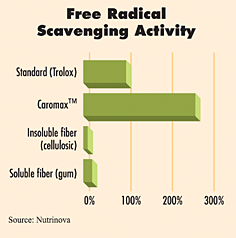
Consumers can derive several health benefits from consuming Caromax with its potential to lower cholesterol and act as an antioxidant, as well as improve digestion.
Another component of the carob fiber, pinitol, naturally occurs at about one percent, a very high level. Pinitol, a type of inositol, has been shown to regulate blood glucose, says Ritter. “Caromax has the potential to be a natural blood glucose regulator, especially for diabetics. We are continuing studies to explore its impact on the glycemic index.”
While Caromax is mostly an insoluble dietary fiber, it has health-promoting benefits typical of soluble fibers, says Ritter. “You would expect water binding in the digestive tract resulting in improved intestinal motility typical of insoluble fibers, however, the additional benefits of lowering cholesterol and regulating blood glucose are quite unique.”
According to a preliminary clinical trial, Caromax was shown to have cholesterol-lowering potential. Forty-nine adults with slight to moderate hypercholesterolemia were given five grams of the product three times a day in addition to their normal diet. The patients consumed the dietary fiber in a variety of foods. Over an eight-week period, total cholesterol and LDL-cholesterol levels were significantly reduced.
The results of a second placebo-controlled human study will be conducted to further substantiate the results of the initial clinical study.
For More Information: Melanie Del Sordo: 732-231-7220 Nutrinova • Write in 221
Looking for a reprint of this article?
From high-res PDFs to custom plaques, order your copy today!