Seeing the Light
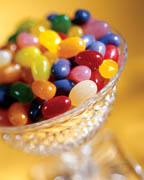
The right color of a food helps to make it appetizing. For example, the color of broccoli in rice, or the color of red peppers in a salsa affects our perception of a product's freshness and how good it will taste. While processors may be savvy as to how to properly formulate a food to retain a desired color, they also should be aware of how light can make or break a product.

How We See Color
The visual spectrum that we humans see is a narrow band of the much larger electromagnetic spectrum. From radio waves down through infrared energy through the visible spectrum and then down through ultraviolet (UV) rays, x-rays and gamma rays, we make our visual decisions based on this very narrow piece of the total energy spectrum. Three things are needed to see color: an object, an observer (a person or color measurement instrument) and a light source. Just like the old tree in the woods question, if one of the three is not present, there is no color. Additionally, an object can “change” with the color of the light we use for viewing. This is due to the way humans see color.It is estimated that humans receive 70% to 80% of their sensory information through sight. This means they also make about the same percentage of their decisions based on what they see. A big component of this visual perception is color, and the color humans see is based on the color characteristics of the light being used. Although people perceive various light sources as “white light,” in fact, depending on the source, the light can be biased quite heavily toward the red/yellow, blue or green portions of the visual spectrum. These various sources will substantially shift color perception.
Although the human visual system has a broad range of color shades that can be perceived (the average observer can see over two million colors, while a trained observer can see over four million), the visual system also adapts to the lighting environment. It scans the scene and picks the lightest color, perceiving it as “white,” and all the other colors fall into place as necessary. Through the course of human existence, this has allowed people to identify a ripe red apple in the warm yellow-red glow of early morning and still see that same apple as red and ripe in the middle of the day, when the light is bluest. For survival, the human system adapts.
We see color because an object either absorbs or reflects light. If that object absorbs all the colors, we “see” black. If it reflects all colors, that object will appear white. If the object absorbs all colors but red, that red light is reflected and we see the object as red. As more colors are reflected, different colors are perceived. If the light source has a high amount of energy in one area of the spectrum--for example, blue--there will be more energy to reflect back to the eyes. In comparison to the other colors, a blue object will appear bluer under such a light when compared to a more equal energy light source with equal amounts of red, green and blue light energy.
This allows us to use the spectral output of the light to our advantage. For instance, when lighting the display case in a supermarket's meat department, using a source with larger proportions of red energy will make the meat appear “redder” than it would under most commercial fluorescent store lighting. The produce in the vegetable department benefits from a light source with higher amounts of green energy, such as the common cool white fluorescent lamp, which makes green vegetables appear greener.
Unfortunately, some light sources are not well suited for certain foods. For instance, a typical tungsten-style light, which has a great deal of red and yellow energy, has very little blue energy. Because of this, not only will it subdue blue, it also will make dark blue shades very difficult to see. Blueberries appear almost black under such a light.
Understanding Light
Light can be measured in lux or footcandles, and its color spectrum--its output at defined intervals (usually in every five or 10 nanometers (nm), or billionths of a meter)--also can be measured. The human visual system sees wavelengths of between 400nm (blue) and 700nm (red), with the greatest sensitivity in the 500nm to 600nm (green) area. Below 400nm are UV energy rays, x-rays and gamma rays, and above 700nm there is infrared (IR-heat) energy and various radio waves. Just looking at the visible spectrum, near UV (300nm to 400nm) and near IR (700nm to 800nm) and graphing the measured results gives us the spectral curve. Looking at a typical incandescent lamp, we get a curve as illustrated in the chart titled “Incandescent: A Spectral Curve.”This graph shows us the light source has a great deal of red energy (600nm to 700nm), some green energy and very little blue energy. A typical commercial fluorescent lamp is pictured in the chart “Cool White Fluorescent SPD Curve” and shows it has very little red and blue energy but large amounts of green energy. The “spikes” in the graph are called “mercury spikes” and are a result of the small amounts of mercury used in a fluorescent lamp that allow the lamps to work. They are in all fluorescent lamps, and studies indicate they have little effect on overall color perception because they are so narrow. The graph shows there is some blue energy, very little red energy and large amounts of green energy. A typical spectral curve for a light source that simulates natural daylight is provided in the chart “Re-creating Light.”
Such graphs only tell part of the story. How well a light source renders colors is rated using the Color Rendering Index (CRI). For color evaluation and matching, a CRI of 90 or better is required.
A better indicator for daylight simulators is the International Commission on Illumination's (CIE, Vienna, Austria) Publication 51 rating. This is a very stringent test to determine how well a light source will render colors that are very close together. For critical color matching and evaluation applications, a rating of “BC” or better is required.
The condition in which colors that match under one light source but then do not match under another spectrally different light source is called a metamerism. It is not uncommon for objects using different types of dyes to achieve the same color to experience this problem. Two samples, say one plastic, the other ink-on-paper, may match in color under a specific light source, such as daylight. But when another light source is used, such as incandescent lighting, for instance, the samples no longer match. The effect can be insignificant, or it can be dramatic. One thing is for certain, if the samples are of two different types, or the color is achieved using different dyes or pigments, there will be metamerism to some degree.
Shedding Light on Foods
Formulators are advised to evaluate their products under several types of lighting. First, they should choose the most appropriate or most important light source for the object. This is called the “primary” source. For a convenience food, cool white fluorescent light is a good first choice. They should then choose the next most important light source (the secondary source). Incandescent lighting might be the best choice, because it is such a common light source and used in the home. A third source, such as daylight, may also be appropriate.When performing the evaluation, assess the sample under the primary source and then switch to the secondary source to observe what happens to the color. Evaluators should note extreme color shifts, objectionable colors or color incompatibilities (such as between different color cake icings, for instance).
After making this observation, they should then switch between the secondary and the third sources, and then between the primary and third sources. This helps formulators develop an understanding of just how the product will appear when a consumer sees it in their lighting conditions. It is a good idea to evaluate foods with dyes using this type of light testing. As different dyes can be used for different products, color shifts or metameric differences are likely. Even natural foods or food colorants will produce color shifts that may be objectionable.
To make certain the test is accurate, each light source must have the same intensity, and a common neutral color surround is used. The surround is usually a medium gray color, commonly known as Munsell N7. The neutral surround is necessary to keep colors from the surrounding area from influencing both the light quality itself and the observers' color perception. Only the color of the object is to be in the viewing environment. The lighting environment described is typically found in a light booth available from various manufacturers.
Color is an important sensory sensation for many foods. Through color, consumers judge freshness, quality, consistency and, in some instances, even perceived flavor. To understand this sensation, processors need to understand light, and how it relates to color. No one wants a product that seems washed out.
Looking for a reprint of this article?
From high-res PDFs to custom plaques, order your copy today!


