Asian Ethnic - Now for Everyone
Once driven by the longing of first and second generation Asian immigrants for their homeland foods, today, ethnic prepared foods appeal to just about every other American.
At first, small businesses tied to community immigrant populations began producing traditional dishes. Along the way, they discovered that selling through ethnic food shops was far easier and more profitable than jockeying with the supermarket giants. With the advent of ethnic superstores (the Pacific Northwest's Uwajimaya, 99 Ranch Markets in California, and the East Coast's Han Ah Reum Asian Marts), today's mainstream supermarkets finally carry a diverse assortment beyond the ubiquitous prepared sushi.
Due to popular new selections, the frozen ethnic foods market experienced a total of $2.2 billion in sales for 2001 (the last year of complete figures), the American Frozen Food Institute (AFFI) reported. Of this, Asian foods rang up $463 million to rank in third place—a 12.3% increase from the previous year. Italian foods came in first with $1.68 billion, while Mexican cuisine was second at $488 million.
Ironically, major corporate players have been taking notice of this category's growth in profits, too. Some have been producing their own product versions geared to the mass market (Uncle Ben's Rice and Noodle Bowls), reinventing others (Con Agra's La Choy brand), or quietly acquiring these small, specialized manufacturers under their own umbrellas (frozen food processor Ethnic Gourmet Foods of Framingham, Mass., is now owned by Heinz).

Chinese: The First Asian Food
To understand the food, one must understand the culture behind it. America's first encounter with Asian food began when Chinese immigrant laborers, mining for gold and laying track, brought their cooking to our shores in the mid-1800s. Years passed, families settled and grew, and restaurants offering traditional foods sprang up. Available in America for so long now, Chinese is no longer thought of as exotic. Today, Asian-operated Chinese restaurants exist in just about every city in the U.S.As the Asian population grew in numbers and diversity, restaurants expressing their unique cooking styles increased their presence in larger cities—fueling the interest in Japanese, Thai, Vietnamese, Korean, and Indian foods, among many others.
Our current knowledge and appreciation of “Chinese” cuisine has since evolved into its distinct regional differences—Cantonese, Hunan, Szechuan, and so on, further emphasizing that Chinese—or any Asian food—no longer can be lumped into one category.
Broad Culinary Brush with Broad Appeal
Asia is a continent with distinct languages, cultural reference points, histories, and religions. While many countries share staple ingredients and cooking techniques, there are distinct differences from one region to the next.In contrast to Western-style cooking where elements of a single meal are isolated, Asian cuisine is anchored in the philosophy of creating balance and harmony through the combination of flavors and textures—and frequently all within the same dish. Rice, noodles, legumes and bread are the backbone of this cuisine. Often steamed or stir-fried, vegetables provide the flavors, textures and colors; fruits appear in everything from savory dishes to desserts to drinks. Spices and spice blends also lend strong flavors and varying heat levels. Simple and complex sauces and pastes round out the mix.
Bolstered by this broad spectrum of flavors and textures and high visual appeal, Asian food is perceived as healthy and very affordable.
Setting the Trends
Through the influence of cooking techniques such as stir-frying and smoking and the use of woks, restaurant chefs have been expressing Asian food trends as they pave the way for consumer education and discovery.Soy sauce is at the heart of Asian cuisine; the use of other ingredients can vary by country and region. Ginger, garlic, chile peppers sesame, star anise, and tamarind. Cilantro, Szechuan peppercorns, galangal, kaffir lime, rice wine, garam marsala, and cardamom. They are but a few of the ingredients characterizing this flavorful cuisine.
Whether remaining 100% authentic to the specific cuisine, fusing it to another, or tweaking it to the American palate, Asian-themed restaurants, such as PF Chang's China Bistro, Thaifoon, RA Sushi, and Big Bowl, are flourishing. Even mainstream American restaurants with broad-based menu concepts have tapped into the movement, incorporating Asian ingredients into contemporary cooking—be it French, Latin American, or even Southwestern. As an example, one may have already tasted the Thai ingredients of fish sauce or shrimp paste in other cooking before having them in a Thai dish itself.
Dashboard Dining Makes Tracks
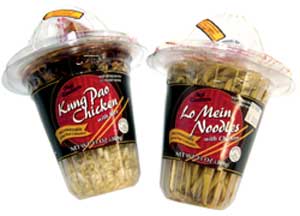
These days, processors of prepared Asian foods could be just about anyone. Focused on the growing niche of mobile foods, Deli Dashers® Premium Meal Oriental Cups, with a decidedly regional Chinese influence, are hitting the mark. Three popular refrigerated varieties, Kung Pao Chicken, Sweet and Sour Chicken (both with rice), and Lo Mein Noodles with Chicken, are packaged in clear, microwaveable cups with domed tops and are designed to be eaten anywhere. Available in C-store delis, they are ready to eat in less than two minutes and generally consumed within two hours of purchase. The dessert fortune cookie stashed under the top is a novel touch. The company's Oriental Bowls, found in supermarket delis, offer the same flavor selections in a larger size that can be brought home and consumed within five days. Recognizing the appeal of ethnic foods, the company also markets a similar line of Italian Pasta Cups and Bowls.“The Oriental menu provides quick, powerful (taste) satisfaction,” remarks Roman Forowycz, president of Fun Fresh Concepts LLC, a new product concept company that commercialized the Deli Dashers line. He says the product delivers “a lot of value for its price. Our goal was to create something different than what the consumer will see out of the frozen case.” The predominance of spices and acidic sauces in Asian cuisine yields a naturally occurring preservative effect, making it ideal for a product with extended shelflife (ESL), he also notes.
Product formulators can be of more than one mind when deciding how authentic to be with ethnic flavors. Commenting that truly authentic meals may require a more sophisticated consumer palate, Forowycz has found that tailoring his product flavor profiles to please 70% of the public has been successful, without sacrificing product appeal. (In some cases, he even adjusts them to a particular regional market within the U.S.)
It All Started with an Egg Roll
Columbus, Ohio-based Kahiki Foods Inc. was inspired by the reception of its signature egg rolls at the Kahiki Supper Club, a forerunner to the company. Encouraged to commercialize the product by local supermarket execs who dined at the establishment often, Kahiki began supplying the products for their stores.By the time the restaurant of 39 years closed its doors, the Kahiki Foods brand was five years into marketing a line of authentic, restaurant quality Pan-Asian/Pacific-Rim frozen foods and supplying supermarkets, club stores and foodservice. Borrowing from Chinese, Japanese, Thai, Malaysian, Indian, Polynesian and Hawaiian cuisines, products include egg rolls and potstickers (shrimp, pork, chicken or vegetable, or some combo thereof), appetizers (mini vegetable egg rolls, chicken potstickers and spicy beef Tiki Bites™) and party platters.
With a company motto of being either “first, best or different,” Kahiki's Bowl and Roll Combos™ is the company's answer to the Uncle Ben's Rice Bowls, says Alan Hoover, senior vice president of sales and marketing. All packaged with a vegetable egg roll and dipping sauce, product profiles include General Tso's Chicken, Mango Chicken, Teriyaki Chicken, Sesame Orange Chicken, and Beef & Broccoli. (To counter sogginess when heating, a special susceptor sleeve crisps the egg rolls in the microwave.)
This year, the Bowl and Roll Combos entered the refrigerated deli case. Now that Kahiki is able to offer extended shelflife on these items (appetizer products also were included), flavor selections are similar to the frozen line, with some new profiles added. Another product line, the individually wrapped Egg Rolls to Go™, is designed for the deli, frozen food and vending markets.
Hoover says, given the company's roots in the restaurant industry, “we've chosen not to move to a sweeter palate or more Americanized version. Diners expect dishes to be spicier.”
What's Working?
Egg rolls, one of the first hand-held foods in the U.S., continue to be extremely successful, and the old-school Chinese/Asian sweet or sweet and sour-based dishes also continue to be popular. But ethnic dishes that are more complex, such as Kung Pao Chicken, are being well received. Building on this concept, sweet and spicy dishes will translate nicely in prepared applications.One flavor that could use more exposure is curry. Except in Britain (due to its colonial relationship with India), Indian curry has not been very popular on the mainstream table. Ever the challenge with its differences in flavor and form (Indian is dry; red and green Thai is wet), the public may need to become better acquainted with its unique and potent flavor profile.
Interestingly, as more ethnic ingredients are imported—such as lemongrass, cilantro (more unique to Asian than Latin American cooking), fish sauces and the like—new industries have been created in the U.S. For example, oyster and shiitake mushrooms now are grown here at home.
Standing Up to the Product Development Challenge
No evaluation of this category would be complete without considering formulation challenges. Asian prepared foods can be tricky. With a predominance of stir-fry cooking, the product must deliver a vibrant look and appealing crunchiness, particularly for frozen or ESL applications. Moisture migration between ingredients can affect formulation. Ingredient sourcing can be uneven. Some items are not commercially available in large volume; others lack product specs or nutritional info. Even tracing the product back to the original supplier to comply with safety regulations can be a nightmare.
However, on the plus side, this style of cooking has the benefit of various prepared sauces, each with its own range of components—such as oyster sauce (as popular in some Asian countries as ketchup is in the U.S.) and hoisin sauce. The finished product then becomes the essential ingredient in the dish.
Prepare to be Excited
What flavors and trends will stimulate the future of American palates? McCormick Co., marketers of a broad range of dry spices/spice mixes to consumers, addressed this query in their report, 2003 McCormick Flavor Forecast. Tellingly, Asian flavors comprised seven out of 12 ingredients to watch: chile peppers, cinnamon, coriander/cilantro, lemongrass, sesame, turmeric and wasabi. (The others were bay leaf, mustard, pepper, sea salt and vanilla.)Americans are ready to experience bolder and more exciting flavor combinations, whether dining out or eating in. Other significant trends included discovering regional ethnic cuisines, and varying degrees of heat in spicy but flavor-packed combinations. In addressing where the Asian prepared foods category is heading, an explosion into more regional foods is evident—and we will be learning as we go. The name of a dish, such as Shrimp Bangkok, will tell us more about its origins than we realize. It becomes a marker—a means of identifying the food and customs of a town or region where it originated. These foods and dishes will become “cuisine from Asia,” not “Asian cuisine.”
Asian ingredients are playing a major role in this category's growth, for they already are merging into and influencing other cuisines. Today, you can make a beef bourguignon, and add soy sauce. In essence, these distinctive ingredients will become a faster-emerging and -growing category than the food and cuisine itself.
Website Resources
www.funfresh.net — Fun Fresh Concepts' Deli Dasherswww.kahiki.com — Kahiki Foods Inc.'s consumer recipes, using their products
http://yancancook.asianconnections.com — Chef Martin Yan site on Taiwan cuisine
www.PreparedFoods.com/archives/1998/9809/9809asianflav.htm — Trends in Asian cuisine
Looking for a reprint of this article?
From high-res PDFs to custom plaques, order your copy today!