Article: New Approaches to Organic Ingredients -- June 2008
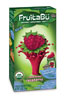
A new line of FruitaBü Organic Smoooshed Fruit Sploooshers carries the USDA Organic Seal. The company notes, “Each FruitaBü Fruit Sploooshers tube is made using more than 90% real organic fruit and fruit juice.”
Since October 2002, when the National Organic Program (NOP) regulations went into effect, the organic food market has enjoyed a double-digit growth rate. Despite showing signs of slowing, it is projected to continue expansion at several times the overall food industry growth rate. As such, it is an exciting area for food companies to continue fast-paced growth.
The slowing growth does not seem to be the result of a decrease in consumer demand, but one possible factor may be a tightening supply. Currently, organic foods account for 3% of total food sales in the U.S., but only 0.5% of the country’s farmland is certified organic, according to USDA statistics. Most of the shortfall is being made up by imports from countries with more mature organic markets. However, as more countries continue to adopt organic regulations (Canada will have regulations in place by December of this year), the availability of imports will continue to grow tighter.
Faced with all of this, plus the added confusion over the exact definition of organic, a product developer could be wondering where to start when creating new organic products.
Understanding Organic
An organic agricultural system rests on three premises. It shuns the use of chemical fertilizers and pesticides; questionable technologies such as genetic modification and growth hormones; and the application of sewage sludge to farmland in favor of composting, traditional breeding practices and attention to the health of the plants, animals and even the soil to achieve a more sustainable agricultural environment. These agricultural roots of the organic movement explain why its administration falls under the purveyance of the USDA and not the FDA.Once farmers have spent so much effort in producing foodstuffs they consider superior to conventional products, they want to ensure the integrity of the item is maintained until it reaches the consumer. This is where the product developer needs to be aware of the restrictions on ingredients and processing technologies placed on organic products. Developers should become familiar with the National List of Allowed and Prohibited Substances (7CFR Part G--List 605 and 606), so they know what can and cannot be used as ingredients. Part 605 provides a list of non-agricultural substances allowed as ingredients in or on processed products, along with some limitations on use. For instance, sodium hydroxide (NaOH) is on the allowed list, so it can be used by pretzel manufacturers to achieve the golden-brown sheen on pretzels. However, it has a limitation of use and cannot be used for lye peeling of fruits. Yeast is an example of a product that, although it is a living organism and is “grown,” it is considered non-agricultural, so it appears on List 605(a). However, yeast still must meet the Disallowed Substances rule of non-GMO and not have been genetically modified. The growth medium also must meet organic guidelines.
One thing that has tripped up many product developers is the fact that while “natural flavors” appears on 605(a), many flavors have synthetic carriers (such as propylene glycol) that are not on the list. A more-organic alternative is an ethanol carrier for the flavor, but the ethanol, typically distilled from grain fermentation, still has to be documented as meeting organic criteria.
List 606 specifically deals with the use of agricultural substances that could be produced organically but are not available in sufficient commercial quantity or quality. This regulation was not written clearly in the original regulations and was used to justify the use of many ingredients that were not organic. After Harvey vs. Johanns, it was clarified that a company must prove the lack of commercial availability and petition the ingredient’s inclusion onto the list.
For instance, native cornstarch was one of the ingredients originally included on 606. Product developers believed cornstarch could be used regardless of organic status. That is not the case, because cornstarch is available in organic form in commercial quantities. However, it would allow a developer to use baking powder containing cornstarch added as a dispersant--so long as no baking powder could be found using organic cornstarch. (Once again, it should be noted that the cornstarch in the baking powder would still have to meet the previously mentioned “big three” rules of organic.) A website, www.606organic.com, has been established to assist certifiers in determining commercial availability, but it also can help a product developer locate a supplier of an ingredient allowed under 205.606.
Another important aspect of the National List is that it is dynamic. Everything is up for sunset re-evaluation every five years, and the first sunset reviews began last year. Food developers should monitor which ingredients are up for review and comment to the USDA/NOP to keep important ingredients on the list. Otherwise, a reformulation might be required, once a functional ingredient is no longer listed.
Pick a Claim Level
The targeted organic claim level determines the available ingredient choices. There are four categories of organic. (See chart “Use of the Term Organic” for an overview.) “100% organic” is the highest claim level and the most difficult to achieve for most processed foods. Every ingredient must be certified 100% organic, including the processing aids. Generally, the only products that achieve this claim level are minimally processed, single-ingredient items, such as rice, applesauce or olive oil.Most processed foods target the “organic” level. At this level, up to 5% of the recipe can use ingredients listed on the National List of Allowed and Prohibited Substances (7 CFR 205 Subpart G--605 & 606). (Also, see chart “The 5% Rule.”) It will have to be demonstrated that agricultural ingredients are commercially unavailable, and organic and conventional sources of the same ingredient cannot be mixed.
“Made with Organic [Ingredients or Food Groups]” has the greatest flexibility, while still allowing the use of the word “organic” on the front panel. Conventional agricultural ingredients may be used, without regard to commercial availability. Conventional and organic versions of the same ingredient may also be intermingled, as long as the ingredient or ingredient groups listed on the front panel are all organic.
As an example, during the creation of a multi-grain bread, the decision may be made to use wheat, barley, rye and oats. At the “organic” level, if the organic barley is in short supply or too expensive, the barley would be omitted, or the manufacturer would have to pay the higher price. At the “Made with...” level, just enough organic barley could be used to achieve the 70% status, with conventional barley used for the remainder. However, there could not be a “Made with Organic Grains” statement, because some of the grains (barley) are not organic. However, the package could state “Made with Organic Wheat, Rye and Oats.” In the ingredient statement, organic barley may be identified separately from barley. If they are declared together, the barley may not be declared organic.
Be Creative
“One of the most common challenges for traditional food scientists when developing a new food product is the tendency to think in terms of individual building blocks (nutrients like vitamins, fats, sugars, antioxidants, etc.), instead of thinking about whole food ingredients,” says Dag Falck, an organic program manager for an organic food manufacturer. “Stop thinking of it as a formula of many parts, and start thinking more in terms of whole foods that already contain the complete formulas.”While not inherent in the regulations, the organic movement has capitalized on some consumers’ perception of organic food as “real food” and everything else as “artificial, Frankenfood,” laden with chemicals synthesized in a lab. Sticking to a simple recipe with a limited number of ingredients that are agriculturally derived is the best formulation strategy. For example, rather than combining lemon flavor and citric acid, lemon juice may work to achieve the same objective.
Learning to think like a chef is helpful. Consider carefully what each ingredient brings to the final product, even the sub-ingredients and processing aids. Are they really necessary? Is there a more natural or organic alternative? Sometimes, the answer is not always intuitive to a scientist that is conditioned to think of the individual parts. Consult a corporate chef for ideas. Consider how the challenge would have been solved 50 years ago. Review cookbooks. Remember how grandmothers used to cook.
When starting that next organic project, remember the following simple steps: Become familiar with ingredients; they can occasionally change, so check the National List frequently. Clarify the claim level. Discuss the challenges of meeting the desired claim level with marketing. Lastly, always remember that developers are not formulating with a bunch of chemicals; they are creating food. pf
Website Resources
www.ams.usda.gov/nop/indexie.htm -- USDA National Organic Programwww.606organic.com -- A non-governmental site developed to assist in the search for organic sources of the non-organically produced ingredients allowed in the National Organic Program section 205.606
www.ota.com -- Organic Trade Association
www.gpoaccess.gov/cfr/index.html -- To access the National List of Allowed and Prohibited Substances, in the search function, type in the needed Code of Federal Regulations (CFR) reference; in this case: 7CFR205.606
CASINGS--FROM PROCESSED INTESTINES
Celery powder
Chia
Dillweed oil
Fish oil--stabilized with organic ingredients or only with ingredients on the national list
Fructo-oligosaccharides
Galangal, frozen
Gelatin
Gums--water-extracted only (arabic; guar; locust bean; and carob bean)
Hops
Inulin-oligofructose-enriched
Kelp--for use only as a thickener and dietary supplement
Konjac Flour
Lecithin, unbleached
Lemongrass, frozen
Orange shellac, unbleached
Pectin (high-methoxy)
Peppers (chipotle chili)
Starches:
* Cornstarch
* Rice starch, unmodified--for use in organic handling until June 21, 2009
* Sweet potato starch--for bean thread production only
Turkish bay leaves
Wakame seaweed
Whey protein concentrate
Colors Derived From Agricultural Products:
* Annatto extract
* Beet juice extract
* Beta-carotene extract derived from carrots
* Black currant juice
* Black/purple carrot juice
* Blueberry juice
* Carrot juice
* Cherry juice
* Chokeberry-aronia juice
* Elderberry juice
* Grape juice
* Grape skin extract
* Paprika
* Pumpkin juice
* Purple potato
* Red cabbage extract
* Red radish extract
* Saffron extract
* turmeric extract
Looking for a reprint of this article?
From high-res PDFs to custom plaques, order your copy today!


