NUTRACEUTICALS in Processed Foods and Supplements
* Products targeting health conditions range in boldness.
* Regulatory staffs influence ingredient choices.
* Rising star ingredients shine.
At first glance, there seems to be little in common between metabonomics, an approach to understanding the metabolic regulation of an organism, and the recent introduction of Lucky Charms' whole-grain cereal in Colombia. Both, however, represent facets of Nestle S.A.'s intent to provide better-for-you products.
"Our focus is on food and beverage, particularly in nutrition, health and wellness, in both emerging and developed markets," Jim Singh, Nestle's CFO, was quoted saying, in an August 11, 2010, article on Bloomberg.com. As the world's largest consumer packaged foods company with food and beverage sales of roughly $100 billion, Nestle's strategy is noteworthy.
Nestle's interest in healthful products translates into its position as one of the world's largest users of nutritional additives, as well. A November 2009 report from Freedonia, "World Nutraceutical Ingredients," notes multi-national food and drug makers, such as "Abbott Nutrition, GlaxoSmithKline, Kellogg, Kraft Foods, Mead Johnson Nutritionals, Nestle, Pfizer and Unilever, comprise the largest customers for nutraceutical ingredients."
Going forward, Nestle is putting significant capital behind health positioning. Its efforts include Nestle Health Science S.A., a wholly-owned subsidiary of Nestle S.A. that became operational last month, and the Nestlé Institute of Health Sciences. The company states its purpose is to pioneer a new industry between food and pharma allowing Nestlé to "develop the innovative area of personalized health science nutrition to prevent and treat health conditions, such as diabetes, obesity, cardiovascular disease and Alzheimer's disease..." The company's website relays interest in such concepts as metabonomics, asking, "What metabolic profile are you?" and "Personalized nutritionñGetting to know the consumer better."
Targeting Health Conditions
Of course, a plethora of smaller companies have forged ahead with nutritional products, many targeting specific health conditions. In "Prepared Foods' 2011 R&D Trends Survey: Functional Foods and Beverages," when product developers--all actively involved in the product development of functional foods, beverages or dietary supplements--were asked, "During the next year, do you expect the following ingredients to become more or less important to your company's product line?" the respondents indicated equal interest in ingredients for heart and digestive health. Following somewhat closely behind were ingredients for weight management and, then, immunity. (See chart "Addressing Health Conditions.")
A multitude of ingredient options for the formulation of heart and digestive health products exist. Indeed, the FDA allows more health claims linking foods and ingredients with heart health than any other disease condition. As for digestive health, an extensive array of unrelated ingredients can be formulated into products falling under that umbrella. For one, digestive health includes a broad array of conditions, ranging from colon cancer and nutrient absorption to constipation, food intolerance and immunity.
Even immunity, a rising star in regards to consumer interest this last half-decade, is a multi-faceted concept, as the industry emphasizes "immune modulation" over "immune enhancement." While probiotics and prebiotics, such as fructo-oligosaccharides or FOS (e.g., inulin) and galacto-oligosaccharides (GOS), have maintained a higher profile in the U.S. food industry, research also continues in the probiotic role of other ingredients, such as soy oligosaccharides, sugar alcohol and more.
Immunity products also look beyond pre- and probiotics. For just a few examples, a search of Mintel's GNPD shows January 2011 saw the U.S. launch of Perfectly Healthy Best Toddler Goat Milk, which touts its colostrum contentónoting it contains immunoglobins, growth factors, antibodies and other substances designed to help the body face a lifetime of invasion by various viruses, bacteria, allergens and toxins. In the same month, Brazil saw the introduction of Quaker Granola 7 Gr„os (7 Grain Granola), with a product description noting it provides "quinoa, said to aid the immune system." In July 2010, Walmark Imunactiv dietary supplement was introduced in Poland, "specifically formulated with vitamin C, beta-glucan, zinc and bioflavonoids to support the body's natural immune system."
Some products directly promote their benefits, while others show great creativity and subtleties. Mintel's GNPD unearths recently introduced examples, such as Preventive Beverages' EVA Resveratrol Antioxidant Beverage containing "30mg of ultra pure resveratrol." The product's description notes: "Resveratrol is a powerful antioxidant found in the skin of red wine grapes, which may enhance and support cardiovascular health and increase longevity." In another example, Kyolic/Wakunaga's Kyo-Dophilus Probiotic Dietary Supplement with Cranberry Extract, launched December 2010 in the U.S., relies on consumers' understanding of the role cranberries and probiotics can play in immunity. Mintel's GNPD notes the product "is said to promote urinary tract and intestinal health...and also supports overall immune health."
Some companies, more commonly found in developing countries, make claims that take a relatively aggressive approach. For example, Mintel's GNPD translates statements made by Pan Fiiller's Cranberry Chip Cookies (introduced in Mexico in April 2010), which link cranberries with a variety of health benefits. "According to the manufacturer, cranberries provide a rich source of the antioxidant phenolic acid, which is beneficial to the health and natural defense against bad cholesterol, improving arterial blood flow. They help to reduce contracting cancer; reduce dental plaque; and help eliminate stomach bacteria."
"Softer" claims, such as those associated with beauty (i.e., cosmeceuticals) and cognitive health, also abound. In March 2010, Coca-Cola launched Rˆmerquelle Emotion in Hungary. Mintel notes the Blackberry Lime-flavored water is claimed to help concentration.
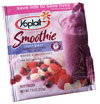
Unlike with dietary supplements, the FDA allows disease-related claims for foods. For example, the benefit of "reduced risk of certain types of cancer" can be made with foods, such as some fiber-containing grain products, fruits and vegetables. Few companies have made use of such a bold claim; however, "softer" associations are made. For example, in the U.S., Yoplait Smoothie's Strawberry Banana Frozen Fruit & Frozen Yogurt Pieces subtly links its product to reduced risk of cancer, by helping to promote the "save lids to save lives" Susan G. Komen for the Cure breast cancer charity. The back label of the primarily fruit-containing product points out it is rich in antioxidant vitamin C, "which can help the body stay healthy by protecting the cells." Indeed, the U.S. food industry's historic shyness in regards to cancer references has been gradually diminishing. (Search for the March 2010 article, "Nutritional Product Opportunities," at PreparedFoods.com.)
Claims, Ingredients and Regulations
The ability of a product to communicate its health benefits to consumers is of paramount importance in marketing efforts and is, indeed, a sensitive challenge. A product's success is impacted by many critical factors, from serendipity regarding an ingredient's health benefits to strategic marketing support to potential regulatory constraints (in terms of what ingredients can be used and what claims are made).
This translates to the sometimes overlooked role of regulatory personnel as influencers in the decision of which ingredients to highlight on packaging and, thus, incorporate into formulations. This topic was explored in this year's "Functional Foods and Beverages" survey through a question, "Which functions within your company are influential in deciding whether any particular nutritional additive or component will be promoted on a product's label?" Of the primarily R&D respondents, 95, 90 and 83% checked off "R&D (product development)," "Marketing/Sales" and "Top Admini≠strators," respectively. However, "Reg≠ulatory" came next, with 77% indicating personnel in these functions were influential. This was ahead of staff in the nutritional department, quality-control, purchasing or technology scouts. (See chart "Influencers of Ingredient Choices.")
Product differentiation through the use of ingredients with emerging beneficial reputations is a marketing strategy frequently chosen by consumer product companies. This may be a more difficult tactic to pursue than in the past, however.
"Recent activity indicates that the GRAS system will be more frequently utilized by the FDA as an important tool to regulate ingredients and/or products that it deems to be unsafe or potentially dangerous," says Justin Prochnow, of counsel, Greenberg Traurig. An example was November 2010, where the FDA issued warning letters to four different companies that were marketing and selling alcoholic beverages containing caffeine. The FDA went through a fairly detailed analysis of the process for determining GRAS status and declared that caffeine is not GRAS for inclusion as an ingredient in alcoholic beverages, says Prochnow.
The warning letters provide a good road map as to how the FDA is likely to treat other products that contain what the agency considers to be potentially dangerous or unsafe ingredients. A letter was sent at the beginning of 2010 to a company with a melatonin-containing beverage. The FDA went through a similar analysis of the GRAS status of melatonin, finding that it was not GRAS for the particular purposes intended, adds Prochnow.
As exotic ingredients are introduced into foods and supplements, the FDA may well use a comparable approach to attempt to control ingredients or products it considers to be potentially unsafe. "Due to the fact that the criteria for ingredients in conventional foods and beverages are more stringent than those for dietary supplements, it is likely the FDA will attempt to treat products as conventional foods or beverages, if there is any confusion over the intent of a company to market and sell a particular product," suggests Prochnow. The December 2009 "Guidance for Industry: Factors That Distinguish Liquid Dietary Supplements from Beverages" indicates the FDA may treat products as conventional foods or beverages, even if a company is marketing a product as a supplement, if the characteristics of the product more closely resemble a conventional food or beverage. "The FDA then has more control over the ingredients that are legally allowed to be included in the product, since the ingredients must then either be approved food additives or GRAS. Thus, it becomes vitally important for dietary supplement companies to properly label products and be consistent in the marketing and advertising of such products, so that no case can be made for deeming such product to be a conventional food or beverage instead of a supplement," Prochnow advises.
As for claims, Prochnow notes current permitted claims are "authorized through statute or regulation, significant scientific agreement or petitions." These include health claims, qualified health claims, nutrient content claims and structure/function claims for both foods and dietary supplements.
Looking more to the future, Prochnow says "natural" and "all-natural" claims will likely continue to proliferate. "The USDA has defined ënatural' for meat and poultry products; however, the FDA and the FTC have not adopted a formal definition of the term," he notes. Of a more intriguing nature, "It is likely that new claims will continue to emerge in the area of ëbioavailability,' or the rate in which an ingredient or a product's ingredients are absorbed," predicts Prochnow. These are essentially claims answering the question: "How rapid and lasting is the intake of the ingredients?" and tout the fast-acting nature of products, he says. In conjunction with the claims being made about bioavailability, there may be a spate of newly identified bioactives, which will be able to be identified, isolated and manufactured by means of new, cutting-edge technology. Such new bioactives will likely be identified for a wide range of beneficial uses, such as weight loss and muscle growth.
Ingredients of Interest
For current commercially available additives, those positioned to assist with health are predicted to do better than more traditional ingredients. For example, a 2010 "Food & Beverage Additives" report by The Freedonia Group Inc. estimates U.S. demand for food and beverage additives will, from 2009-2014, grow 3.5% annually to reach $8.5 billion. However, "nutraceuticals," which includes vitamins, minerals, herbal extracts and probiotics, are projected to increase 6.3% during that period, to reach $890 million.
Freedonia's earlier "World Nutraceutical Ingredients" provides global statistics and predicts world demand for nutraceutical ingredients to reach $21.8 billion in 2013, which will serve a $236 billion global nutritional product industry. The report provides a laundry list of ingredients expected to have the best growth opportunities. It includes soy protein nutrients; the carotenoids lutein and lycopene; omega-3 fatty acids; probiotics; phytosterols; and the essential nutrients of vitamins A, E and D, calcium and magnesium. For ingredients more associated with dietary supplements, it lists ginkgo biloba and saw palmetto herbal extracts, and, lastly, glucosamine, chondroitin and coenzyme Q10.
In Prepared Foods' 2011 survey, the most popular ingredients are "tried and true" mainstream ones. When the survey asked, "During the next year, do you expect the following ingredients to become more, or less important to your company's product line?" and then listed 36 ingredients or ingredient categories, those ranking at the top are categories with consumer-friendly names and awareness; are applicable for a broad range of products; and have few regulatory issues. Thus, some 64% said dietary fiber would become more important to their product line, while half (50%) of the respondents said omega-3 fatty acids and probiotics would become more important. (See chart "Mass Market Nutritional Ingredients.")
As in past surveys, broad ingredient categories ranked higher than more specific or specialized ingredients. Thus, while 50% of respondents said antioxidants would grow in importance, 37% responded so for the antioxidant ingredients green tea and fruit extracts and 30% for grape seed extract. Some 41% responded that "proteins, increased levels" would become more important, while 32% said so for amino acids and 30% for specialized whey protein.
About five years ago, "Prepared Foods' R&D Trends: Functional Foods and Beverages" surveys conducted in 2005 and 2006 asked a similar question, in regards to "up-and-coming" nutritional additives. A direct comparison cannot be made, in that only 26 ingredients were listed, and not all were the same. That said, antioxidants, omega-3s and dietary fiber ranked in the top three for all surveys.
Ingredients that appeared to have risen in rank include probiotics, with only a quarter of respondents saying they would increase in importance five years ago (compared to half this year). (See chart "Rising in Prominence.") This also drove interest in prebiotics, where five years ago, roughly one fifth had said prebiotics would be growing in importance in the coming two years, while 44% said so in this year's survey.
Other ingredient categories appearing to have risen in importance include botanicals, fruit extracts, conjugated linoleic acid (CLA) and phytosterols/stanols. Reasons include a trend towards "natural" and multifunctional ingredients, such as with fruit extracts, to the FDA's "no questions" response on a GRAS notification for CLA.
The popularity of phystosterols/stanols will be interesting to watch. Regulatory approval has grown, both in terms of the number of countries where they are permitted and also in the number of products they may be used in within the U.S. However, Bob Jones, principal, Scientia Advisors LLC, says, "Phytosterols seem to have everything required for success, including GRAS status, clinically demonstrated efficacy and the involvement of a number of well-regarded companies. But, I don't think they will really take off, until more consumers truly care about lowering their cholesterol."
Although it has rightly been said that consumers buy products for their benefits, not their ingredients, ingredients can play a major supporting role in the success of any functional food, beverage or dietary supplement. And, sometimes, they make all the difference. NS
Looking for a reprint of this article?
From high-res PDFs to custom plaques, order your copy today!


