Article: Beverages: Drinking It Up -- November 2008
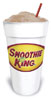
Smoothie King added six coffee-based smoothies to its menu. The Mo’cuccino smoothies mixed java with ice cream and protein, intended to be an indulgent treat.
The beverage industry continues to cut calories in schools two years into a three-year implementation period of the national School Beverage Guidelines, according to a report from the Alliance for a Healthier Generation. The alliance worked with The Coca-Cola Company, Dr Pepper Snapple Group, PepsiCo Inc. and the American Beverage Association to establish guidelines that limit portion sizes and reduce the calories available to children during the school day.
The report finds beverage calories shipped to schools has decreased by 58% since 2004, the last comprehensive analysis available prior to creation of the guidelines in 2006. The second progress report shows 79% of schools under contract with bottlers are already in compliance with the national School Beverage Guidelines.
The science-based guidelines call for the beverage industry to provide lower-calorie and smaller-portion options in schools, including the removal of full-calorie soft drinks, by the 2009-2010 school year. Beverage options include 100% juice, low-fat milk and bottled water in elementary and middle schools, with the addition of diet sodas, calorie-capped sports drinks and enhanced waters, and low-calorie teas in high schools.
The shift toward lower-calorie, smaller-portion beverages is contributing to the reduction in calories available from beverages in schools, as well as a change in the beverage mix available to students. In fact, shipments of full-calorie soft drinks have decreased by nearly two-thirds, with the volume shipped to schools down by 65%.
Also in school foodservice news, the USDA added another option for students, allowing parents or legal guardians to request, in writing, soy milk as an alternative to cow’s milk for children receiving National School Lunch and Breakfast Program meals. This change catered to the growing diversity of participants in the School Nutrition Programs by allowing children with lactose intolerance, dairy allergies or cultural diet restrictions to have an alternative source of calcium at school mealtimes.
Taken to the Limit
As schools diversify their beverage options, limited-service restaurants have reduced the number of beverage items on their menus compared to the prior year, reports Technomic’s “Beverage Consumer Trend Report.” The greatest drop was in customized beverages, like specialty coffees, teas and smoothies, while at the same time, the number of limited-time only (LTO) beverages increased.“Limited-service operators are rationalizing their offerings to focus their regular beverage menus on the most profitable, popular and unique drinks,” explains Darren Tristano, executive vice president of Technomic Information Services. “They’re introducing new, innovative beverages through LTOs, rather than bulking up their everyday beverage menus with long lists of specialty drinks.”
Full-service restaurants, which tend to focus primarily on traditional meal accompaniments, such as iced tea and soft drinks, showed a modest increase in the total number of menued beverage items. One particularly hot area of innovation was in “mocktails,” typically featuring lemonade in combination with other fruit flavors.
Drink the Dessert
Drinkable desserts are the “new wave” of dessert. They range from smoothies to coffee specialties (such as MaggieMoo’s Caramel Cowpuccino) to adult beverages (such as the Belgian Mocha Crème Martini at Legal Sea Foods or the White Russian prominently featured on the dessert menu of Logan’s Roadhouse). Even Starbucks tested such a concept in several hundred Los Angeles-area stores; Sorbetto was described as a “drinkable sorbet.” Dessert beverages appeal most to young consumers of the Starbucks era who think of coffee beverages as dessert.
Coffee’s presence proved one of foodservice’s continuing trends. Smoothie King Franchises Inc. added six coffee-based smoothies to its menu. Available in caramel, mocha or vanilla, the Mo’cuccino smoothies mixed java with ice cream and protein, intended to be an indulgent treat. The line also included Gladiator protein to provide an energy boost and long-lasting fullness. The smoothies were cold-brewed processed, resulting in the removal of more than 70% of bitter acids and oils, providing a smoother flavor and resting easier on the stomach. Furthermore, any of the coffee and Mo’cuccino smoothies could be made “skinny” by leaving out the turbinado, thereby reducing the number of calories and carbs in each blend.
Jack in the Box likewise capitalized on the coffee trend and, in the process, utilized a variety that it says is one of the world’s most premium and sought-after cups of joe, but in a shake--the Kona Coffee Shake. The rich and creamy confection blended real vanilla ice cream with the flavor of Kona coffee and topped it with a dollop of whipped topping and a maraschino cherry.
Also entering the suddenly ultra-competitive coffee market, Sonic launched a line of coffee drinks including the Java Chiller, lattés and premium roast coffee. The Java Chiller is a blend of vanilla soft-serve ice cream and espresso. It and the hot or iced lattes are available in mocha, caramel and hazelnut flavors. Sonic also introduced Sonic Boom, a shot of espresso that can be added to any beverage “for an extra jolt.”
Coffee’s biggest player also delivered an “extra jolt” of energy to its patrons. Starbucks introduced “+Energy” products, new ingredients that can be added to any existing Starbucks handmade beverage. Baristas were trained in how to mix in the +Energy ingredients, which contained B-vitamins, guarana and ginseng. Those same ingredients were added to Starbucks coffee for the ready-to-drink Starbucks Doubleshot Energy + Coffee, which could be found in retail outlets as well as company stores. In fact, Starbucks suggested its consumers’ first experience with +Energy should be paired with the Doubleshot, as the flavors “complement each other.”
This energizing launch came after Starbucks introduced its Pike Place Roast coffee, which did boost sales and attract new customers, but at the same time, it alienated some of its most loyal fans. The new “main drip coffee” at the chain’s stores, Pike Place had a smoother finish, unlike the company’s robust-roast roots. Starbucks’ website was riddled with negative feedback, as well as competitors offering samples of their own take on bolder coffee.
Nevertheless, sales of the stores’ drip coffee did rise, and Rob Grady, vice president of global beverage with Starbucks, noted, “Our satisfaction metrics are up across the board,” driven by new customers “that historically might have not come into Starbucks.” That said, the thousands of website pleas did result in Starbucks adding bold-flavored coffee in the afternoon at some of its locations.
The rapid development of Pike Place (six months from concept to in-store; roughly a year less than typical for implementing new ideas at Starbucks) could be attributed to the return of chief executive Howard Schultz and his efforts to reverse sliding same-store sales. Those efforts included a reinvention of its breakfast food. The “billion-dollar” idea, as Schultz regards it, strived to make Starbucks’ morning fare more nutrition-friendly: few calories, with more protein, fiber and fruit; the six new items included hot oatmeal, a whole-grain apple bran muffin and an energy bar.
Starbucks, however, would be advised to pay more attention to the economy and the effect of its prices on consumers. A Rasmussen Report in August found 73% of U.S. adults regard Starbucks coffee as “overpriced,” and only 6% disagreed. The poll results suggested Schultz’s food foray must address consumer opinions, as only 5% of respondents go to the stores for the food. Some 80%, naturally, visit for the coffee, while free wireless Internet access attracts 8% of respondents.
Starbucks’ move to reorient its breakfast items as more healthy was not the only coffee powerhouse revamping its food with nutrition in mind. Dunkin’ Donuts added the DDSmart menu, filled with items with either 25% fewer calories; 25% less sugar, fat, saturated fat or sodium than comparable fare; or ingredients that are “nutritionally beneficial.”
Caffeinated Competition
In the meantime, the coffee culture gets even more crowded. Fast-food chains continue to create coffee drinks to lure cost- and time-conscious consumers. Wendy’s International plans to push further into specialized coffee drinks, as evidenced by its test marketing of a major new coffee program in one state and iced coffees in three cities. Several dozen Wendy’s in Mississippi have begun serving iced coffees and the Frosty-cino, a coffee-infused and slightly less thick version of the chain’s Frosty. A different line of iced coffees has been in test in stores in Phoenix, Pittsburgh and Kansas City, Mo.Smoothies may be the next trend to break as big as coffee, especially considering how many coffee chains are betting their innovation dollars on the drinks. Starbucks launched Vivanno, a $3.75 fruit smoothie made with one whole banana, juice, ice, and protein and fiber powder. With no artificial colors, flavors or added sweeteners, Vivanno has 250-270 calories, depending on the flavor. Dunkin’ Donuts also introduced a new, lower-calorie smoothie in May; the Reduced Calorie Berry Smoothie (made with low-fat yogurt and real fruit) weighed in with 250 calories, 30% fewer than the chain’s regular smoothie.
However, not only coffee chains are embracing smoothies; fast food operators are entering the nation’s $2.4 billion smoothie market. Taco Bell launched Fruitista Freeze this year, and it quickly became the chain’s most successful signature beverage launch. Jack in the Box launched an entire beverage platform around smoothies: Jack’s Real Fruit Smoothies are made from a blend of Minute Maid fruit juice and non-fat, frozen yogurt and come in three flavors--Strawberry Banana, Mango and Orange Sunrise. “With consumers’ busy schedules, smoothies have become very popular as snacks and even breakfast items,” said Teka O’Rourke, director of menu marketing and promotions at Jack in the Box Inc.
McDonald’s also will augment its specialty coffees with smoothies, part of efforts to be a “destination” for beverages, explains Lee Renz, vice president of beverages. The company tested McCafe Real Fruit Smoothies in strawberry banana and wild berry banana flavors, both made with fresh bananas mixed with fruit syrup.
Mintel reports RTE smoothie sales have increased 139% since 2002 and are on track to eclipse the $4 billion mark by 2012. Made-to-order smoothies will tally more than $2.5 billion in sales this year, well ahead of the $989 million Mintel reported in 2002. “Smoothies have a health halo attached,” says David Morris, research chief at Mintel. “That could help combat criticism for Frappuccinos that are almost 1,000 calories.”
Nevertheless, these chains should be cautious. Jamba Juice has struggled with decreasing same-store sales, and in the midst of the softening economy, “The industry should take a long look at the possibility of overbuilding,” Mintel warns.
However, entering the healthy foodservice beverage market was Lifeway Foods Inc., with its Starfruit “kefir boutique” cafe. The retail concept debuted in Chicago and is expected to serve as a prototype for Lifeway’s national franchise program. The shop offers several flavors of frozen kefir with over 20 toppings, plus customized kefir parfaits and smoothie-style kefir drinks.
“Starfruit will capitalize on the renewed popularity of frozen yogurt shops,” says Julie Smolyansky, president and CEO of Lifeway Foods Inc., “while offering a healthier alternative with all the probiotic benefits of kefir. Plus, franchising the concept can help grow the brand quickly. This is a promising diversification that will leverage our leadership in the kefir market, familiarize a whole new group of consumers with kefir, as well as teach existing customers new ways to consume kefir and provide a potentially very lucrative new revenue stream.”
Rubbing Alcohol
In adult-oriented beverages, bars are expected to grow 3.1% in 2008, says Technomic, in its revised U.S. foodservice industry nominal growth forecast. The group believes a larger-than-expected slowdown in discretionary consumer spending will result in an overall restaurant industry growth of 3.6%. Considering the 4% rate of inflation, real spending will actually decline.Meanwhile, Anheuser-Busch went in another direction, launching a non-alcohol beverage subsidiary called 9th Street Beverages LLC. Offering a clear distinction between its beer business and non-alcohol business, the new subsidiary was part of the parent’s effort to reach consumers of energy drinks, high-end waters and other non-alcohol specialty beverages, such as its 180 Energy, Borba Skin Balance Water, Icelandic Glacial and Monster drinks.
“With the success of our non-alcohol portfolio and opportunities to continue the momentum, we felt the time was right to bring further focus to this segment of our business,” said David English, vice president and general manager of 9th Street Beverages, who noted that sales for the non-alcohol portfolio are up 77% in 2008. “Our focus will be on reaching new consumers in accounts where alcohol products are sold, as well as accounts where alcohol may not typically have a presence, such as travel and transportation venues and ‘at-work retail’ and specialty accounts such as spas, gyms and health stores.”
The Monster moniker also made its way onto one of c-stores’ iconic brands, as 7-Eleven’s Slurpee added a number of energy brand varieties. AMP Energy Freeze launched in April, followed by Full Throttle Frozen Blast in May. June saw a guarana-spiked Radiation Rush, with a Monster Black Ice version cooling consumers in July.
Meanwhile, Fred’s Minit Mart LLC added a self-branded fountain drink line. Minit Mix fountain drinks include 16 different soft drinks, flavor syrups on demand and pellet-style ice. PepsiCo, Coca-Cola and Dr Pepper products are all featured, including six diet flavors. The chain’s operations director likens the effort to the customization trend sweeping areas of the food industry: “[The customer] decides how much ice, how much flavor, making every drink their own creation.”
Looking for a reprint of this article?
From high-res PDFs to custom plaques, order your copy today!
 |
William Roberts is responsible for the consumer trends section in Prepared Foods, as well as the website news updates and e-newsletter. He served as the Senior Copy Editor at Elevator World. He holds a B.A. in English and a B.S. in Political Science from the University of Mobile.


