Better Baking in Food Product Development
Prepared Foods R&D Seminar presenters help bakers address clean label and finished quality concerns
SOURCE: ©iStockphoto/photobyphotoboy
SOURCE: Copyright: john shepherd
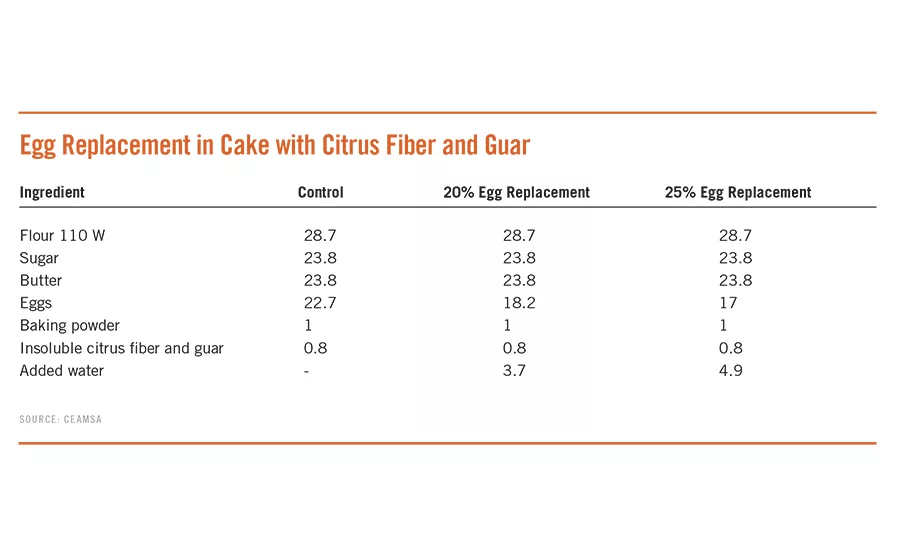
Egg replacement with citrus fiber improves freshness and end product quality. A 20% and 25% egg replacement with added guar gum were compared with a control cake. Texture measurements showed increased tenderness (during five days) with the 25% egg replacement samples—and sensory measurements confirmed this finding showing highest visual, flavor and texture scores for the same sample—but both scored higher than the full egg control.
Clean Ideas to Stay Fresh in Bread and Cake Applications
Key freshness attributes in bread include volume, size, shape, crust crispness, crumb softness and moistness, and flavor. Bread contains flour, sugar, salt, oil, yeast and water. Dough improvers, shortening, milk, eggs, flavoring and coloring ingredients are optional. During the bread-making process, physical and chemical changes occur from mixing, fermentation and baking.
“While bread is baking, physical changes, such as film formation, gas expansion (oven rise) and evaporation of moisture occur. Chemical changes happening in the oven are yeast activity, starch gelatinization, gluten coagulation, enzyme activity, sugar caramelization and browning reaction,” explained Lariza Lopez de Leon, R&D specialist, Caldic Canada, in her Prepared Foods R&D Seminar presentation titled “Clean Ideas to Stay Fresh in Bread and Cake Applications.”
Flour is the main component in bread, at approximately 80% carbohydrates made up of amylose and amylopectin. These starches gelatinize with water and heat between 135-165˚F or 57-74˚C.
In cakes, quality depends on softness, bite, chew, moistness, cohesiveness and resilience. Cake composition includes much higher liquids than bread—with eggs, oil and water making up 40-50% of the batter, and flour and sugar making up most of the 40-50% dry ingredients. The other less than 8% includes milk solids, leavening agents, emulsifiers, flavors, colors, hydrocolloids, modified starch and preservatives.
“After baking, cake crust has a lower moisture content than the crumb, but during storage, the cake crumb firms and begins to stale,” said co-presenter Gladys Lee, R&D specialist, Caldic Canada. Staling in baked products occurs with physical and chemical processes that reduce their palatability. Changes during staling include loss of crust crispness; increase in crumb firmness; increase in crumbliness of crumb; and deterioration in flavor and aroma.
Based on various studies, changes in the starch play a major role in crumb firmness. Retrogradation is a reaction that takes place in gelatinized starch; when the amylose and amylopectin chains realign themselves, causing water to expel from the polymer network. Staling also occurs through moisture migration from the crumb.
Consumers now seek minimally processed baked goods containing fewer additives. Desired ingredient lists are short, with natural, recognizable ingredients. Bakeries face numerous challenges when capitalizing on the clean label trend. Consumers want great-tasting, cost-effective, safe food; retailers also want long shelflife. Shelflife extenders, such as emulsifiers, enzymes and gums, affect bread and cake textural properties—thus delaying staling processes and improving shelflife. Storage time and temperature also affect the rate of staling.
Enzymes are widely used for improvement of dough and staling. Enzymes are biological compounds (protein), which accelerate the conversion of one substrate to another. Enzymes are substrate-specific. The substrate is transformed into another product, while the enzyme is unchanged. The enzyme, as long as there is substrate, can continue to catalyze the same reaction over and over.
Some of the enzymes used in bread baking include:
- Amylases: enzymes that hydrolyze part of the starch to dextrins and further into maltose, reducing the speed of starch re-crystallization.
- Pentosanases: enzymes that cleave the polysaccharide chains decreasing dough viscosity, improving volume and crumb softness thereby increasing shelf life days.
- Lipases: enzymes that catalyze hydrolysis of lipids and are active at water-lipid interface, resulting in mono- and diglyderides which have starch-complexing properties. Egg usage can also be optimized by improving emulsification with egg lecithin.
Hydrocolloids are high-molecular weight polysaccharides, and natural types are available. They modify texture; improve moisture retention; control water mobility; maintain overall product quality during storage; and are a fiber source. Guar and xanthan gums are examples of hydrocolloids often used in baking.
Enzyme and hydrocolloid systems can help achieve the consumer-desired “clean” label in baked goods, along with the retailers’ need for longer shelflife.
“Clean Ideas to Stay Fresh in Bread and Cake Applications,” Lariza Lopez de Leon, R&D specialist, Caldic Canada, 905-812-7300, llopezdeleon@caldic.ca; and Gladys Lee, R&D specialist, Caldic Canada, 905-812-7300, glee@caldic.ca
—Summary by Elizabeth Pelofske, Contributing Editor
Clean Label Bakery Products
How far has clean labeling come, so far? Subway, Panera, General Mills, Pizza Hut and Mondelez, to name a few, have taken steps toward removal of certain ingredients from their products—leading to cleaner labeling. In 2015, ingredient statements generally were shorter in length than in 2014.
When it comes to bread, basically, it is prepared from flour, water, yeast and salt.
“Almost all flavor active components are formed during dough fermentation and baking. The ingredients and the process determine both flavor and texture of bread,” said Michael Beavan, director of technical services, Watson.
The flavor of wheat bread can be enhanced by increasing the concentration of amino acids in dough. Amino acids are generated in dough by flour proteinases. The highest proteinase activity is seen in acidic or reduced dough. Dough pH value is the determinant of which amino acids are produced. The texture of bread is highly influenced by gluten/starch interactions and the distribution of moisture. A soft crumb is associated with freshness.
During fermentation, sugar, in the presence of yeast, is broken down into ethanol and carbon dioxide. In the presence of homofermentative bacteria, sugar (lactose) is broken down into lactic acid. Heterofermentative bacteria break sugar down into lactic and acetic acids, carbon dioxide and water, along with many other organic acids and aromatics. During baking, changes occur from thermal degradation of sugars and amino acids; microbial metabolism of amino acids; evaporative cooling in the oven; and moisture distribution between the crumb and the crust.
The ratio of short-chain fatty acids determines whether a bread is a sourdough. A sourdough has much more lactic acid than a cultured wheat-starch dough. This specific ratio of acids can be created in pre-ferments, sponge or liquid; produced on site; or added as part of the dough. Dried, powdered acid blends can be added as ingredients to the dough. Or encapsulated blends of organic acids and flavors can be added to the dough.
According to Beavan, “The choice of flour and other ingredients, the types of microorganisms present, the type of oven and available amount of time determines the flavor, texture and keeping qualities of the bread.”
Micronized rice fiber is an extremely fine powder with high dietary fiber content; it is derived from rice hulls. When incorporated into dough, it allows production of high-fiber, soft, fine-grained baked products. The rice fiber is produced on specialized equipment to grind and classify it into near-colloidal particle dimensions. The result is low excess water retention and virtually no organoleptic perception of fiber particles.
Gluten-free breads have grown dramatically in the last few years. They are similar to rye breads in their dependence on starch gelatinization; they also have the water-holding capabilities of pentosans and the gas-holding ability of hydrocolloids. The use of sourdoughs in gluten-free bread improves flavor, texture and shelflife.
To sum up, Beavan said, “Consumers want baked products with appealing flavor and texture at reasonable prices—with tangible benefits and with ingredients they can relate to. The important tangible benefits are health and wellness, determined in large part by a person’s microbiome, which is determined in large part by diet.”
The largest part of the microbiome resides in the digestive tract, and many of the microorganisms are the same as those found in sourdough cultures. These organisms, through their fermentation of dietary fiber, secrete short-chain fatty acids, which provide health benefits, and also are responsible for the flavor, texture and shelflife of baked products—especially those containing whole grains.
Clean label baked goods require a combination of ingredients and process. With ingredients based on cultured flours, natural emulsifiers, enzymes, mechanically modified fibers and whole grains, together with the processes of fermentation and baking, it is possible to create flavorful, textural and healthful baked products.
“Designing Clean Label Bakery Products,” Michael Beavan, director of technical services, Watson, 203-932-3000, mike.beavan@watson-inc.com
—Summary by Elizabeth Pelofske, Contributing Editor
Insoluble Citrus Fiber in Food Applications
Soluble and insoluble fibers are added to foods for a variety of functions and nutritional benefits. Soluble fiber is recognized for cholesterol reduction, protection from diabetes and colon cancer, and its prebiotic effect. Insoluble fiber is responsible for regular bowel movement, delayed glucose absorption, satiety, weight control, cholesterol reduction, as well as possible protection from colon, gastric and breast cancer.
“Adequate intake of dietary fiber is recommended at 25g/day for women and 38g/day for men. However, the average intake in developed countries is more like 16g/day. There especially is a deficit in insoluble fiber,” explained Teresa Cruces, fiber product manager at CEAMSA, in a PF R&D Seminar presentation.
“The terms ‘fiber’ and ‘dietary fiber’ are accepted and understood by consumers as healthy components in food products. An insoluble citrus fiber containing 85% insoluble fiber is considered a natural ingredient with clean labeling. It is gluten-free, non-GMO, non-allergenic and GRAS. Functionally, it has high water-binding capacity (1:10); binds oil (1:4); and is pH-independent and heat-stable,” she added.
“In many applications, from baked goods to meats to mayonnaise, insoluble citrus fiber increases viscosity and yields, reduces syneresis and increases shelflife. Insoluble citrus fiber absorbs water by holding it in the capillary structures as a result of surface tension. Water absorption increases after shearing, probably due to the increase of the fiber porosity, leading to higher ability to trap water within the cell matrix,” described Cruces.
In meat products, insoluble citrus fiber can be used for partial replacement of meat or fat. It helps prevent jelly and fat separation; improves form stability and texture; and increases moisture retention, yield and heat resistance. Gravies benefit from insoluble citrus fiber due to syneresis reduction, viscosity and yield increase.
Tomato sauces and pastes show improved heat stability, reduced syneresis and cost reduction with the addition of insoluble citrus fiber. Insoluble citrus fiber, used synergistically with guar and xanthan gum, can be used for reduced-egg or egg-free mayonnaise.
Baked goods show improved texture and nutrition, reduced cost and clean labeling with use of insoluble citrus fiber. Insoluble citrus fiber can reduce oil in muffins, as well as increase softness and shelflife—all for a cost reduction, depending on oil used. In cakes, insoluble citrus fiber improves freshness and end-product quality and can be used for egg reduction.
Crackers show a reduction in breakage during manufacture, shipping and handling with use of insoluble citrus fiber, due to increased strength and structural integrity. Frozen bread doughs show improved quality when thawed, with less stickiness, by minimizing changes in firmness throughout shelflife. Gluten-free baked products also can benefit from addition of insoluble citrus fiber by improved crumb softness and springiness. Pie dough with added 0.5% insoluble citrus fiber plus extra water showed improved texture, with increased firmness; reduced stickiness during refrigeration; and improved handling.
Cruces closed by noting, “Something to remember when using insoluble citrus fiber in baked goods, which require additional water is that the water activity of the finished product should remain similar to that of the control. Water activity is directly related to microbial growth; due to its high water-binding capacity, insoluble citrus fiber helps to control water activity, maintaining its stability.”
“Insoluble Citrus Fiber in Food Applications,” Teresa Cruces, fiber product manager, CEAMSA, tcruces@ceamsa.com
—Summary by Elizabeth Pelofske, Contributing Editor
Originally appeared in the May, 2016 issue of Prepared Foods as Better Baking.
Looking for a reprint of this article?
From high-res PDFs to custom plaques, order your copy today!


