Kraft Heinz Commits to Remove FD&C Colors From US Portfolio
The company aims to complete the transition prior to the end of 2027
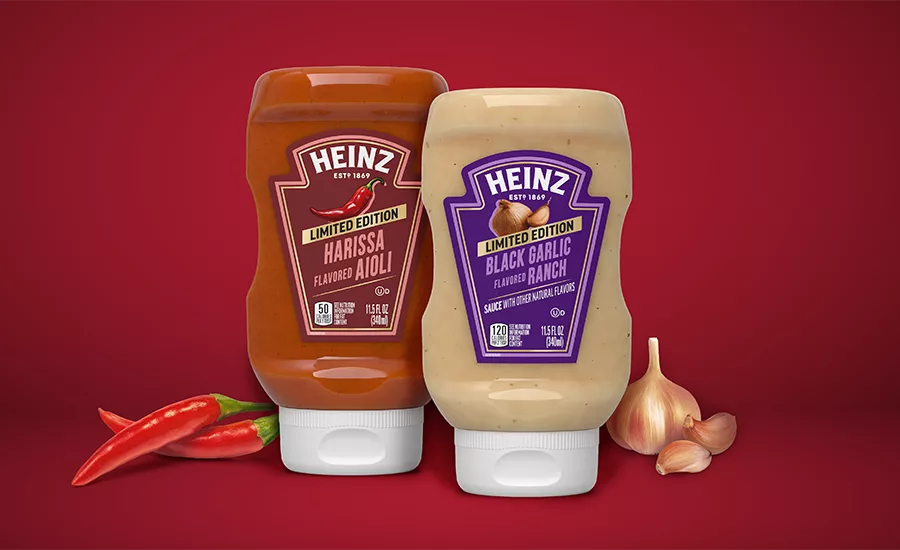
PHOTO COURTESY OF: The Kraft Heinz Company
The Kraft Heinz Company announced it will not launch any new products in the US with Food, Drug & Cosmetic (FD&C) colors, effective immediately. The company also announced it will remove the remaining FD&C colors from its US product portfolio before the end of 2027. Already, nearly 90% of Kraft Heinz’s US products are free of FD&C colors (by Net Sales). For the small portion of products that currently contain FD&C colors, the company has invested significant resources, mobilizing a team to address this complex challenge with a three-pronged approach (3Rs):
- Removing colors where it is not critical to the consumer experience
- Replacing FD&C colors with natural colors
- Reinventing new colors and shades where matching natural replacements are not available
“As a food company with a 150+ year heritage, we are continuously evolving our recipes, products, and portfolio to deliver superiority to consumers and customers,” said Pedro Navio, North America president at Kraft Heinz. “The vast majority of our products use natural or no colors, and we’ve been on a journey to reduce our use of FD&C colors across the remainder of our portfolio. In fact, we removed artificial colors, preservatives, and flavors from our beloved Kraft Mac & Cheese back in 2016. Our iconic Heinz Tomato Ketchup has never had artificial dyes – the red color comes simply from the world’s best tomatoes. Above all, we are focused on providing nutritious, affordable, and great-tasting food for Americans and this is a privilege we don’t take lightly.”
Given FD&C colors have a longstanding history of approval by the US Food & Drug Administration, Kraft Heinz has used the colors in a small number of products. As part of this process, Kraft Heinz is also working with licensees of its brands to encourage them to remove FD&C colors.
Today, Kraft Heinz sources the most tomatoes in the US, all grown in California for products like Heinz Tomato Ketchup. Claussen pickles (cucumbers) are grown in Ohio and Michigan; Ore-Ida potatoes are grown in Idaho; the dairy for Philadelphia cream cheese comes from farms in Upstate New York. It’s all part of the company’s mission to make high-quality, great-tasting food that is both affordable and accessible to all.
Kraft Heinz has made great progress innovating and renovating its products to improve their nutritional profiles in recent years. The company has made changes to more than 1,000 product recipes to add protein and fiber, and reduce sugar, salt, and saturated fat. Through these changes, Kraft Heinz is on track to reduce nearly 55 million pounds of sugar across its portfolio by the end of this year.
Looking for a reprint of this article?
From high-res PDFs to custom plaques, order your copy today!


