Ingredients That Gel

Choosing Textures
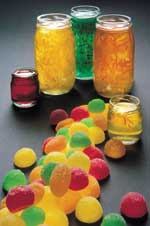
Gelling hydrocolloids have distinctive properties that create characteristic textures. Agar-agar gels tend to be firm and brittle and, generally, develop turbidity due to the microfibrillar structure of the gel network. Carrageenan gels vary from firm to soft with varying degrees of elasticity, depending on type. Alginates form gels in the presence of calcium ions. These gels can be soft or firm, depending on alginate type and calcium content, and tend to be very elastic.Gellan gels tend to be firm and brittle whereas xanthan forms soft elastic gels in the presence of locust bean gum. Gelatin produces completely stable soft gels of chewy texture and with melt-in-mouth properties that give favorable flavor-release qualities. Native, amylose-containing starches form firm, pasty gels with limited stability and shelflife, due to syneresis. Pectins form soft, short-textured gels in high-sugar jams and confectionery jellies. Agar-agar, kappa-carrageenan, calcium alginate and gellan gum gels can undergo shrinkage and exude water on storage (syneresis).
Food manufacturers rely upon gelling agents to obtain desirable textures in a wide variety of food products. Conventional gelling hydrocolloids long have been used in applications where their particular characteristics are fully exploited. However, demands in the marketplace continually pressure food manufacturers to develop new or reformulated products that have novel textures, functionalities or processing capabilities. These demands present new opportunities and challenges for those that manufacture or use functional hydrocolloids.
The Challenges Ahead
Leatherhead Food International, Surrey, U.K., recently conducted a survey1 in which its members identified key trends, technologies and issues impacting ingredient manufacturers and food processing companies over the next five years. New tastes and textures, shelf life extension, faster processing, functional foods and nutritional science are identified as important areas presenting challenges and opportunities for ingredient and food product innovation. Some of these issues are traditional. For example, the food industry always has had concerns about product quality, shelflife, convenience of use, and economics of manufacture.More recent challenges reflect concerns consumers have in relation to religion and culture, health and nutrition, and safety. Religious and cultural concerns lead to an increased demand for non-animal products and, in particular, by-products with no pork in them. This generates a market for gelatin alternatives. Because of the nature of polysaccharide gelling agents, finding suitable replacements for gelatin seldom is easy.
Additionally, health and nutrition concerns generate new markets for low-fat and low-calorie foods, and for products containing nutritional supplements. These products have specific requirements for functional ingredients.
New Texture Development
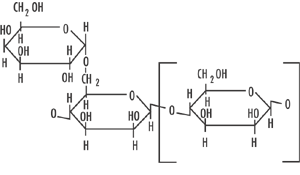
Gelling hydrocolloids have their own characteristic texture profiles. In some cases, these textures can be modified and extended by interaction with other hydrocolloids. The best-known example of a co-gelling polysaccharide is locust bean gum, which interacts by association with helical polysaccharides including agar-agar, carrageenans and xanthan gum. Such complex polysaccharide gelling systems improve structural stability and modify elastic properties that make them particularly useful and economical.Gel structures and associated textures can further be improved and extended by controlling molecular weight distribution. Leatherhead Food International is pursuing this approach by investigating complex gels based on mixtures of locust bean gum with both agar and alginate.
Molecular weight distribution is controlled by partial hydrolysis. Interactions between locust bean gum and hydrolyzed agar fractions generate complex gels networks based on both agar galactan and locust bean galactomannan chains. For short-chain, non-gelling agars, these complex gels are based only on locust bean galactomannan chains. Generally, locust bean gum extends the elasticity and break strength of agar gels, while improving water-holding capacity. (See photo Augmenting Agar.)
Molecular weight control through partial hydrolysis can also assist in the processing of polysaccharide gelling agents. For agars, partial hydrolysis reduces dispersion temperatures resulting in easier, more economical processing. Sugar compatibility is improved and confectionery processing is facilitated. In the case of alginates, partial hydrolysis moderates the reactivity towards calcium ions and extends the setting time. This facilitates processing and helps to produce homogeneous gels without “fish-eyes.”
Film Formation
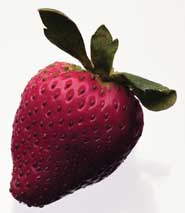
The development of more sophisticated hydrocolloid gelling systems helps drive new applications. Extended texture profiles, improved solubility, reduced viscosity, reduced processing temperatures and improved structural stability can be exploited in the development of improved gelling agents for applications such as confectionery, bakery fillings and desserts, where current gelling agents have not provided the desired product quality.A number of application areas for complex gelling systems are under investigation at Leatherhead Food International (Surrey, England). These include the development of edible, anti-microbial films and coatings, and microencapsulated fish oils. These applications aim to ensure safety, secure shelflife and promote convenience packaging. Hydrocolloid gelling systems for edible films and coatings have been formulated using carrageenan/starch, carrageenan/agar and gelatin/starch mixtures. Natural anti-microbials with GRAS status—such as nisin and lysozyme—have been added. These are used to coat fresh strawberries and cheese (dip-coated) and to package various items such as vegetables and meats (heat-sealed sachets). Studies show their shelflives are considerably extended. Also, the convenience of edible-film packaging could enhance market value.
Protein/polysaccharide complexes have been used to form a film around individual fish-oil droplets, protecting them from oxidative degradation. The process involves emulsification of the oil, complex coacervation of the gelatin/polysaccharide system to form the microcapsules, and recovery of microencapsulated oil as dry powder. The process is relatively complex and expensive but the advantages include high oil content and good stability. Leatherhead Food International research seeks to improve microcapsule strength and to enhance protective properties. Again, this type of encapsulation depends on the choice of interacting hydrocolloids and on their molecular weights, which influence viscosity, phase-separation processes and, ultimately, the capsule-wall thickness.
Reducing Fat Uptake
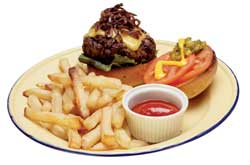
Gelling systems also provide the base structure from which fat-barrier films can be made. Research at Leatherhead Food International shows that gelled ribbon or coating, when dried to a film, has very effective fat-barrier properties. Such coatings applied to the surface of French fries, or other deep-fried products, can significantly reduce fat uptake during deep-frying. This has general application from a technical point. Films of calcium alginate, carrageenan and agar-agar all have fat-barrier properties. Interestingly, the general principle extends to heat-setting polysaccharides, particularly methylcellulose, ethylcellulose and methylhydroxypropyl cellulose. When heated, they set to form pseudo-gel structures that function as fat-barriers on drying. In practice, the cellulose gum solution (cold) would be applied to the surface of the object to be fried, possibly as part of a batter formulation. The cellulose gum coating would set and dry to form a fat-barrier film during the frying process. The efficacy of methylcellulose as a fat-barrier on French fries has been demonstrated.The demand for alternatives to gelatin presents formidable challenges to manufacturers of desserts, confectionery pastilles, and encapsulated products. Properties that need to be matched include solution viscosity, compatibility with high-sugar formulations, gel texture characteristics, gel-melting temperature, flavor-release attributes, mouthfeel and stability on storage. No polysaccharide gelling systems can match all these properties. However, by extending the property profiles of polysaccharide systems, progress towards these objectives can be made.
These are examples of ingredients that gel, forming multi-functional components of food products. Food processors look to the hydrocolloid industry to help solve problems associated with texture, shelf life, and convenience and other considerations. Very often, only gelling ingredients can provide the solutions.
Website Resources
www.leatherheadfood.com — Leatherhead Food Internationalhttp://food.oregonstate.edu/gums/ — Oregon State University site on gums including links
Looking for a reprint of this article?
From high-res PDFs to custom plaques, order your copy today!


