Courting the College Crowd
Even the traditional college preferences are no longer a sure sell. The days of an inexpensive pizza and beer are long past, replaced by healthy, though at times indulgent, food options. The alcoholic drink of choice is more likely to be a “malternative,” and the most popular beverages can energize the body and mind.
These consumers look for more value-added benefits, be it a boost from guarana or ginseng in a drink, or the healthful possibilities they perceive in functional foods. Students equate healthy eating as part of a healthy lifestyle, and campus foodservice directors report more students know the basics of a healthy dining lifestyle and want good-for-you options.

Drink It Up
One company that has successfully reached the college-aged consumer is SoBe (South Beach Beverage Company, now a part of PepsiCo, Purchase, N.Y.), which has developed a strong presence on campuses. This is not by accident, as the company views its core consumer to be on-the-go, 16- to 24-year-old males and, as such, has set about reaching them with event sponsorships and targeted marketing.SoBe sponsored the ESPN Rock 'N' Rip tour in early 2002, which toured select college campuses around the nation and featured skateboard ramps, extreme sports athletes and booths from which to sample SoBe's products. Furthermore, SoBe has focused their grassroots marketing efforts around events such as the Gravity Games and the U.S. Open of Snowboarding—where the 16- to 24-year-old demographic is the predominant audience, says Kristine Hinck, director of public relations with SoBe.
So-called extreme sports have served as an excellent route to garner the attention of college students, but SoBe also has found success in marketing around music tours. In fact, SoBe Adrenaline Rush merged hip-hop music and action sports into one event—the Adrenaline Tour, which toured the country in April and May. Such promotions helped make SoBe Adrenaline Rush the second-best-selling energy drink on the market within six months after its debut in January of 2000, Hinck says, attributing “a significant part of the growth to targeted marketing, including a college marketing initiative and an on-premise focus.”
Indeed, the beverage battles on campuses around the country have just begun, and new introductions mirror the increasingly diverse and adventurous palates of college-aged consumers. Mountain Dew's Code Red proved such a hit a year ago, that more carbonated beverage makers have entered the mix, including Coke's, Atlanta, new vanilla version, Pepsi's Blue beverage, and Cadbury's crimson-colored Dr Pepper, Red Fusion, from the Plano, Texas, beverage maker. The soda fountains will be full on campus in the coming year, but other beverages are fighting for attention.
Energy drinks are gaining in popularity, as time-strapped students look for an extra boost. “College students are into meal-replacement bars and nutrient-enhanced teas and juices, like SoBe, as well as waters,” says Hinck. “Energy drinks, like SoBe Adrenaline Rush and Pepsi's new Amp are popular in the college market. Also, the enhanced water competition is heating up—Gatorade has a water. Reebok has a water. Glaceau is getting in on the mix, and there are a few other players in that category.”

Dropping Breakfast
Today's students, like much of society, feel the pressures of time. With these hectic schedules, eating patterns have changed. Although cereal might be consumed at any time of the day or night, breakfast is no longer an event. In fact, a recent panel of campus foodservice professionals at the National Restaurant Association Show, held in Chicago in May, said that lunch also is losing its appeal as a dining option on campuses. Instead, students are choosing to snack throughout the day and have an actual meal at night. However, that meal might not come at the traditional hour. A number of dining halls are open as late as 2:00 a.m. around the country, and some report that students have requested the dining halls be open 24/7. Nationwide studies have shown the average male college student eats four meals a day, while the average female student eats what can be considered six snacks daily.Time pressures have prompted those students to opt for grab-and-go concepts or fast food, says a recent survey by Aramark Corporation, Philadelphia.
The devastating events of September 11 were no less traumatic for college students. Many (as much as 25%) of them were living away from home for the first time. In the wake of those events, colleges have seen an increase in the number of students eating in their dining halls—and in the amount of time those students spend there. Michael Floyd, department head, foodservices at the University of Georgia, Athens, Ga., attributes that to the fact that the students felt safe in the dining hall and in the company of their peers. He says the university's food consumption has increased 5% since September 11.
What are those students eating? As might be expected in the wake of such tragedy and fear, students looked for comfort foods, seeking a return to more traditional, home-cooked fare. Chicken tenders proved quite popular, say campus foodservice directors, as did pizzas, popcorn and chips.
The latter, however, reflected students' desires for increased flavor and bold tastes. Keep in mind, Generation Y has hit college age—and has brought all of their expectations and demands with them. Hardy says students are sophisticated and diverse, of all ages and ethnic backgrounds. They are quality-oriented, she has found, and price-sensitive, convenience-focused, retail-oriented and equate brands with value.
While they may not be the most brand-loyal of consumers, college students relate to the concept of brands—be they national, regional or local. Be aware, this group is also a tough judge of quality, and quick to reject any mediocre product.
As Dee Hardy notes, “Students today are retail savvy and certainly control their own discretionary food dollars. They equate brands with value, if they were served those brands in their own homes. They find this reassuring—a trend even more pronounced since September 11.”
Hardy says this has weighed heavily on dining hall administrators in courting these consumers. “If having a retail option means only one brand and a very limited menu, that is not desirable (for the students). On the other hand, having a food court with a number of brands, meaning a range of choices, is really hot. A mix of national, manufacturer and self brands may well be the best response.”
Above all, however, this demographic is motivated by taste. This is a consumer group that has been exposed to stimuli and flavors as varied as any generation in American history. They have had exotic foods since childhood, and most have friends of a different race or ethnic origin. College students eat healthy, but also like to indulge, and many are looking for foods with value-added benefits, i.e., more functional features.
Sidebar: Sating the Social Scene
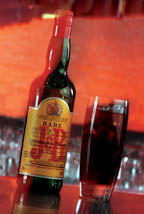
Certain beverages have proven their staying power on campuses, though some officials would have it otherwise. Alcohol continues to hold its allure—both to students of legal age and those still waiting to hit 21. A study by the U.S. Department of Health and Human Services found that drinking by underage college students contributed to an estimated 1,400 student deaths and 500,000 injuries annually. Furthermore, the study reported that more than one fourth of college students between the ages of 18 and 24 had driven in the past year while under the influence of alcohol.The report found, “(Drinking) is a persistent and costly problem that affects virtually all residential colleges, college communities and college students, whether they drink or not” and recommended strategies to reduce alcohol-related incidents and general alcohol use. Individuals, it said, should be encouraged to document daily alcohol consumption, while efforts should also be made to change beliefs about alcohol's ability to increase sociability and attractiveness. The student population should be more informed of the drunk driving laws, says the report, which also states that those laws should be more strictly enforced. Alcohol should be eliminated at college sporting events, the study suggests, and the colleges and surrounding communities should regulate happy hours on campus, increase the cost of alcoholic beverages and decrease the number of alcohol retail stores near campuses.
Some universities are taking a different approach to dealing with alcohol on campus. Dee Hardy, director of dining services at the University of Richmond, Richmond, Va., says the school felt a responsibility to legal-aged students who choose to drink. As such, the school has a campus pub, The Cellar, where students over the age of 21 can purchase alcoholic beverages. Hardy says the pub has drawn some attention from her peers, but also has managed to keep legal student drinkers off the road and, as such, has been a success.
“The overall response to our pub has been good,” says Hardy, “and its popularity has been growing each year. The University of Richmond has moved in this direction, as we believe it is the right and appropriate thing to offer enhanced student-socializing space. The main focus is entertainment and food rather than alcohol. In keeping with that approach, we do not run any alcohol promotions. . . We have done food promotions but no beer or wine.”
Links
Looking for a reprint of this article?
From high-res PDFs to custom plaques, order your copy today!
 |
William Roberts is responsible for the consumer trends section in Prepared Foods, as well as the website news updates and e-newsletter. He served as the Senior Copy Editor at Elevator World. He holds a B.A. in English and a B.S. in Political Science from the University of Mobile.


