Courting Ethnic Consumers
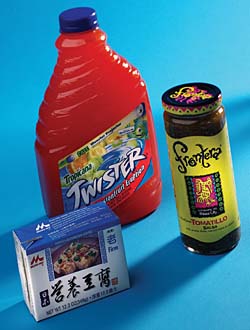
Those numbers are just for the Hispanic population. The University of Georgia's Selig Center for Economic Growth says the combined buying power of ethnic consumers in the U.S. tops $1 trillion. By 2030, one third of the U.S. population will be Hispanic (19%), African-American (13%) or Asian American/Indian (7%), according to data gathered by the U.S. Census Bureau. Such statistics are impossible to ignore, says Jill A. Rahman, director of ethnic marketing with Kraft Foods, Northfield, Ill. “Understanding and marketing to ethnic consumers is a strategic imperative if food manufacturers and retailers want to thrive.”
According to data Kraft presented at the FMI show, Hispanics spend 12.3% of their income on food prepared in the home, while African-Americans allocate 10.1%. Each of these is significantly greater than the 8.3% the general market devotes to in-home food purchases. Those statistics equate to an average yearly household expenditure of $5,300 for Hispanics, compared with $4,305 for the general market.
Loyalty Defined
“These ethnic groups are especially important for the supermarket industry, beyond just their financial muscle,” Rahman observed. “They tend to be younger and have larger families, and the meals are larger and require more ingredients. Kraft's research shows they spend more time on meal preparation and rely on their 'mental cookbook' of tried-and-true recipes well over half the time at dinner.”The notion of “tried and true” is a brand of loyalty often attributed to ethnic consumers for a variety of reasons. The Hispanic population is often regarded as particularly brand loyal, says Felipe Korzenny, Ph.D., president and co-founder of Cheskin, a market research and consulting company based in Redwood Shores, Calif.
“Loyalty is a funny concept,” Korzenny explains, “because it has many dimensions. Traditionally, the Hispanic consumer has loyalty as a cultural attribute. That means they are loyal to family, to country, their culture, their religion, their elders.
“However, there are other elements, such as a lack of awareness of opportunities (due to lack of language skills or understanding of what the product is all about) that narrow the product choices. Many Hispanic consumers say that once they enjoy a brand they prefer to stay with that brand, because it is safe for them and because they say the brand has been good to them.
“Being good means many things. It means the brand has delivered a good product. It means the brand has done things for the community.” Building brand loyalty among ethnic consumers will hinge on establishing a rapport, a relationship, with these groups.
More Than A Brand
As Bill Imada, president and CEO of Los Angeles-based Imada Wong Communications Group, explains, companies must “make some type of outreach. Build some kind of a relationship with the consumer, building customer loyalty. Or get other people to serve as marketing channels, people trusted in the community. Those relationships might be churches or temples, though a lot of American companies might be afraid to market in such locations.“Nevertheless, in ethnic communities, temples and churches are more than just religious centers. They are social centers where people congregate, get together for lunch, talk about life issues, recommend products, services, supermarkets, grocery stores, restaurants, what they have tried, what they like, what they hate. It's a different paradigm than a lot of American companies are used to trying.”
Exploring a variety of channels proved particularly successful for Burger King. A 1999 survey by Los Angeles' KSCI-TV found only 4% of Chinese consumers said they visit Burger King most often among all fast food restaurants.
To address this, Burger King implemented an Asian marketing campaign that focused on the Chinese community. It sponsored the local Chinese New Year Parade, aired Asian-special promotions such as “Dragonball Z” and “Pokemon” (campaigns based on popular Japanese cartoon characters) and also developed a special promotion called “Red Envelope,” based on the Chinese tradition of giving gifts in red envelopes.
Eight months later, as a part of KSCI-TV's annual survey conducted during May/June 2000, the same questions about patronage to Burger King were asked. The results showed a significant increase in Burger King's market share (14% vs. 4% in 1999) among the target Chinese consumers.
Not A Rejection
Whether due to language barriers or simple unfamiliarity, many ethnic consumers fail to understand what some products are, as well as the differences between similar products on store shelves. Furthermore, having found satisfaction with a particular product, consumers may be unwilling to experiment with other products that are less familiar and, perhaps, confusing to them.“It's not that they are rejecting these products [based on criteria],” Korzenny notes, “they do not understand them.
“That is a very important distinction—the one between rejection and neutrality, basically not knowing. In taste tests with consumers, I have heard, 'I wish I had known about this product before. I never knew that it existed, that it was good.'” Consumers who do not comprehend what a product's purpose is need assistance from manufacturers and advertisers in understanding how it benefits them.
Imada relates the example of a Nestle product that has strived to reach a particular ethnic group. “Their packaging was redone in English and Chinese; that was smart. American products attract consumers' attention, but if the label has both languages, consumers more comfortable using their native langauge are going to gravitate toward it.”
Kraft has gone so far as to invest in EthnicGrocer.com, an Internet-based retailer targeting ethnic communities. In the process, the packaged foods giant will gain insights into an Internet-based arena and will serve to familiarize itself on a widescale level with ethnic consumers. However, some contend the key to reaching those consumers is gaining attention on the local level through community-oriented efforts.
Imada notes another product that has done well in the Asian market is Spam. He comments, “Spam has a very strong grass-roots kind of marketing effort, showing how it fits into a Korean lifestyle and an Asian-American lifestyle. The company floats recipes to Chinese, Korean and pan-Asian publications about how Spam may be added to fried rice, into certain types of chow mein, or as part of a sushi dish. It is incredible how they have integrated their product into the culture.”
Imada relates that simple wording on a package may not be sufficient to communicate a product's message. Asian consumers in particular, he notes, want to see the product, taste it, feel it, smell it. “It has to be that kind of image for (such a consumer) to consume it,” he says. “They have to get the bigger picture.”
A package design on a product or a food item could be unappealing. Immigrants coming to the U.S., especially non-English speaking, tend to be more visually oriented than Americans, says Imada. “Asians for the most part really look at packaging, at the display of the product and at the ingredients very carefully. They tend to make sure it has the freshest ingredients.
“Look at the package, the color scheme,” Imada advises, “even redesign the package. While the package might appeal to American consumers, just a slight change could make a difference in selling and driving the product or seeing the product sit on the shelf forever.”
Beyond Language
Simply including a foreign translation on a package may not be enough. According to Mike Trueblood, president of TruMarketing, a multicultural marketing firm in Santa Fe Springs, Calif., marketers should put “less emphasis on language and more on culture” in targeting ethnic groups, in particular Hispanics. While “you can never go wrong being bilingual,” he says, Spanish-only advertising will alienate both Anglos and the half of the Hispanic population that speaks English.Brand marketers, Trueblood believes, should implement a long-term plan to reach the Hispanic market. “At least 10% to 15% of a company's budget should be allocated to the Hispanic market.
Imada advises companies not to underestimate the Asian American consumer. “The community is very diverse, so what might work with Korean Americans might not work with Vietnamese Americans or Japanese Americans and vice versa. So, it is very important to look at package color schemes and icons and images very carefully. Even number combinations can make a difference.
“For instance, one company had a consumer hotline that used the number four several times. The phone number was easy to remember and used a lot of twos and fours. However, two and four in combination are bad luck in some cultures. Two in Chinese is very close to the word for easy. Four in Chinese, Japanese and Korean is very close the word for death. So put two and four together, and you get 'easy death.' Most people laugh about it, but it could make the difference between selling the product or not.”
www.ethnic-foods.com — Online trading in ethnic food, wholesale and retail
www.fecfood.com — Online grocery for authentic Latino food
www.Mexgrocer.com — Online grocery store for authentic Mexican food
Looking for a reprint of this article?
From high-res PDFs to custom plaques, order your copy today!
 |
William Roberts is responsible for the consumer trends section in Prepared Foods, as well as the website news updates and e-newsletter. He served as the Senior Copy Editor at Elevator World. He holds a B.A. in English and a B.S. in Political Science from the University of Mobile.


