Formulation Tips for Creating Healthy Snacks
Presenters at Prepared Foods' R&D Applications Seminars gave formulation advice for meeting consumer demands for healthy, higher protein snack offerings
Meeting Market Demand for Healthier Snacks: Higher Protein and Minimally Processed
Diana Seevers, senior application scientist, DuPont Nutrition & Health, focused her seminar topic, healthy snacking, on the benefits and challenges of adding minimally processed protein. The seminar started off by reporting on consumer dynamics surrounding protein. Then, Seevers provided data about protein sources, functionality and the profitability of introducing these popular proteins into the snacking niche.
Seevers did not shy away from discussing the complications businesses will encounter when going clean label with protein additions. She instead offers solutions, formulating processes and ingredients that will help maintain safety regulations and increase product shelflife.
She noted that consumers have learned more about protein’s role in the diet. Moreover, today’s shoppers are looking for dietary protein from other sources beyond meat.
Consumers most commonly associate protein with delivering energy, aiding in weight loss, and supporting muscle-building or maintenance. It has been reported that 21% of consumers believe proteins from plant sources are “more healthful” than they did a year ago, whereas only 12% believe the same about animal proteins. Among those consumers who view plant proteins as “more healthful,” 69% more say that they are consuming more plant proteins today than they were a year ago, according to IFIC’s 2016 Food and Health Survey.
Another study asked buyers if they have shied away from animal proteins and if they have substituted in more vegetarian proteins, including soy and beans. The positive answer to this question has risen 9% from 2012 to 2015—from 32% in 2012 to 41% in 2015, according to “The Target Market Report on Consumer Preferences for Plant Protein,” Multi-sponsor Surveys, Inc., 2015.
This shifting opinion is based on concrete evidence. For example, soy protein counts as a complete protein source with all the essential amino acids, making it unique among plant-based proteins. Soy protein can also be used as an economic, nutritious and functional alternative to dairy proteins, including whey protein, caseinate and milk protein concentrates.
Soy proteins alone, and in combination with dairy proteins, have been shown to support muscle building and recovery. Nuts and seeds also contribute protein, and they also are nutrient-dense. Their high fiber and “good fat” count towards building energy. They are great for sport diets; work well in both sweet and savory snacks; and can even be used in dairy-free milk and drinks.
Despite all the positive things about plant proteins, there are a lot of challenges to overcome in order to successfully incorporate many plant proteins into food systems. The addition of protein can impact a snack’s processing and the finished product quality, in terms of flavor, color and texture. It can also change the size, shape, color and density of a snack.
Companies have found solutions in incorporating protein blends and nuggets into their cookies and snack bars. However, in optimizing their use, process conditions and order of ingredient addition are important factors to consider, Seevers explained. Adding protein to any product may alter texture, flavor and other sensory properties.
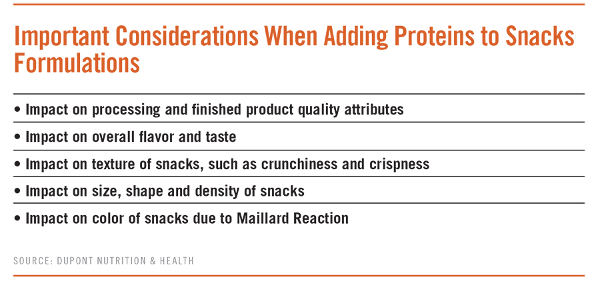
When adding proteins to a snack formulation, it is important to consider many sensory factors that might impact its overall success.
Often a formulator needs to compensate for those impacts through formula adjustments. With some of the more novel proteins coming into the market, supply-chain reliability, availability, consistency and their regulatory status may also be issues to explore. If the protein delivers the desired functionality, but does not have a well-developed or reliable supply chain, it can jeopardize the success of the end product.
Finally, a formulator needs to ensure the safety of their final product, and that’s where considerations around moisture content and shelflife come into play.
After managing to overcome all of these obstacles, there are effective ways to maintain the quality over the shelflife of the product with clean label antimicrobials, antioxidants and flavor extracts. Antimicrobials produced from fermentation will inhibit the growth of yeast and mold that often cause spoilage and reduce shelflife. Naturally sourced antioxidants and even natural flavor extracts can be used to delay the onset and slow the rate of oxidation, keeping the products tasting and smelling fresh over the entire shelflife.
Antimicrobials are an important part of what is called “hurdle technology.” This is a comprehensive microbial management program that included appropriate sanitation practices in the manufacturing facility; knowledge and management of the food product’s water activity; and its pH, salt content, processing conditions and other parameters that will affect microbial growth. It also includes the management of raw materials, packaging, shipping and storage conditions. The proper antimicrobial will be used in conjunction with these other hurdles to manage and control microbial growth.
“Meeting Market Demand for Healthier Snacks: Higher Protein and Minimally Processed,” Diana Seevers, senior application scientist, DuPont Nutrition & Health, Diana.Seevers@dupont.com
—Summary by Jessica Glass, Contributing Editor
Fry Smarter, Reduce Oil Pick-up in Fried Foods
Formulating with cellulose-based gums can reduce oil absorption in fried foods, helping to achieve up to 35% less fat and the associated lower calories. Cellulose is a sustainable resource from plants and vegetable sources.
Various types of cellulose derivatives exist for functional food purposes, including methylcellulose or modified cellulose (MC), and hydroxypropyl methylcellulose (HPMC).
MC and HPMC have reversible thermal-gelation properties, forming a thermal gel as a barrier to minimize oil pick-up and moisture loss. Additional functional properties include: controlling hot binding, restrict/control melting, minimizing boil out of fillings and emulsion stabilization.
Modified cellulose provides benefits in coating systems (of fried foods), improving crispiness and extending hold time, while retaining more moisture (higher yield). It also can improve adhesion of the coating; replace egg white for adhesion; reduce coating damage during frozen transport; and thicken/bind substrates.
Liz Diaz, technical applications manager for Dow Food Solutions, explained that “viscosity impacts batter pick-up; MC can help stabilize batter viscosity and adhesion to reduce variation and ensure consistency. The adhesion properties of glazes, seasonings and marinades also benefit with using modified cellulose, to maintain a consistent layer of flavor.”
When developing a fried food with less fat, key factors for the formulator are sensory. Diaz gave an example of targeting a texture comparable to the full-fat control; she warned that it must be scalable from bench top to production; repeatable with consistency from batch to batch; and stable from par-fry to finish fry.
Customized particle morphology modified cellulose (CPM MC) is designed to hydrate faster in a coating system (for full functionality), with a controlled level of spherical particles and distribution of particles, leading to increased surface area for better/faster hydration and a smoother film.
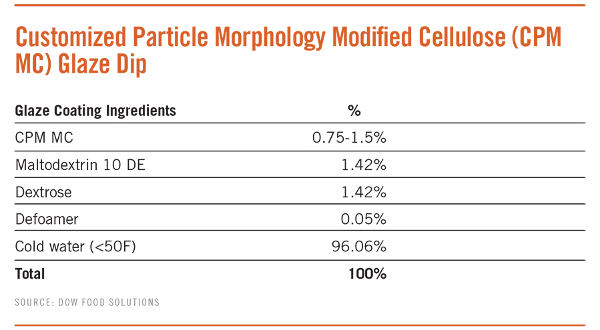
With CPM MC in the glaze, in addition to reducing oil absorption, seasonings on chicken or other meat/vegetable matrixes show improved adhesion and moisture retention. Color and additives/dispersing aids can be adjusted to achieve desired appearance. The defoamer is required with the cold dispersion method to eliminate foam formed during mixing for a uniform coating.
The usage level varies, based on the application and coating system. MC requires cold temperatures for optimal hydration. In batters, xanthan gum and other gums should be removed when adding CPM MC.
Chicken tenders with a 31% fat reduction using CPM MC showed improved crispiness and crunchiness, plus higher moisture retention, leading to increased yield. This performance was validated in a scale-up process and an independent third-party consumer sensory panel.
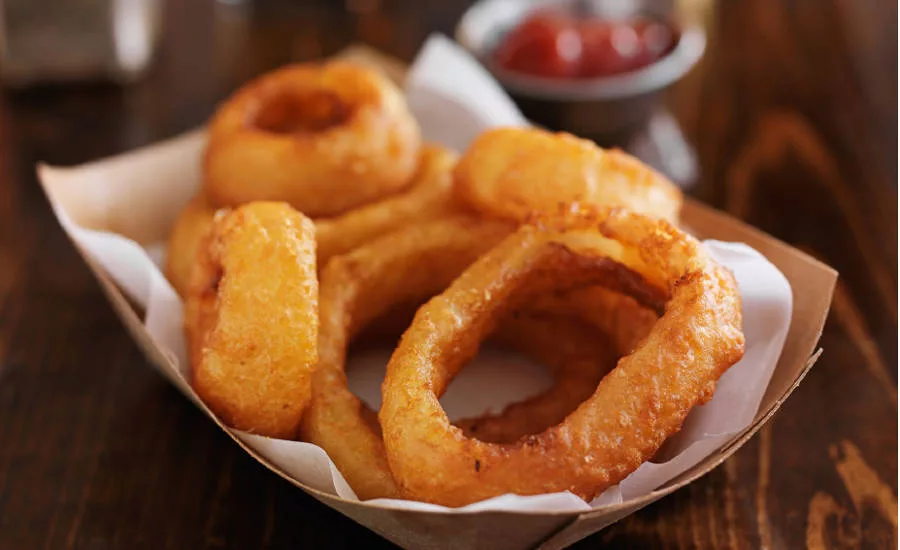
Similar results were seen in pollock fish fillets, tempura shrimp, onion rings, and in formed and extruded fried foods, such as potato tots and hash brown patties.
“CPM MC forms a protective barrier to reduce oil pick-up, while improving the integrity of the breaded chicken tenders or formed product during frying—enhancing crispiness, improving yield and moisture retention, reducing large ice crystal formation during freezing, and improving adhesion of seasonings and flavors to the surface,” Diaz stated.
Labeling options include either modified cellulose or methylcellulose (E461). CPM MC is GRAS in the US, allergen-free, non-GMO, gluten-free, and is kosher- and halal-certified.
The uniqueness of functional cellulose gums provides for multifaceted applications for new innovations, healthier products, cost reduction and product quality improvement.
“Fry Smarter, Reduce Oil Pick-up in Fried Foods,” Liz Diaz, Technical Applications Manager, Dow Food Solutions, 508-888–1783 or 317-459 – 8620, Diaz4@dow.com
—Summary by Elizabeth Pelofske, Contributing Editor
Originally appeared in the October, 2017 issue of Prepared Foods as Formulation Tips for Creating Healthy Snacks.
Looking for a reprint of this article?
From high-res PDFs to custom plaques, order your copy today!


