Flavor Boosters & Maskers in Food Formulations
Developers are reimagining the complexities of flavor for a clean-label future
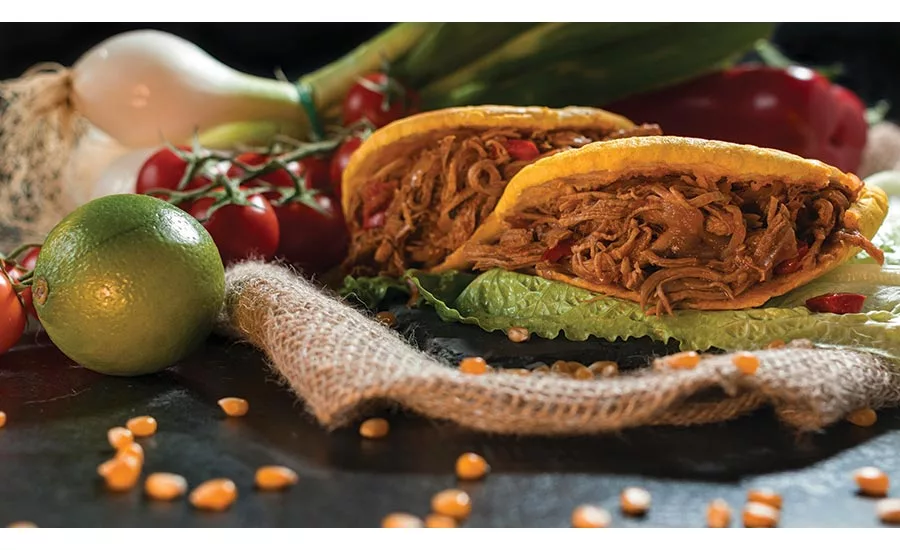
Creating ideal flavor involves not only what is tasted but what is not.
PHOTO COURTESY OF: C J Bio/CJ CheilJedang Corp. (www.tastenrich.com)
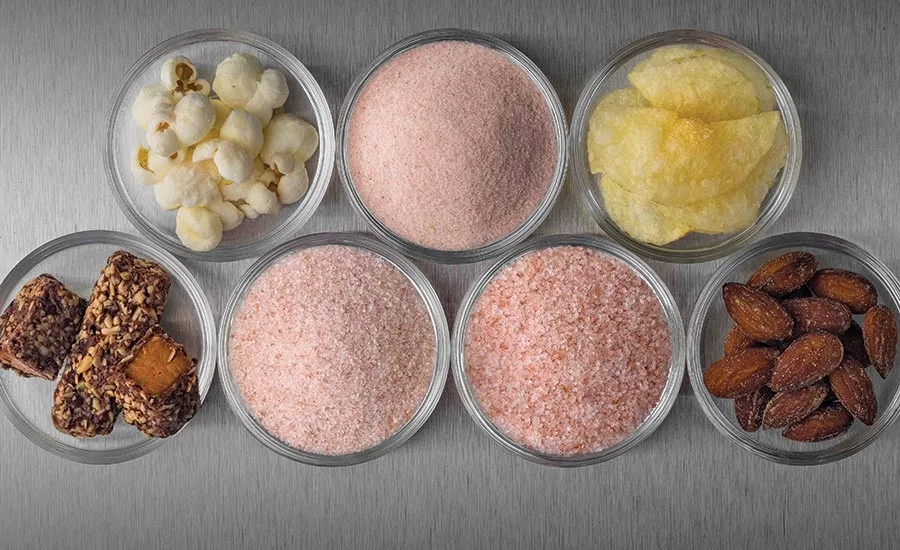
Sea salt, the oldest and most popular flavor masker and enhancer, has received an “upgrade” through such techniques as herbal infusion and cold wood smoking.
PHOTO COURTESY OF: Saltworks, Inc. (www.seasalt.com)

Flavors and aromas are a cohesive unit, comprising a whole greater than the sum of its parts.
PHOTO COURTESY OF: Mizkan Americas, Inc. (www.mizkan.com)
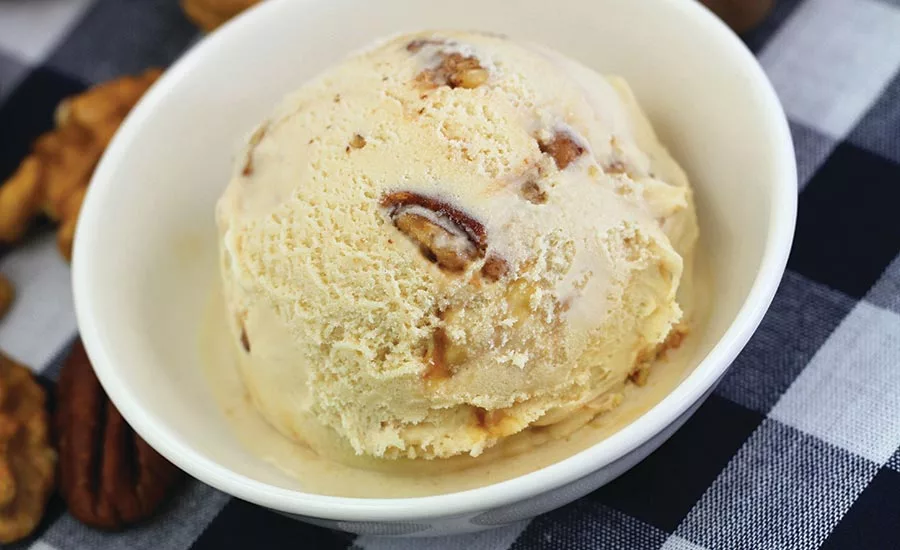
As consumers seek greater benefits from favorite foods, the challenge is to keep those foods tasting as they always have — with ingredients such as ultra-low calorie allulose sugar.
PHOTO COURTESY OF: Tate & Lyle, PC (www.tateandlyle.com)

Soy sauce and soy sauce ingredients are expressing their versatility as flavor boosters outside of their traditional application in Asian cuisine formulations.
PHOTO COURTESY OF: LEE KUM KEE USA INC. (WWW.USA.LKK.COM)
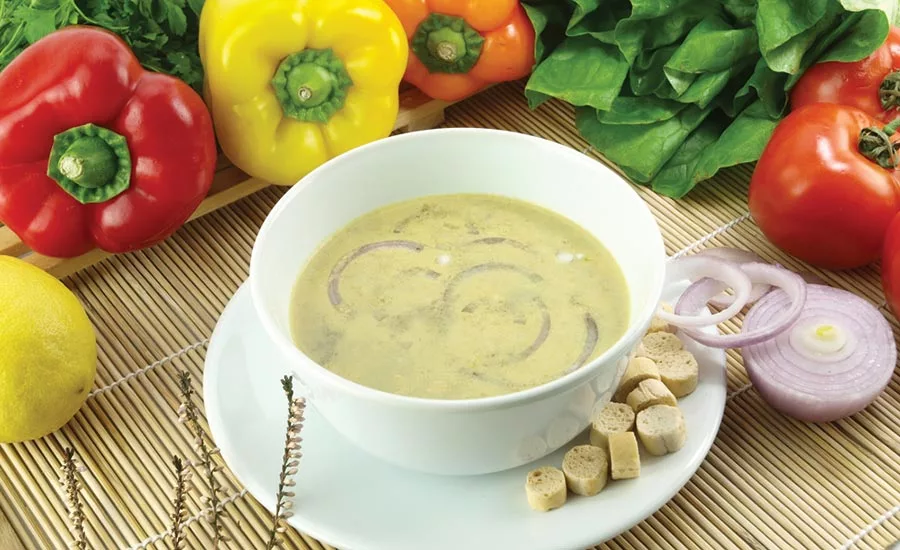
Ingredient technologists are turning to plant sources such as tomatoes and other vegetables to enhance or mask complex flavors while keeping labels clean.
PHOTO COURTESY OF: LycoRed, Ltd. (www.lycored.com)
With flavor being the product of a complicated, multilayered collection of ingredients and chemical compounds that interact as aromas and individual flavor notes in synchronicity, the task of masking one specific flavor note can be difficult. A greater challenge for today’s processors is that the technique applied must be low-cost, allergen-free, and naturally derived (clean-label), and the result must survive processing.
Part of making that collective work often involves enhancing some flavors and blocking others, depending on the formulation. Typically, an enhancer is designed to function in conjunction with a specific flavor or flavor profile. A masker is used against an overall flavor of the near-final product. However, some ingredients naturally can either mask, enhance, or do both at the same time, even in the same formulation and depending on the need. Salt and sugar are two of the most commonly used and fundamental flavor adjusters — and famously able to accomplish that trick.
Maskers are used predominantly to offset bitter notes, countering the impact of, for example, a vitamin and mineral premix. Secondarily, a masker might be used to temper a flavor that might overwhelm the dominant flavor synergy, such as a flavor derived from a reduced alcohol beverage.
Overall, its target is a specific undesired off-note from an ingredient that is necessary but not tasty. Developers of CBD products represent an excellent example of current popular usage of maskers, given that most cannabinoids have a strong and undesirable flavor.
Heat Treatment
Hot peppers are a classic flavor enhancer, especially in formulations that need a boost to compensate for lack of fat and protein flavor carriers. Botanically, a chili pepper is a berry, and a fresh chili pepper such as a Manzano or Fresno will impart a slight fruitiness with its heat. Chili peppers require a great deal of care when they’re incorporated into a product, especially as there is considerable variance in levels of heat and flavor, even within the same batch of peppers.
Mild peppers, however, can add a flavor kick to certain formulations. Dried Poblano peppers (Ancho) have sweet and smoky, almost chocolatey hints while imparting a somewhat meaty undertone to a product. Ancho can be used to add an umami touch to vegetarian soups and stews, or an unexpected depth of character to chocolate, white cheese, or sweet pastry products.
With the recent trend of pushing the needle up on the heat in many formulations, super-hot chili peppers, such as Bhut jalokia (Ghost pepper), at about 500,000 Scoville Units; Trinidad Scorpion, at around 1 million Scovilles, and Carolina Reaper, at around 1.5 million Scovilles, have been the hottest peppers used in commercial products. Of these, while not as hot as the Reaper, the Scorpion tends to boast the most flavor. Plus, its heat, while nuclear, dissipates rapidly, leaving behind a hint of berry fruitiness. With hundreds of peppers to choose from, developers can easily line up a whole new set of flavor building and boosting tools.
The ingredient chosen as a masker or enhancer in a food or beverage might serve only to act as a neutral ingredient that binds to or counteracts specific flavor components. Or, the ingredient used might carry its own weight in the formulation and boost the overall flavor. Think “vanilla.” The headily aromatic flavor on its own is highly popular, yet it is also used in nearly every chocolate formulation for its ability to make cacao flavor components come forward.
Ingredients that can be included in a food or beverage formulation to enhance or mask certain flavors vary greatly. Flavor maskers and enhancers can be carried on just about every food ingredient medium — lipids, proteins and their fractions, carbohydrates (including starches, fibers, or smaller saccharides), minerals (including, of course, salts — usually sodium chloride, but also potassium chloride), or unique chemical compounds. There’s a flavor enhancer or masker to suit just about any formulation and ingredient technologists can work with a manufacturer to tailor a precise system for any need.
Building Blocks
Savory flavor enhancers have always been a part of the product developer’s bag of tricks. The key to many savory flavor boosters are those protein building blocks, amino acids. Of these, glutamic acid (glutamate) is considered the workhorse of the savory flavors industry. While commonly associated with its sodium salt form, monosodium glutamate (MSG), it also occurs naturally in cheese, tomatoes, seaweed, wheat gluten, and other sources.
While certain naturally derived glutamate compounds can be labeled as a natural flavor, MSG cannot. Other glutamates or glutamate salts appear as “hydrolyzed yeast,” “yeast extract,” “autolyzed yeast,” “hydrolyzed vegetable protein,” “protein isolate,” or “soy extracts,” and are so labeled on ingredient panels.
Another amino acid known to help impart savory flavors is L-cysteine. It is prized for its ability, when processed with sugars undergoing the Maillard reaction, to trigger strong meaty flavors. A handicap to its use in vegetarian/vegan meat analogs was that it traditionally had been derived from chicken feathers or hog hair. The latter source also precluded kosher or halal certification.
Synthetically derived forms of L-cysteine were created to overcome these hurdles, but recent technological advances allowed ingredient technologists to develop biofermentation methods that produce an ingredient that conforms to clean-label and vegetarian designations. Combined with naturally derived nucleotides, it not only promotes and lengthens umami, but also enhances juicy and savory notes. In baking, it contributes sourdough-like richness and yeasty, toasted bread profiles.
By improving mouthfeel, richness, nuttiness, and other complex natural flavors, it delivers an intense, balanced savory flavor experience and enhances saltiness on the palate.
Savory Stars
With the huge burst of activity in plant-based animal protein analogs, savory flavor enhancers have been in high demand. These analogs target consumers who embrace a vegetarian or flexitarian lifestyle, reducing their intake of animal protein not only for philosophical motives but for perceived ecological goals. This gives an advantage to clean-label providers of ingredients that enrich umami and kokumi.
Umami is that flavor described most often as meaty and mushroomy. Kokumi engages more of the satisfactory effect of fattiness. The latter can be accomplished by tailoring vegetable fats to have melting points and textures similar to tallow, and combining them with the former, umami, generated through such natural sources as concentrated mushroom extracts and powders or vegetable extracts and powders, and yeast derivatives.
Mushroom concentrates and extracts also make excellent clean-label enhancers of meaty savoriness, but mushrooms also have a distinct flavor of their own. Ingredient makers, however, have isolated the savory characteristics and offer mushroom extract powders that function as pure savory enhancers without imparting mushroom flavor. Certain mushroom extracts also make excellent chemical blockers of bitter flavors. Tests of some of them have shown an ability to cover up the licorice-like notes of less pure forms of stevia, for example.
Tomato concentrate is a strong source of concentrated savoriness, and ingredient technologists have isolated the components that provide this concentrated savoriness to create clear tomato concentrates that deliver savory enhancement to sauces, stews, soups, and other products without altering color.
Yeast extracts as savory flavor boosters also are riding the wave of clean-label popularity. Recent surveys by Maximize Market Research Pvt., Ltd., and others indicate that yeast extracts will enjoy a CAGR of around 9% or greater through 2026. This is expected to almost double the current nearly $5B sales figures to around $8.5B or greater.
The attractions of yeast extracts are their clean-label attributes, sustainability, low cost, and non-GMO vegan suitability. They also are versatile flavor improvers, augmenting meat flavors, cheese flavors, toasted bread flavors, and broths, and they can even deepen the flavors of some wine-reduction sauces.
Yeast extracts are especially useful for boosting fat flavors, allowing for a reduction in total fat and thus calories. Yeast extracts also have health benefits beyond those associated with caloric reduction, providing trace amounts of certain minerals. (In larger amounts than are typically used to tweak flavor, they can be a good source of B vitamins.)
New Flavors Brewing
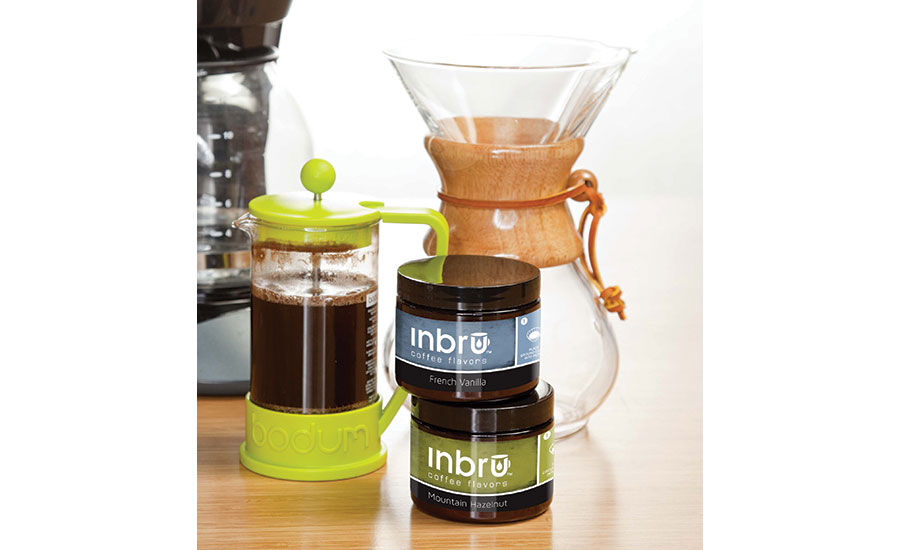
PHOTO COURTESY OF: Inbru Coffee Flavors, LLC. (www.inbru.com)
Ingredient technology also is changing the way consumers enhance flavor at home. Flavored coffees is on example. Inbru Coffee Flavors, LLC, created a patented, sustainable, coffee-flavoring product that uses organic rice hulls (an insoluble fiber) and natural flavors for the purpose of carrying flavor. “We developed Inbru to create a superior flavor while providing the consumer the ability to control both the level of flavor and the quality of coffee used,” explains Rebekah Sherman, Inbru’s owner and CEO.
“Inbru maintains its independence from coffee right up until the point of brew.” The Inbru flavoring system is scooped into the brew basket along with the coffee grounds. It adds no calories, carbs, fat, allergens, or gluten, and is certified kosher and vegan. “Inbru also doesn’t sweeten or whiten the coffee, making it ideal for those consumers wanting pure flavor without adding calories or questionable ingredients,” adds Sherman. “For bold flavor, add more. Prefer just a hint of flavor? Use less.” Inbru also allows consumers to craft their own proprietary blend from the 23 flavors it offers. The product has a “one-year, plus” shelf life and does not stain or contaminate coffee grinders or coffee pots with residual flavorant.
Soy Story
For many formulations, soy sauce and its derivatives are superlative providers of umami. Soy sauce is a favored savory booster due to more than its natural concentration of glutamic acid. Other amino acids and flavor-potentiating compounds, come into play in this chemically complex concoction of fermented soy.
“The various umami taste-active compounds — amino acids and peptides — that fermented soy sauce products contain are proven to increase the consumer’s perception of both salt and sugar,” says Robert Danhi, research chef and CEO of Flavor360 Solutions, LLC. “They reduce the bitterness and sourness of nearly any food system. Based on evolutionary biology, humans have developed the craving for protein-based foods, and the various fermented soy-based products deliver that punch of protein flavor.”
Danhi points out that, for manufacturers wanting to reduce sodium, through careful examination of the formula it’s possible to replace some, if not all, added salt with a soy-based sauce, soy sauce powder, or fermented soy-based concentrate that brings all the sodium enhancement and lots of flavor itself.
“I find I can get to a 15-20% reduction in overall salt content without any noticeable difference in flavor profile,” Danhi affirms. And these soy sauce-based flavor systems typically are available in a range of colors, from neutral to dark, to accommodate a variety of formulations.
Tried and True
Salt is certainly the oldest flavor enhancer and remains the most popular and widely used one today. And sodium reduction demand is easing as consumers are increasingly aware that not everyone needs to reduce sodium in their diet. In fact, research supports that healthy persons without prëexisting health conditions not only have no need to cut dietary salt but that drastic lowering of sodium intake in certain groups can actually increase the risk of dysfunction and disease.
Salt boosts all flavors and can mask off or sour flavors. Even a pinch will elevate sweet flavors, magnify toasted sugar and caramel flavors, deepen cacao’s distinct earthiness while cancelling its bitterness, and bring out fruit flavors.
By itself, table salt is a workhorse for the above applications. But product developers are taking advantage of new salt formats to expand its already unmatched flavor manipulation capacities. Microflaked and micronized salts bring not only power to saltiness but a wider expansion of the flavors they enhance. This is because these smaller molecules have a greater engagement of the surface area of taste receptors on the tongue.
Savory Science Marches On
Chanterelle mushrooms (Cantharellus cibarius) provide strong kokumi notes and rich body in savory dishes. However, the specific key substances that make this happen were unknown. But in Germany, a research team from the Technical University of Munich and the Leibniz-Institute for Food Systems Biology recently developed the first method to clearly quantify those substances. Natural chanterelle extracts could be coming soon.
The addition of such flavored salts as herb-infused and naturally smoked sea salts, can boost flavors in other ways. For example, some wood-smoked sea salts, such as hickory-smoked salt, can add bacony flavors to vegetarian dishes or snacks. Chili pepper-infused salts will bring an extra punch of flavor that can build on a complex formulation’s layers of flavor without having the heat overwhelm the final product flavor profile.
This is certainly not to deny the incredible enhancement properties of chili peppers. (See “Heat Treatment,” page 60.) Heat has long been a source of flavor enhancement, especially in the absence of other carriers of flavor, such as fats and animal proteins. Chili peppers can enhance sweet or savory by exciting the taste buds and opening up the sinus passages to a greater influx of aromatic compounds. However, it also is easy to tip the balance toward simply “hot” and lose most of the total flavor in the long run. Developers should use hot chili peppers and their extracts cautiously.
Sweet Surrenders
Sugar in its sucrose form is the other most popular and widely used flavor enhancer. Although its flavor-improving capacity often is assumed to be fairly linear, sugar (and other sweeteners), especially in certain forms and as compounds other than sucrose, can be used subtly to bring out certain characteristics of a variety of formulations, not just sweet products.
Typically, when used to mask bitter notes — those of chocolate being the best example — the addition of sugar and other nutritive sweeteners (and allulose, see below) bring about a holistic flavor profile that is more than the sum of its parts. Sucrose is especially good at improving earthy tones, again with chocolate as a sterling example. The roasted, chocolatey fruitiness of coffee flavors, too, benefit from the flavor notes imparted by using sucrose as the balancing sweetener.
Malt sweeteners, while bringing their own toastiness to a product, also make effective balancers of bitter notes, especially in beverages (particularly fermented beverages) and dairy products. And of course, they can elevate baked goods with alluring aromatics that marry the smell of a fresh-baked good with its anticipated flavor.
A recent arrival in the sweetening toolbox, allulose, is being celebrated for its ability to function as an ultra-low calorie replacement for sucrose. This is due to its status as a natural sugar that browns and bulks, yet delivers only one-tenth the calories of sucrose. Yet allulose has an often-overlooked trait: It can be a useful flavor enhancer in certain formulations.
Sucrose is a disaccharide, a single molecule made up of a bonded fructose and glucose pair. Allulose, while similar in structure to glucose, is a monosaccharide like fructose. It also has a similar flavor profile to fructose. When used as a 1:1 replacement in fruit-based products, it can highlight the fruit flavors more prominently.
Although allulose is not currently marketed as a flavor enhancer, product developers may want to consider it for low-cal fruit fillings, beverages, compotes, sauces, and condiments. As a one-to-one replacer for sucrose and other nutritive sweeteners, it obviates the need for the bulkers used with high-intensity sweeteners. And, with its clean flavor and even sweetness, allulose does not need any of the maskers typically called for when using high-intensity sweeteners requiring them to offset the off or bitter notes many of them carry.
Speaking of fruit, fruit concentrates, especially those from dried fruits such as raisins, dates, figs, prunes, and cherries, also can be used to boost fruit flavors, enhance sweetness, and balance savoriness or bitter notes in sauces and fillings. Fruit purées also can sit in for fats and, in fact, dried fruit pastes and purées can impart some of the fullness of mouthfeel that fats normally carry.
With consumers overwhelmingly seeking clean-label and plant-based foods and beverages, product developers are increasingly focusing on flavor adjustment ingredients that can do the required job, yet easily be understood — and accepted — when read on an ingredient label. It is especially helpful when the ingredient is not only readily acceptable but actually favored. Vanilla certainly is a sterling example, but so too are “tomato extract,” “soy sauce,” “mushroom powder,” and “natural smoked salt.”
Looking for a reprint of this article?
From high-res PDFs to custom plaques, order your copy today!


