Every so often, we “come full circle” on industry issues. Consider dietary perspectives on fat. In the early days of the dairy industry, we embraced fat. Whole milk was the gold standard. Fast-forward to the 1980s, and the industry was spellbound by the notion of nonfat everything.
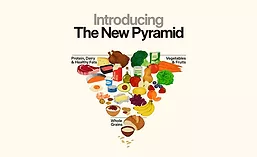
A new IFIC survey finds nearly half of Americans quickly recognized the updated Dietary Guidelines and Food Pyramid, but many remain unclear on how to apply the advice. The findings highlight ongoing challenges — and opportunities — in communicating nutrition guidance, particularly around cost perceptions, protein priorities and emerging food trends.
As part of the Make America Healthy Again agenda, federal leaders call on medical education organizations to embed comprehensive nutrition education across all stages of physician training to combat diet-related chronic disease
The effort is part of the Trump Administration and Secretary Robert F. Kennedy, Jr.’s Make America Healthy Again agenda, which prioritizes prevention and reducing chronic disease through improved diet and public health measures.
The Phase II targets will continue to focus on commercially processed, packaged, and prepared foods in the marketplace
August 28, 2024
The Phase II voluntary sodium reduction targets follow an initial set of targets issued in October 2021. The initial set of targets encouraged the food industry to reduce sodium levels in a wide variety of processed, packaged, and prepared foods. Preliminary data from 2022 show about 40% of the initial Phase I targets are very close to or have already been reached indicating early success of this effort.
Sodium reduction is a critically important public health issue because Americans consume on average 50% more than the recommended limit for those age 14 years and older
October 15, 2021
The sodium guidance finalizes in part a draft guidance from 2016 that provided short-term (2-year) and long-term (10-year) targets for sodium content in commercially processed, packaged and prepared foods. The FDA received about 200 comments on the draft guidance.
To bridge that gulf between what consumers say they want and what they veer toward, on-trend product developers have adopted a "stealth-health" approach to increasing produce content in products.
Last year, the focus was on teens. This year, our inestimable experts, Dr. Keith-Thomas Ayoob (clinical professor emeritus of the Department of Pediatrics at the Albert Einstein College of Medicine, NYC) and Jill Litwin (founder and CEO of Peas of Mind LLC, award-winning makers of foods for little ones) swing their attention to the other side of the playground and take a look at babies and infants, the 0-2 age group, in "Building Better Babies."
The guidelines recommend that quantitative amounts of probiotics in a product should be expressed in colony forming units
January 19, 2017
As probiotics are quickly gaining popularity, the guidelines are designed to ensure probiotic manufacturers can consistently create high-quality products that consumers can be confident in.
Beverage companies using natural sweeteners prior to regulations
November 18, 2016
With the release of the 2015-2020 Dietary Guidelines for Americans earlier this year followed by the US Food and Drug Administration’s new Nutrition Facts label, many changes are in store for consumer packaged goods (CPG) manufacturers. Among those changes, mainstream media has given its share of attention to one ingredient category: sugar.
Smooth-Frozen Ridgefield’s SideKicks and Cup Slushies offer schools more meal options
June 10, 2016
Country Pure Foods, a portion juice processor, recently announced the purchase of the assets of The Ridgefield’s Brand Corporation, which includes Smooth-Frozen Ridgefield’s SideKicks and Cup Slushies products. Ridgefield’s 100% fruit juice products, will allow Country Pure Foods to provide their school nutrition customers with more meal choices for students.