Cracking the “Craveability” Code

Traditional methods of investigation also must be updated. The days of doing research from office desks and conducting a single study to back a claim are over. Savvy marketing and product development professionals understand they must integrate the knowledge collected over the last decade—about what has worked in the past and what is viable in the future—with real consumer feedback collected in-context (in the home, school, store, or automobile). This requires developing relationships with customers, fully experiencing their world and finding a way to fit new products and services into it. It means building products and services on more than functionality, taking into account emotional and behavioral consequences inherent in the experience.

The Foundational Study
A new method of understanding the current mindset of the consumer and tracking shifts in the marketplace has been developed, the “foundational study.” This technique allows marketers to understand consumer wants not only in a given product category, but also across a diverse range of product categories. This method allows one to explore the parameters of abstract concepts such as, “What makes a food 'craveable?'” and to incorporate key attributes of that concept into product development and marketing programs. Consumers' direct responses can be measured and their underlying cognitive structures can be studied (“What makes a food craveable? When? Why?”).These foundational studies are a new form of syndicated research that helps marketers and product developers, working together, to deliver new, consumer-relevant product and service experiences. The first study of this kind was conducted last year by The Understanding & Insight Group, Denville, N.J., and I-Novation, a division of Moskowitz Jacobs Inc., White Plains, N.Y., on the subject of craving.
The foundational study differs from other consumer segmentation models in both design and interpretation. Consumers are invited to participate in any of 30 studies—from olives to tortilla chips to pretzels to steak— and rate their craving for these foods. The cravings are evaluated on 36 possible elements. For example, in the case of coffee, those surveyed are asked to rate it in several forms, such as freshly-ground, freeze dried, latte and cappuccino, as well as in several settings, such as at work or when it is cold outside, enjoyed alone or in a group. Consumers also respond to a series of more traditional demographic and psychographic questions, such as those about their gender and age. At the end of the test, participants may view how their responses compare to others.
Data can be interpreted based on an individual consumer's responses, the total sample population, or any individual demographic or psychographic subgrouping. In addition, consumer segments, based on individual responses to the 36 elements presented in the study, can be derived from statistical analyses. In the craving study, three unique consumer segments were identified, each with its own cravings based on specific product and emotional drivers.
Patterns in the attributes of craveable products are expected to emerge over a period of two to three years, allowing marketers to track how consumers are reacting to current trends, such as natural and organic foods, and events such as the September 11 terrorist attacks. In 2002, for example, consumer cravings for comfort foods are expected to be on the rise, and a deeper understanding of what makes a food comforting is expected to develop.
Creating “Craveable” Products
The foundational studies work best when complemented by in-context conversations with consumers. This allows developers to understand clearly the product attributes sought by consumers. Integrating insights generated from consumer stories also helps shed light on the specific functional, emotional and behavioral consequences of product attributes and consumers' motivating values.Used together, the tools help the developer and marketer identify and deeply understand consumer segments in the marketplace for products and services. Understanding the relative impact of factors such as primary physical product attributes, secondary product and service attributes, and emotional motivators to purchase and brand, allows marketers and product developers to build consumer experiences that enhance the value of the products and services they sell.
Consider the construct of “craveability.” There is a basic understanding that if a consumer craves your product or service, it has a positive behavioral result; if they crave your product, they will seek it out and purchase it more frequently. However, the drivers of a craving are not well-known. Limited scientific understanding of how physical body states contribute to cravings has prevented developers from creating products consumers are passionately driven to purchase repeatedly.
There are several diet and nutrition sources offering methods to curb cravings for fat, sugar, or carbohydrates. The word craving also is strongly associated with inappropriate and overuse of drugs, alcohol and other illegal substances, and with shifts in hormones. . .for example, women may crave more chocolate during menstruation.
Three Key Consumer Groups
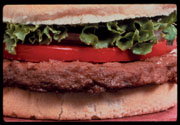
The first foundational study on cravings, which focused on 30 food and beverage categories, sheds more light on craveability, in general. A new way of segmenting consumers has been derived, and three key consumer groups emerge—the Classics, the Elaborates, and the Imaginers—each which have cravings triggered by different kinds of product or experience attributes.The Classics tend to prefer the basic version of a given product: The classic char-grilled hamburger, basic vanilla ice cream or classic cola. These people come in with a high level of interest in the overall category, but marketing messages have little to do with their cravings. The Elaborates tend to prefer the decorated version of a given product: The bacon cheeseburger with lettuce, tomato, pickle, and that special sauce, or an ice cream sundae with hot fudge, nuts, and sprinkles on top. These people come in with a high level of interest in the overall category, and marketing messages have a minimal effect on their cravings. The Imaginers may like the basic version or the decorated version of the product, but these people are highly influenced by the marketing messages presented to them. They come in with a low level of interest in the category. Based on the product's positioning, they may love it or hate it. Imaginers tend to be more emotional decision-makers. They also can be new brand builders.
When considering these three groups in context—for example, at a drive-through fast food restaurant—it becomes clear that the Classic is more frequently satisfied than the Elaborate at the drive-up window. Although both groups of people may or may not arrive at the restaurant with a specific product in mind, Classics, more often, will be able to get what they want without making a mess in the car. Elaborates may change their order to something more appropriate to in-car snacking, or they may struggle to keep their sandwich together as they drive out of the parking lot and down the street. Although fast food restaurant managers want to keep both of these groups happy, some adjustments in the product or its on-the-go packaging might be needed to fulfill the needs of both. In addition, the marketing messages for the fast food restaurant might be best tailored to the Imaginers. A description of the perfect hamburger might draw in their business at any time of the day.
By taking a new approach to segmenting the market—a behavioral one rather than a demographic one—and designing products tailored to suit the needs of these three segments, marketers and product developers can more successfully create craveable consumer experiences supported by appropriate advertising. Calling your product craveable does not make it so. It is critical to understand what makes an item craveable, to whom, and in what circumstance. With a deep understanding of real consumer dynamics in food and beverages both today and in the future, one can calculate the impact of emerging trends on his business, product, and market, and exploit new market opportunities for commercial success—before the competition even knows what is happening. Marketers can better understand which trends are important to their consumers, which trends will be ignored, and which ones are being driven by a specific segment of the market. Without this understanding, a marketer and his company could completely miss the mark.
Summary
Building a database of understanding around craveability and its link with different sets of consumers becomes essential, as consumer choices increase and companies struggle to differentiate their products and services from the competition's. Foundational studies, coupled with in-context insights, can help companies crack the craveability code and keep their consumers' business in the long run.Looking for a reprint of this article?
From high-res PDFs to custom plaques, order your copy today!


