Prepared Meals That Please - April 2007
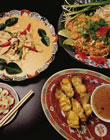
Culinary Flavor Trends
People’s tastes in food are changing much more quickly today. The reasons are varied and are due in part to marketing and specialty publications, as well as cooking and food shows. In addition, the adoption of flavors by major brands and quick service dining operations has an affect on consumers’ tastes. According to Cara Newkirk at FONA International, new foods, flavors or ingredients pass through a four-stage program the company calls the “flavor radar.” These four stages are novel, “up & coming,” mainstream and everyday. Novel items are often first seen at fine dining establishments from which they are rolled into premium products available only through upscale retailers. During the “up & coming” stage, these items begin to appear at casual dining restaurants and begin to receive play in gourmet food publications. The ingredients or foods will now be seen in specialty products introduced by smaller companies and may only be available in particular regions to start. When flavors or ingredients become mainstream, they will become part of family dining or fast casual establishments and be featured in the mainstream press. With growing popularity, nationally branded products will pop up using these ingredients. From here, they become part of everyday lexicon and move into the traditional fast food menus. An example of such a product is chipotle, which was a novel ingredient in the early 1990s and has since become an everyday ingredient in a wide range of products.There are a number of research services that allow industry personnel to track food industry trends. By examining the data collected from these sources, visibility of the materials may be determined and a “flavor radar” rating given. As an example, shiso, which also is known as perilla, is in the mint family and has flavors resembling mint or fennel. According to the “flavor radar,” it has been seen only in fine dining establishments, has been included as an ingredient in less than 30 new products worldwide in the past two years and has received very little coverage in the print media. Such an ingredient would still be classified as novel. On the other hand, tamarind has advanced to the mainstream. (See chart “Popular Flavors.”)
This system may be used by developers or marketers as a tool to gauge public opinion and look for new product ideas using novel or “up & coming” ingredients or flavors. A walk through your local market will clearly demonstrate that there are many items marketed to mainstream consumers that a short time ago were found only in specialty stores. Any resource that helps make more educated decisions is certainly one that should not be ignored.
“Culinary Flavor Trends,”Cara Newkirk, senior market manager, savory business unit, FONA International Inc., cnewkirk@fona.com, www.fona.com.
—Summary by Rick Stier, Contributing Editor
Exotic Mushrooms
Exotic mushrooms impart unique flavors and textures to foods and they appeal to gourmets. Moreover, they enhance appearance of the foods, provide distinct nutritional benefits and are a source of the newest flavor characteristic: umami. The exotic mushrooms most popular amongst consumers are portabella, shiitake, crimini and porcini. These mushrooms may be found in grocery stores, especially upscale markets. They are featured in magazine recipes and in restaurants, and they have evolved to become part of mainstream foods.Each of these varieties has unique characteristics and applications. For example, portabella mushrooms are related to the common white mushroom. They grow up to six inches in diameter, have a full and open cap, a meaty texture and a rich, full-bodied flavor. They are easily cultivated and economical to produce. Portabella mushrooms may be used to complement meat, fish and poultry, plus they serve as a vegetarian alternative. They also may be used with milder varieties to boost flavors, and their use in foods helps to create a very desirable visual appearance.
Exotic mushrooms may be individually quick frozen (IQF) as fresh, roasted or blanched products; air dried, packaged in brine or frozen as pasteurized purees.
Each of the IQF processing options has unique characteristics and properties. Fresh IQF mushrooms have excellent flavor, texture and appearance, plus active enzyme systems. These products are marketed as sliced, diced or whole caps. Blanching will preserve much of the desired flavors, but the mushrooms have a wider range of application use due to destruction of enzymes and reduced moisture release. Roasting exotic mushrooms will intensify flavors and reduce moisture release. (See chart “Mushroom Applications.”) Reducing moisture release allows the products to be used more effectively in ready-to-eat applications and on products such as pizza. The lower moisture minimizes the potential for producing soggy finished products.
Air dried mushrooms are sold as whole, sliced, kibbled or powdered. These products have excellent shelflife, intense flavors, great versatility as an ingredient and are an economical ingredient alternative. They may be used in dry packed items, in products cooked in-house or for enhancing flavor in formulated products. Brine-packed exotic mushrooms are marketed as sliced or whole. They are fully cooked and release no moisture. Brine-packed mushrooms are a substitution for canned products, have excellent applicability in refrigerated and frozen applications (especially pizzas) and may be used in ready-to-eat products. Lastly, frozen pasteurized purees are excellent ingredients for use as flavor bases. They will enhance products by contributing fresh mushroom flavors and aroma.
“Umami! Using Exotic Mushrooms for Maximum Flavor and Consumer Appeal,” Rick Angelucci, Phillips Gourmet Mushrooms, ra@phillipsgourmet.com, www.phillipsmushroomfarms.com.
—Summary by Rick Stier, Contributing Editor
Raisins Offer Cleaner Labels and Enhanced Shelflife
California’s Central Valley is the center of raisin growing in the U.S. The predominant variety is the Thompson seedless. Raisins are hand harvested, and the majority of the crop is sun-dried, although some are also mechanically dried. The final product is called golden raisins, which are produced by five hours’ exposure to sulfur dioxide that prevents them from darkening. Other products include raisin paste, which is manufactured by grinding raisins, and raisin juice concentrate. The latter is manufactured by leaching raisins in water and concentrating to 70°Brix.Research indicates that the incorporation of raisins and raisin products, such as paste and concentrate, into food products can have both significant health benefits and enhance product quality. Raisins are high in fiber, carbohydrates and essential minerals. (See chart “Raisin Composition.”) Raisins are a significant source of inulin, a fiber-like carbohydrate that is associated with colon health. They also help support the growth of beneficial microorganisms in the intestinal tract. Studies have shown that raisins stimulate the body to replace bile acids, which will lower serum cholesterol levels and reduce the risk of heart disease.
The addition of raisin juice concentrate will enhance flavor intensity in sauces. Raisins have high levels of phenolic compounds, which are known to have antimicrobiological properties. Workers at Texas A & M have conducted studies that demonstrate that raisins will inhibit L. monocytogenes and E. coli 0157:H7 at ranges of 70% to 95% and 50% to 70%, respectively. Other research has shown that the addition of raisins to breads inhibits mold growth. Bread without raisins developed mold within three days, whereas products with added raisins showed no mold growth after 20 days. Raisin paste may be added to bakery products as a fat replacer and as a natural colorant. Raisin paste provides texture, sweetness and enhances mouthfeel. The products may be used in extrudable fillings and as a binding agent.
The antimicrobial activity noted above is a function of several factors, including the phenolic compounds, low pH (ranges from 2.0 to 3.5) and the presence of organic acids, such as tartaric and propionic. Incorporation of raisins, raisin paste or raisin concentrate into bakery products reduces water activity and can inhibit mold growth.
Raisins have applications in many areas that may not be considered traditional. They can be used in dairy products such as frozen novelties, ice creams and yogurt, as well as in sauces, where they can add sweetness, color and enhance flavor. They also can be used in both sweet and salty snacks. Finally, since they are a natural product, raisins provide users with a potential marketing advantage.
“Cleaner Labels to Enhanced Shelflife with Raisins,” David Ropa, food industry marketing, consultant, California Raisin Marketing Board, dropa@ tjpmd.com, www.raisins.org.
—Summary by Rick Stier, Contributing Editor
Dehydrated Chicken Broth Applications
Pure dehydrated chicken broth is a versatile and all natural ingredient. It may be used in soups, soup bases, broths, bouillons, sauces, gravies, side dishes, meals, marinades and in flavor systems. Usage levels vary with the application. Average usage levels in wet soups range from 0.5% to 2.0%, whereas levels in reacted flavors may range as high as 25%.Chicken broth is produced by cooking whole chickens, chicken parts, chicken carcasses or chicken bones. Broilers, layers or breeders may serve as the raw material. The cooked chicken is separated into liquid and solid (meat) fractions. The liquid fraction is separated into fat and broth. The broth is then concentrated into product high in protein and essential amino acids. For example, 100g of dehydrated broth contains 88g of protein. (See chart “Chicken Broth Analysis.”)
Chicken broth has a reputation that it is “good for you.” There are ethnic groups (and many moms) who consider chicken soup a cure-all. Recent scientific studies have confirmed some of these “old wives’ tales.”
Chicken broth has a number of very desirable characteristics. It has an appealing flavor and a distinctive aroma. Its mouthfeel resembles gelatin. The color and flavor profiles vary with the preparation method. Preparation procedures allow the manufacturer to make products that vary from savory, to roasted, to somewhat bitter and blend well with the other flavors and seasonings used. The broth chosen becomes, if not the base, at least an integral part of the flavor system. In other words, the manufacturing process may be tweaked to produce a wide range of products that are applicable in a wide variety of finished products. The addition of salt and mirepoix will enhance the flavor of broth, but the naturally occurring umami notes allow the end-user to add very little to round out the desired profile. Dry broths are shelf-stable for up to two years. Unlike typical powdered broths, agglomerated broth powders exhibit excellent flow characteristics and readily disperse in cold water. Chicken broth has the added advantage of being a natural emulsifier.
There are a number of advantages to using dehydrated chicken broth. One truckload of dry broth equals three truckloads of frozen broth at 32% total solids (or 37° Brix). This reduces shipping costs alone by about 67%. Dehydrated chicken broth does not require refrigeration or freezing, hence there is no need to build a pre-conditioning step into the process, i.e., tempering, melting or standardizing. The use of dry broth controls production losses. Processors might replace a flavor with chicken broth and find it very label friendly.
“Dehydrated Chicken Broth Applications in Prepared Foods,” Roger Dake, director of research and development, International Dehydrated Foods Inc., rdake@idf.com, www.idf.com.
—Summary by Rick Stier, Contributing Editor
Looking for a reprint of this article?
From high-res PDFs to custom plaques, order your copy today!


