A is for…Immunity
Boost Your Immunity: The Power of Vitamin A, Retinoids & Carotenoids
Two related classes of vitamin A-like compounds, retinoids and carotenoids show an impressive range of immune-supporting benefits.

Vitamin A compounds have demonstrated possible benefits in helping to protect against infectious diseases and cancers, and support eye health, skin health, and prenatal health. Credit: djgflorez/Getty Images Plus
Vitamin A is a collective term referring to a group of related compounds known as retinoids. Sourced from animal products, retinoids are present in food in their active form and include retinol, retinal, retinoic acid, and retinyl esters (such as retinyl palmitate and retinyl acetate). They’re active forms of vitamin A and functional in their original forms.
The plant-based group, called carotenoids, include some that also are a source of vitamin A—known as provitamin A carotenoids—and must be converted to active vitamin A during metabolism. But carotenoids also include other, non-provitamin A forms. Both carotenoid groups have important functions that influence health and immune function.

Food and Function
Two of the most commonly appearing members of the family of vitamin A-like compounds are retinol (as the ester retinyl palmitate), a retinoid, and β-carotene, a carotenoid. Retinol and the other retinoids are found largely in animal products including eggs, dairy, and liver. Carotenoids are found largely in plant products, especially those rich in yellow, orange, and red pigments.
Among the non-provitamin A carotenoids found in the human diet, the most familiar are lycopene, lutein, zeaxanthin, and astaxanthin. These are well-known for their roles in supporting health and immune function, especially in the eyes, cardiovascular system, and skin. As with all retinoids and carotenoids, they have demonstrated strong antioxidative and anti-inflammatory capacities.
Since carotenoids are sourced from plant material, they must be released from the plant matrix to fully metabolize. Also, as lipid-soluble compounds, they should be combined with a source of fat prior to consumption in order to promote absorption. The solution is as simple as cooking and adding a fat source to a plant-based formulation. However, absorption is highly variable for carotenoids, and the type and amount of triglyceride (fat) and carotenoid can have an impact.
Provitamin A compounds such as α-carotene and β-carotene circulate to different organs, each of which express enzymes capable of converting those compounds into bioavailable retinoids. This mechanism is dependent on the amount of vitamin A currently in an individual’s system.

A for Absorption
Retinoids do not require conversion in the body and are more readily absorbed than carotenoids, increasing the risk of toxicity when overconsumed. Among the carotenoids, β-carotene is the most readily absorbed. A main advantage of the carotenoids is that when excessive doses of these provitamin A compounds are administered, there is a biological mechanism in place to protect from vitamin A toxicity from their overconsumption.
In low-fat foods, retinyl esters are commonly used to supplement the vitamin A that is lost with fat reduction. Retinyl esters are more stable than retinol, and they have reduced capacity for oxidation during storage. There is no reduction in biological activity, making these retinoids ideal for supplementation of products such as cereals, which tend to have a longer shelf life than other foods.
In beverage applications, it is important to note that vitamin A and retinyl esters are fat-soluble and dissolve poorly in aqueous solutions. However, microencapsulation or use of organic solvents such as ethanol or oils can improve solubility in beverage applications with little to no available fat. However, stability in a low- or no-fat beverage is dramatically reduced, increasing susceptibility for retinyl esters to degrade due to light, heat, and oxygen.
As is well known with use of β-carotene as an ingredient, retinyl esters also can impart a yellow hue to applications when used in large quantities. Comparing retinyl palmitate to retinyl acetate, retinyl palmitate has better shelf stability and is more widely used than retinyl acetate. However, retinyl acetate can be more stable in certain foods so it is important to identify the correct retinyl ester for each application. Ingredient suppliers can help with choosing the best form for the final product.
Preventive Function
Retinal benefits are especially prominent in vision. The compound 11-cis-retinal is the visual chromophore that, when bonded with opsin proteins, enables the phototransduction cascade that allows the eye to perceive light. In addition to binding light, retinal has other impacts on the body.
Some studies have indicated that retinal reduces adipose tissue accumulation from high-fat diets by inhibiting adipogenesis (fat cell production). Also, retinoid X receptors (RXR), which regulate retinoid signaling, are known to positively influence physiological processes such as cell growth, differentiation, and apoptosis (cancer-cell suicide), lipid metabolism, bone health, and immune function.
In lipid metabolism, RXR regulates the breakdown and synthesis of lipids, which has a direct impact on heart health, serum cholesterol, and adipose tissue accumulation. The immune support effect afforded by these vitamin A compounds is that dysregulation of RXR can lead to atherosclerosis, heart failure, obesity, diabetes, retinitis pigmentosa, macular degeneration, and certain types of cancer. Since retinoids are fat-soluble vitamins, and RXR is highly involved in regulation of adipose tissue and energy metabolism, it is notable that adipogenesis or inhibition of adipogenesis is strongly influenced by retinoids.
Among other carotenoids, α-carotene, β-cryptoxanthin, lutein, and zeaxanthin concentrations have been positively correlated with HDL-cholesterol levels. Lutein and zeaxanthin have also been connected to reductions in LDL-cholesterol, further supporting the importance of a balanced diet and the benefits of non-provitamin A carotenoids.


The Eyes Have It
Lutein and zeaxanthin are the only two vitamin A compounds that are able to cross the blood-retina barrier to develop macular pigmentation in the eye. But lutein also accumulates in the brain, making it a potential biomarker for cognitive function, especially in elderly adults. Many completed studies of vitamin A analogs are observational, but a relationship appears to exist between lutein concentrations in the macula and improved memory and cognitive function in both elderly and young adults.
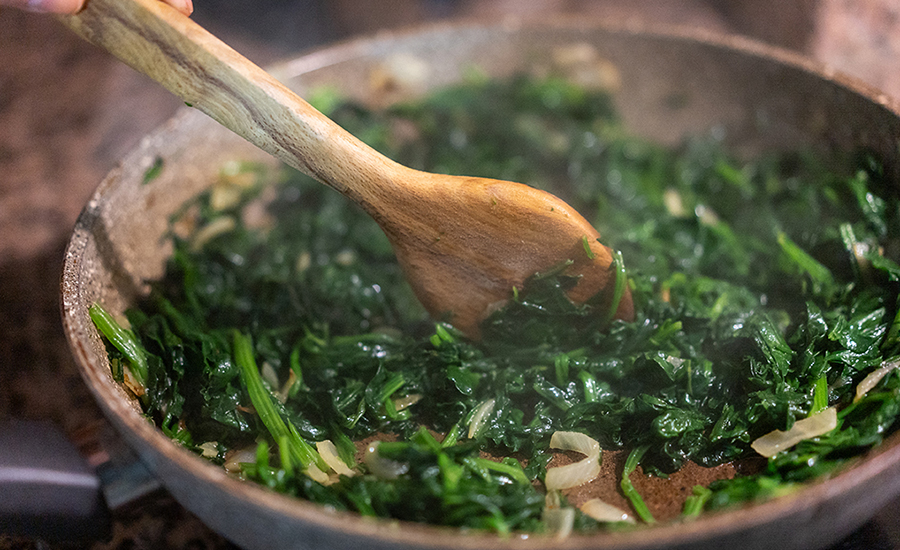
Lutein is in greatest concentrations in dark leafy greens (more bioavailable when cooked). Similar to retinyl esters, lutein is more stable in its esterified form, reducing susceptibility to damage from light, heat, and oxidation. Foods with fat and higher protein content with minimal heat treatment tend to be the best options for lutein inclusion.
In this age of constant visual assault from screens and blue light, macular degeneration and resulting blindness is affecting older adults at an increasing rate. Lutein and zeaxanthin (an isomer of lutein), are able to cross the blood-retina barrier. They absorb blue light, protecting the retina from oxidative damage and degeneration.
Dietary intake of lutein and zeaxanthin has a direct effect on concentrations of lutein and zeaxanthin in the macula. This is supported by numerous studies that revealed a reduced incidence of age-related macular degeneration and resulting blindness in participants taking those carotenoids. β-carotene has also been shown to reduce age-related macular degeneration, and research has associated intake of astaxanthin with protection from multiple diseases and dysfunctions of the eyes and vision, especially from blue light damage.
In the case of retinopathy resulting from diabetes, it has been reported that supplementation with lutein, zeaxanthin, and astaxanthin has a positive impact on preserving vision by reducing retinal degradation, inflammation, cataracts, and oxidative stress. Some studies have even positively correlate β-carotene intake with reduced cataract progression.

General Immunity
Retinoic acid functions through multiple mechanisms, primarily regulation of the innate and adaptive immune systems, specifically via immune cell differentiation and function, as well as inflammatory responses. Retinoic acid also maintains homeostasis in the gut and moderates immune responses in conjunction with immune tolerance, which is important in control of bowel inflammation and other inflammatory actions, such as tissue inflammation in the central nervous system and pulmonary mucosa.
Due to their impact on macrophage and monocyte activation, and the subsequent initiation of immune response against pathogenic organisms, retinoic acids play a crucial role in immunity and defense in the g.i. tract. They also have shown a strong inhibitory effect on tumor necrosis factor, an inflammatory cytokine, interleukin-12 (IL-12, a pro-inflammatory cytokine), and nitrous oxide production, while enhancing secretion of IL-10 (an anti-inflammatory cytokine).
These interleukins are produced by macrophage and dendritic cells, both of which are influenced by retinoic acid and its derivatives. Dendritic cells are key in the activation and development of adaptive immunity. Since dendritic cells are able to activate T cells, retinoic acid enhances the ability of these cells to present antigens and improve T-cell proliferation. Retinoic acid also induces gut-homing markers on T cells, directing their migration to the gut and protecting the body from possible pathogenic organisms.
Vitamin A homologs also positively influence the functionality of B cells, which produce antibodies. In the presence of retinoic acid, B cells differentiate to produce antibody secreting cells. Retinoic acid works both directly and indirectly on B cells, improving and sustaining critical production of immunoglobulin G (IgG) antibodies, improving immune function and reaction time.

Look Out, Cancer
As with their beneficial effect on heart health, concentrations of vitamin A compounds also have demonstrated capacity as cancer risk mitigators and even cancer fighters. There have been positive associations reported between blood concentrations of carotenoids and retinoids and lung cancer, prostate cancer, skin cancer, and breast cancer, among others.
While studies of all vitamin A compounds revealed possible capacities to help reduce the risk of certain cancers, research suggests that some vitamin A compounds might help lower the risk of specific cancers. For example, in some studies. β-carotene has exhibited a positive impact on the reduction of risk of breast cancer. Similar observations were made between colorectal cancer and β-carotene concentrations.
In the instance of prostate cancer, lycopene has been the subject of a wealth of studies indicating a strong impact on reducing the risk of prostate cancer and improving survivability. Numerous research studies into astaxanthin have disclosed impressive evidence of protective support against skin cancer.
Results of some preliminary studies suggest greater concentrations of both β-cryptoxanthin and lycopene reduce the risk of throat and mouth cancers but there is a great deal of noise surrounding these studies. Similarly, in the instance of lung cancer, both β-cryptoxanthin and lycopene concentrations have a negative correlation with morbidity in lung cancer.
While there is a need for more research on the interactions between vitamin A analogs and their impact on various cancers, what is clear is that carotenoid and retinoid compounds demonstrate many possible benefits related to immune support and overall health. Developers of foods and beverages targeting immunity and general health are fortunate to have multiple members of this vitamin A family to consider.
Looking for a reprint of this article?
From high-res PDFs to custom plaques, order your copy today!


