Circana’s latest outlook points to modest dollar sales growth, tighter volumes and evolving value expectations as consumers lean into convenience and functionality. These insights anchor Prepared Foods’ new Predictions issue, which gathers expert perspectives on what’s new and next for food, beverage and retail trends in 2026.
The Food Away from Home Association projects a 1.1% inflation-adjusted increase in 2026 supplier purchases, with menu inflation expected to ease and resilience continuing across restaurants, c-stores, cafeterias and emerging formats like ghost kitchens
IFMA anticipates a slowdown next year in menu inflation, or what many in the industry cite as the key reason for declining orders of meals prepared outside the home. The association expects food costs to rise by 3% next year, compared with the 3.9% it projects for 2025.
Circana’s latest research spotlights shifting consumer priorities, from health-driven choices and adventurous flavors to online shopping and value-conscious behaviors
This comprehensive research reveals how evolving consumer priorities, a growing focus on health-conscious choices, and broader macroeconomic factors are transforming snacking behaviors.
Now that 2024 is in the rearview, we wanted to share a few quick thoughts that highlight pivotal changes and trends in the industry. Below, you'll find a mix of both broad and specific evolutions in the food and beverage market that are certain to influence the business environment in 2025.
Following Circana’s forecast for 2024 from a year ago and the recent midyear update, the market has mainly trended as predicted. Overall, dollar sales have grown by 2.6%, price/mix by 1.6% and volume sales by 1.1% in 2024.
The 39th annual report, “Eating Patterns in America,” highlights a growing trend toward at-home dining over the past year, with 86% of eating occasions sourced from home. While retail volumes show modest growth, foodservice traffic remains under pressure. However, significant opportunities remain in both sectors, with American consumers spending nearly $1.7 trillion annually on food and beverages.
Consumers continue to say their primary store for purchasing food does an excellent job of meeting their needs, with 79% of shoppers reporting that getting a “good value” when grocery shopping is their top priority.
The 75th annual report surveyed food retailers’ and suppliers’ 2023 developments and expectations for the year ahead, finding that while the industry made key strides in addressing longstanding labor and transportation capacity issues, inflation and other financial hurdles caused industry profit margins to fall to pre-COVID-19 pandemic levels.
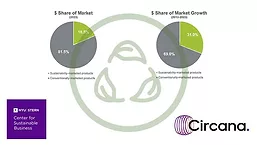
Data shows an increase of 1.2 percentage points since previous year, finds research from NYU Stern Center for Sustainable Business in partnership with Circana
“Our annual research definitively shows that sustainable products thrive regardless of inflation and present continued opportunities to compete for market share amid the rise of store brands,” said Randi Kronthal-Sacco, Senior Scholar at the NYU Stern Center for Sustainable Business.
New IRI report reveals food and beverage dollar sales will moderate in 2023, but will remain higher than the historical baseline, even as volume sales decline
March 22, 2023
This new report leverages IRI’s -- now Circana -- latest point-of-sale data, which reveals that at-home food and beverage inflation was up 13.2% in Q4 2022 versus Q4 2021. While consumption levels are continuing to soften, at-home food spend remains strong, with center store sales up 11.1% and perimeter sales up 6.3% in Q4 2022.