New Products Annual - Baked Goods - March 2007
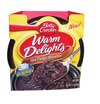
Under
its Betty Crocker brand, General Mills made baking much quicker for
time-crunched consumers. The product also took second place in this year’s
Prepared Foods/Ventura Foods Spirit of Innovation Awards and has proven popular
enough to warrant a line extension.
PHOTOS COURTESY OF THE MINTEL GNPD
PHOTOS COURTESY OF THE MINTEL GNPD
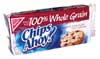
Among
cookies, trans fats were formulated out of a number of products. Some touted
the absence of them, as was the case with Nestle Toll House’s Ultimates, which
proudly
proclaimed “0g Trans Fat” on the front of the package. Others took a different
approach: Nabisco’s Chips Ahoy! had no trans fat either, but the true selling
point of this particular product was its incorporation of whole grain.
The result was that, among health claims in new bakery products, “trans fat-free/-reduced health” claims soared to the number one position in both 2005 and 2006, after having been almost unheard of prior to 2004.
According to the Mintel Global New Products Database (GNPD), trans fat launches thrived in 2005 and again in 2006. During this period, “whole grain” was the only other claim in bakery to move up in both 2005 and 2006 (from ninth to third place). “All-natural” and “no additives/preservatives” are blanket claims that long have been in the top five, as consumers implicitly trust them. “Gluten-free” claims rose substantially last year, and it probably ranks as the most important secondary trend. This is in line with rising “allergen-free” claims in many baked goods. Interestingly, “low-/no-/reduced-sugar” claims fell for the second year in a row, joining “low-/no-/reduced-carb” claims as the only other one to do so. These carb claims fell sharply from 475 in 2004 to 17 in 2006, according to the Mintel GNPD.
With so many rollouts in two years, it is clear that a majority of the leading products on the market have been reformulated to be trans fat free. This includes a large percentage of the bread and cookies from all of the major bakeries.
While bakeries are committed to producing healthier products, the food industry will be dealing with the trans fat issue for some time. Trans fatty acids remain difficult to eliminate from formulas when the end objective is to maintain the quality of the finished product in terms of taste, texture and shelflife. One traditional tactic is to replace trans fats with fat and oil ingredients that are higher in saturated fatty acids. This, of course, results in products with which some health-oriented consumers may have issue.
Even though trans fat-free bakery introductions will continue to rise, the sales of these products have the potential to be lackluster. Consumers will likely feed their need for indulgent products, quite possibly including trans fats, by buying bakery goods that are “unmarked” and thus guilt-free from any potentially harmful claims, such as a brownie, lemon-poppyseed cake or Danish from almost any fast casual dining establishment.
It is worth noting that the upward swing in the trans fat-free trend is seeing the strongest movement in North America, as the total number of trans fat-free/-reduced bakery products in all other regions of the world totaled only eight, 21 and 133 for all of 2004, 2005 and 2006, respectively. According to the GNPD’s bakery product analysis, North American rollouts accounted for 21% of global rollouts in 2006, but made up 72% of the trans fat-free/-reduced bakery items. The lasting allure of trans fats will depend on good taste combined with low cost.
Staying on Message
As last year began, consumers were already attuned to the whole-grain message. A Mintel survey showed that 60% of respondents buying bread in the bakery area during December 2005 specifically sought out whole-grain products. The healthfulness of whole-grain foodstuffs has become something like a dietary law, and many consumers are fully aware of their benefits.
Harvard School of Public Health researchers analyzed data from more than 74,000 women aged 38-63 for a 12-year period and discovered those who ate whole grains gained less weight as they got older, compared to those who were eating white bread/refined grains. Similarly speaking, the Journal of the American Medical Association reported that among more than 75,000 participants over a 12-year period, women who ate the equivalent of two or three slices of whole grain bread daily had a 30% to 40% lower risk of having an ischemic stroke. This was compared to women who ate the equivalent of less than half a slice of whole grain bread daily.
Accordingly, manufacturers have responded to the growing weight of medical knowledge by conducting vast amounts of research into bread products. Prior to 2004, many consumers actively avoided whole-grain breads because they complained that they were too dense or had a “woody” taste. The growing number of whole-grain introductions demonstrates the dramatic success that has been achieved in such a short period.
The rapid rise of new bread introductions has been received well by consumers. Pepperidge Farm and Sara Lee were two brands that aggressively launched new heart healthy bread extensions. Other bakery aisle products are also enjoying good luck with whole-grain products, including General Mills' Pillsbury Danceable Cakes that are said to be “a good source of whole grains, providing 8g per serving.” Cookies, despite being small and generally thought of as a snack or dessert, have seen quite a few big name whole-grain introductions, including Quaker Foods Whole Grain Breakfast Cookies and Nabisco Whole Grain Chocolate Chip Cookies.
There are a couple of caveats about whole-grain products. They are higher in calories and, although more filling, the calories may worry people who are watching their diet. The industry will need to continue aggressively promoting the benefits of whole-grain foods and possibly even confront the calorie issue head-on.
There is also a shelf-stocking issue. More than a third of the respondents to a Mintel consumer survey report that they already find the variety of offerings in the bread aisle confusing, indicating potential shopper overload. More product launches might compound the problem, so companies have to be careful to not dilute existing brand extensions. Continued education about the distinctions between products, as well as further consumer awareness building, can assist with smooth transitioning for both shoppers and manufacturers.
The Yin and Yang: Health vs. Indulgence
The chart “The Crumbling Cookie,” from Mintel’s 2006 report on cookies and cookie bars, provides a glimpse into the mind of the American consumer during this period. Consumers are a little less interested in “standard” offerings, primarily due to the excitement that has been generated around products that have “healthy” or “premium” claims.
Sales in the very large standard cookie segment fell 3% during 2004-06, while premium and health-oriented cookies each rallied 9.4% and 9%, respectively. Underscoring the importance of premium products, even private label cookies have gone upscale. A few examples from 2006 include:
Room for Indulgence and Health
Consumers appear to be increasingly conscious of treating themselves—to both healthy and indulgent products. This trend in contradictions supports the observation that more and more customers are purchasing products that have a specific benefit. Beyond the healthy focus on trans fat-free and whole-grain items, in-store bakeries report they are using more butter than ever before, switching to better tasting icings and using high-end chocolates. This may explain a recent International Dairy-Deli-Bakery Association report that found that 25% of Americans are on a diet, even though 60% say they eat what they like no matter the calorie count.
Similarly, one of the few bakery segments that was not hit hard by the low-carb fad of 2003-2004 was pies. This is one instance where people simply will not sacrifice—if people are going to indulge in dessert, they do not want to count carbs or anything else. Hence, there were a multitude of decadent options in sweet goods last year that appear across all channels, from in-store bakeries to foodservice. Furthermore, consumers are willing to splurge in order to enjoy their decadent treats. When Mintel asked consumers what influenced their decision to purchase at an in-store bakery, cost was only a consideration for one fourth of respondents. Evidence suggests that consumers will pay more for perceived higher quality, regardless of whether it is triple chocolate mousse or a whole-grain ciabatta with kalamata olives.
Some information in this article was derived from the Mintel Global New Products database, www.gnpd.com, 312-932-0400.
Looking for a reprint of this article?
From high-res PDFs to custom plaques, order your copy today!


