Complex Function -- August 2007
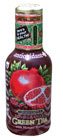
As Mintel’s report notes, hip brands, lively packaging and innovative varieties and flavor combinations have helped to boost sales of ready-to-drink functional teas.
Part of the problem would seem to be consumer perceptions. Consumers remain skeptical about the benefits of the products; however, the majority of functional consumers are not eating or drinking enough of each product to attain the promised benefits. This leads to a potentially wise marketing suggestion by Mintel: companies should promote and encourage greater frequency of consumption, while building consumer confidence in the efficacy of functional products. How best to deliver these messages will prove a difficult decision.
According to consumer research commissioned exclusively for this report, 60% of respondents who purchased functional foods in the prior three months had eaten a functional food 10 or fewer times in the past month. Mintel suggests marketing campaigns focus upon frequency of consumption, as for most products, 10 times per month is not enough to achieve the purported benefit. (An important distinction has to be made here: these 10 purchases are not all of the same product. These consumers are buying different functional items, further lowering the number of times each food has been eaten per month.)
Why do consumers purchase functional products? Mintel’s research found “dietary supplementation” and “weight management” ahead of “to address specific health issues” (cited by 30% of buyers), a troubling statistic considering that is ostensibly what functional foods have been engineered to do. “These survey data,” observes the report, “make clear that functional products will not ‘sell themselves,’ but rather must be actively and clearly promoted.”

Functional dairy and margarine products enjoyed a 13.7% sales increase between 2004 and 2006, well ahead of other functional foods, in which growth was fairly stagnant.
Reasoning Why
Some 48% of functional food buyers do so to “make up for poor eating habits” and are unlikely to be consuming the products enough to receive the full benefit, the report contends. The two leading reasons for not consuming are overpricing (cited by 43%) and a lack of belief in the claims being made (35%).Further complicating matters are the consumers who claim not to “need” functional products. Some 32% say they do not “need” them because they take dietary supplements; 30% because they maintain a healthy diet and lifestyle; 17% because they believe they get what they need from conventional foods and beverages; and 11% because they take prescription drugs that address their health issues. As a consequence, Mintel believes the future of the market rests with getting existing consumers to eat more, appealing to very young adults or working with the medical community to build the credibility of products.
Manufacturers have had some success in publicizing the results of clinical trials, and Mintel’s report notes that sampling has helped to prove that foods with medicinal qualities do not have to taste like medicine. Furthermore, it encourages manufacturers to consider partnering with health-oriented organizations, allowing them to associate their food and beverage products with specific benefits.
When it comes to functional foods and beverages, consumers are both skeptical and confused, impeding the development of the market since its inception. As Mintel’s report indicates, “The fact that the FDA permits so-called qualified health claims for various foods is indicative of the friendliest regulatory environment the U.S. market has ever seen, but these claims can confuse shoppers as well as enlighten them.” Consumer education efforts offer details about studies supporting the effectiveness of functional ingredients and--ideally to Mintel’s thinking--manufacturers should persuade consumers to use the products regularly. Dannon has done this effectively by recommending DanActive’s daily use for two weeks to achieve regularity.
Dannon DanActive benefits from the unique culture L. casei immunitas to “strengthen your body’s defenses,” but despite the product’s success, sales of smoothies and yogurt drinks improved a slight 1.2% between 2004 and 2006 to reach $285 million. Refrigerated smoothies and yogurt drinks first hit the market in 2002 with strong debuts from Yoplait, Groupe Danone and G. Hausen.
Unfortunately, Mintel predicts sales in the segment will decline in the near future, due largely to significant declines in Nouriche sales, based on data from Information Resources Inc.
Other segments of functional beverages fared better during the period under review, growing total sales for functional beverages by about $1.1 billion. In fact, four of the six segments grew sales substantially, with sales of soy-based drinks up nearly 14%, tea increasing 48.7%, enhanced water/sports drinks rising 81.3% and a breathtaking 171.1% jump in energy drinks. In terms of segment share, all of these trail juice/juice drinks, though that segment has seen a decline.

Soy-based beverages are still seeing sales growth, just not at the pace of pre-2002 levels. Still, the products offer a relatively parent-friendly means of incorporating needed nutrients into children’s diets, without imparting unneeded sugar.
On Juice
In the juice/juice drink segment, annual sales declines have exceeded 4% since 2003, Mintel finds. While juices are almost inherently perceived as healthy, functional varieties have met many of the same challenges plaguing the overall juice market: that these “can be sugary, high-calorie, high-carbohydrate delivery systems for nutrients,” to quote Mintel’s report. Further complicating matters has been the segment’s relative lack of innovation. Mintel says no product tracked for its report was less than three years old.Functional teas, meanwhile, have seen strong growth in recent years. Tea, widely perceived as a healthy beverage and inherently rich in antioxidants and polyphenols, is a “natural vehicle for added herbs and other botanicals and is easily flavored.” As Mintel explains, ready-to-drink options in this segment have been boosted by hip brands, lively packaging and innovative varieties and flavor combinations, notably under the AriZona, SoBe and Fuze brands.
Sales of soy-based drinks are not in decline, but the growth rate has plunged since 2002, notes Mintel. Soy-based beverages tend to feature the FDA-approved soy protein health claim prominently, in addition to vitamin, mineral or supplement fortification. Hain Celestial’s WestSoy Plus soymilk, for example, adds calcium, vitamins A and D, and riboflavin for a nutritional profile resembling that of dairy milk.
The functional dairy and margarine segment saw FDM sales increase 57% during the period under review, 37% in real terms, to reach an estimated $820 million in 2006. For its coverage, Mintel groups fortified eggs into this segment, and they comprised 28% of dairy’s dollar sales in 2005, compared to 21% in 2001 and serving as “another bright spot,” says the report.
Cholesterol-lowering margarines provided a boost to the segment with the 1999 launch of McNeil’s Benecol and Unilever’s Take Control, but that momentum has “fizzled,” as consumers have either abandoned attempts at lowering cholesterol or opted for alternative methods. The increase in sales of functional dairy and margarine was attributed to growth in yogurt and omega-3-enhanced fresh eggs.
The 13.7% increase in FDM sales for dairy and margarine between 2004 and 2006 was well ahead of the growth of other functional foods. In fact, sales in other segments were stagnant, as the category registered a slim 2.9% increase in sales during that time. “Other processed foods” saw virtually no change in sales, while bakery and cereal climbed a slight 2.2%. Less positive news was seen in bars and snacks, with a 0.7% decline, dropping from $984 million in 2004 to $977 million in 2006.
The latter segment was strong in 2002 and 2003, but sales sagged thereafter. Between 2001 and 2006, sales grew 49%, although most of the growth was during the first two years. In its 2004 report, Mintel warned that the segment was mature and that manufacturers needed to address consumer confusion over nutrition and efficacy. Those fears appear to have been realized, even while the segment has seen some innovative focus, particularly one introduction from Mars Inc. “CocoaVia is one of the most exciting things to happen to this category in a long time,” the report explains, “and the science supporting the effectiveness of plant sterols is sound (plus, cocoa contains naturally occurring polyphenols), but Mars has already run afoul of the FDA for its claims, which may discourage genuine innovation among other marketers.”
In the bakery and cereal segment of functional foods, a good dose of innovation could only help, as sales here decreased at least somewhat in constant terms every year reviewed. Over the five-year span, sales have dropped roughly 10% in constant dollars, with declines in General Mills’ Cheerios brand noted particularly in the report. “Strong showings by Kellogg’s Special K, Kashi and Smart Start brands,” it details, “have not sufficed to buoy the category.” Nonetheless, functional cereals are outperforming the overall cereal category, which Mintel estimates declined 18% in constant dollars during the period under review.
The challenge for all forms of cereal is the same: the time-pressed consumer skipping breakfast. No matter that various health entities refer to it as the “most important meal of the day,” surveys continue to show consumers abandoning the morning meal. H.J. Heinz’ Better Together Breakfast survey in June 2006 found 60% of respondents believed it was too difficult to find time to make breakfast a family meal; half said it was too much of a challenge even on weekends.
This article contains information from the Mintel report “Functional Foods and Beverages, U.S.” Please visit http://reports.mintel.com for more information or call Mintel at 312-932-0400.
Links
Looking for a reprint of this article?
From high-res PDFs to custom plaques, order your copy today!
 |
William Roberts is responsible for the consumer trends section in Prepared Foods, as well as the website news updates and e-newsletter. He served as the Senior Copy Editor at Elevator World. He holds a B.A. in English and a B.S. in Political Science from the University of Mobile.


