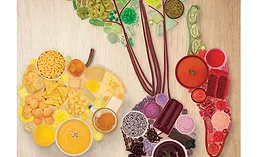
The past 30 years have seen the market demand for food colorants changing in substantial ways, particularly regarding the choice between synthetic and natural colorants.
Botanicals are big. The combination of health and flavor has proven irresistible to today's consumer, thrilled at knowing that the tikka masala dinner they bought contains turmeric, fenugreek, and ginger to help fight inflammation and balance blood sugar.
Although synthetic food colors (FD&C colors) have historically been favored by the industry due to predictable performance and lower cost, in recent years consumers have increasingly demanded the use of natural colorants.
Although green might be the symbolic color of nature, red is definitely the color of the Back to Nature flag. This has nothing to with leftist politics; natural reds have been at the forefront of the tidal shift from artificial to natural colorings in foods and beverages, pushed ahead to replace the now-spurned Red Dye #40 and bug-derived cochineal colorants.
The “natural colors only” movement resulted in sweeping reductions in the use of synthetic colorants and, understandably, a concurrent rise in interest in naturally derived food colorants.
GNT’s EXBERRY Coloring Foods offer natural, clean label color solutions
November 12, 2014
You could say that vibrant color is “in season” all year long, even though winter weather may be bleak.
The truth is, consumers still look for colorful foods on supermarket shelves and on restaurant plates.