Mintel research shows that the most common consumer response to dealing with inflation is cutting back on nonessential purchases, followed by dining out less often
October 19, 2022
In addition to the future of the economy, inflation is top of mind across the population. Nine in 10 consumers (94%) say they are currently worried about inflation, and 67% believe the majority of Americans share in these concerns, while a third (34%) believe it’s other Americans – rather than themselves – who are financially struggling right now.
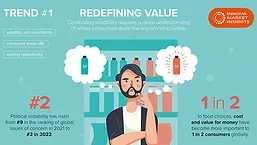
Innova Market Insights research suggests that consumers seek out brands that respond to core values at economic price
October 14, 2022
Over the last year, cost and value for money have become more important to more than half of food and beverage consumers worldwide. Today’s shoppers are increasingly exploring money-saving strategies, such as choosing lower cost items and cooking from scratch.
Better-for-the-environment attributes such as organic, sustainable, and upcycled, are gaining ground as motivators for purchase among specialty food consumers
October 12, 2022
Spending on groceries and away-from-home food is up. Inflation plays a role here but spending choices indicate consumers are returning to restaurants and buying freshly prepared foods.
The plant-based foods market is forecasted to reach 7.7% of the global protein market by 2030, with a value of over $162 billion
October 7, 2022
Even well funded players are suffering. Planterra Foods who launched the OZO brand a few years ago just announced it is being shut down by its parent company Brazilian-based JBS. Maple Leaf Foods, who owns Lightlife and Field Roast plant-based brands, is reallocating resources back to conventional meat amid declining sales.
From packaged snacks, baked goods, and pasta sauces to more complex nutrition bars, fermented beverages, and plant-based milk analogs, organic fulfills multiple expectations
The biggest challenges for developers and manufacturers of organic products are sourcing certified organic ingredients and knowing what secondary ingredients may be permitted. The organic regulations clearly define the practices and ingredients that are allowed.
The global COVID-19 pandemic had a marked impact on consumers’ attitudes toward health. COVID took a heavy toll on people in poor health and consumers looked for quick ways to boost their health as a defense against the disease.
New shopper trends and behavioral analytics are based on real-time insight surveys from September 2022
September 21, 2022
In a fall from last month, 46% of shoppers are feeling uncomfortable with their finances while 64% still report looking for sales, deals or coupons. Fifty-four percent
are cutting back on non-essentials and 63% are cutting back on areas besides groceries, such as clothing and entertainment. Customers are still making changes to avoid price increases.
For the past few years, the Innova Market Insights list of Top 10 Trends has included a plant-centric trend. This acknowledges the growing presence of plant-based foods and beverages, as well as alternatives to traditional animal-based products.
IRI and NPD report that at- and away-from-home food market is forecast to grow 8% in 2022
August 24, 2022
The nearly $1.5 trillion at- and away-from-home food market is forecast to grow around 8% in 2022, with at-home food (8.7% sales growth versus a year ago) outpacing away-from-home (6% versus a year ago), according to IRI’s and NPD’s inaugural joint research.
Under inflationary constraints, consumers turn to frozen and shelf-stable foods, as well as private label brands
August 17, 2022
According to NPD, lower-income households under $75K eat 89% of their meals and snacks at home. These households eat more frozen foods, like frozen pot pies or breakfast sandwiches, and shelf-stable foods, like canned pasta or ramen noodles, than on average.