Prepared Foods logo
search
cart
facebook twitter linkedin youtube
  • Sign In
  • Create Account
  • Sign Out
  • My Account
Prepared Foods logo
  • TRENDS
    • Prepared Foods The Year Ahead
    • Innovation Month
    • *Sustainability*
  • PRODUCTS
    • Bakery
    • Beverages
    • Breakfast, Cereals & Bars
    • Candy
    • Cannabis
    • Dairy
    • Meals & Sides
    • Meat, Poultry & Seafood
    • Sauces & Marinades
    • Snacks & Appetizers
    • Soups
  • INGREDIENTS
    • Antioxidants & Nutritionals
    • Colorings
    • Dietary Fiber
    • Emulsifiers, Fat & Oils
    • Flavors, Seasonings, Spices
    • Flours, Grains, & Pasta
    • Fruits, Vegetables and Nuts
    • Gums & Starches
    • Phosphates & Acidulants
    • *Proteins*
    • Sweeteners
  • FORMULATION
    • Allergens & Intolerance
    • Authentic & Ethnic
    • Cost Reduction
    • Fat Reduction
    • Gluten Free
    • *Immunity*
    • *Natural / Organic*
    • *Plant Based & Vegetarian*
    • R&D Lab Tech / QA-QC / Food Safety
    • Shelf Stability
    • *Sugar Reduction*
  • BETTER FOR YOU
    • Functional New Products
    • Functional Ingredients
    • Functional Benefits
  • FOOD MASTER
  • MEDIA
    • Podcasts
    • Videos
    • Infographics
    • First Person Q&A
    • Favorite Products Poll
    • Play With Your Food Game
    • Webinars
  • STORE
  • EVENTS
    • Spirit of Innovation Awards
    • Industry Events
  • EMAG
    • eMagazine
    • Archive Issues
    • Advertise
  • SIGN UP!
Better for YouDietary Fiber & PrebioticsProbioticsDigestive HealthImmunity

Synbiotics in Focus

July 1, 2010
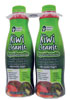
A search through Mintel’s GNPD shows products combining probiotic cultures with dietary fiber have been primarily in the pet food and healthcare categories. While Stonyfield Farms has been a leader in this area, other manufacturers, such as Genesis Today’s recently launched Kiwi Cleanse Yogurt Smoothie with fiber and a blend of four probiotic cultures, will surely follow. -- PF Editors
Photo courtesy Mintel’s GNPD

Chronic and acute gut disorders are a major and growing societal and financial concern. The pharmaceutical approach has been enormously valuable for treating disease. However, there has been an increasing emphasis on dietary-based approaches that reduce risk and act in a prophylactic manner. This is the basis of the “functional foods” concept, whereby dietary ingredients are used for purposes over and above their normal nutritional value1. The “Global Market Review of Functional Foods” estimates the worldwide functional food market will reach a value of at least $90.5 billion by 2013. The emergence of health-conscious consumers with a proactive approach of “prevention over cure” and the development of nutritional science have driven the growth of functional foods. Currently, around 60% of functional foods in use are targeted toward gastrointestinal health.


Probiotics and Prebiotics
The biological and clinical importance of the gut microflora in humans is becoming increasingly recognized by consumers and healthcare workers. Although it is known many disease states involve bacterial metabolism, the human gut microbiota may also be considered as extremely relevant for an improvement in host health2. For instance, Bifidobacteria and Lactobacilli can improve resistance to gut infections by directly inhibiting the growth of harmful bacteria, improving the immune response and producing vitamins. More speculatively, they have been implicated in reducing cholesterol levels, decreasing genotoxic markers and alleviating inflammatory conditions. Scientific concepts underpinning directed modulation of the human gut microflora towards a more beneficial composition have had probiotics as a principal focus.

While probiotics have been ingested by humans for several hundred years, their development has progressed markedly over the last decade. Probiotics are live microbial food supplements that have a beneficial effect on the intestinal flora of the host, thereby leading to health improvements4. Probiotics must be safe (i.e., Generally Regarded As Safe, GRAS); they must be amenable to industrial processes necessary for commercial production; they must remain viable in the food product and during storage; they must persist in the gastrointestinal tract long enough to elicit an effect; and they must improve host health.

The use of live bacteria in the diet has been successful scientifically and economically over the last two decades.

However, there is debate over:
* Maintaining product integrity and consistency.
* Survivability in the product and following ingestion.
* The fact that probiotics are only amenable to use in a limited number of food sectors (as heat kills the strains).

Prebiotics are a far more recent concept than probiotics, being first developed in the mid-1990s5. They are dietary ingredients which can selectively enhance beneficial components of the indigenous gut microbiota, such as Lactobacilli or Bifidobacteria, and are finding increased application in the food sector.

Prebiotics were originally developed to selectively enhance beneficial components of the gut microbiota, such as Lactobacilli or Bifidobacteria. Prebiotics were originally defined as “non-digestible food ingredients that are selectively metabolized by colonic bacteria that have the capacity to improve health” 5. As such, their use is directed towards favoring beneficial changes within the indigenous gut microbial milieu. They are distinct from most dietary fibers, like pectin, celluloses and xylan, which are not selectively metabolized in the gut. Criteria for classification as a prebiotic are:
* Resists gastric acidity, hydrolysis by mammalian enzymes and gastrointestinal absorption.
* Fermentation by intestinal microflora.
* Selectively stimulates the growth and/or activity of intestinal bacteria associated with health and well-being.

Any dietary component that reaches the colon intact is a potential prebiotic; however, it is the latter of the three above criteria which is the most difficult to fulfill. Much of the interest in the development of prebiotics is aimed at non-digestible oligosaccharides, such as fructo-oligosaccharides (FOS), trans-galacto-oligosaccharides (TOS), isomalto-oligosaccharides (IMO), xylo-oligosaccharides (XOS), soy-oligosaccharides (SOS), gluco-oligosaccharides (GOS) and lactosucrose. In Europe, FOS, TOS and lactulose have been shown to be prebiotics, through numerous volunteer trials, as evidenced by their ability to change the gut flora composition after a short feeding period2. Some prebiotics, like inulin, occur naturally in several foods, such as leek, asparagus, chicory, Jerusalem artichoke, garlic, artichoke, onion, wheat, banana and oats, as well as soybean. However, these foods contain only trace levels of prebiotics, so developments have taken the approach of removing the active ingredients from such sources and adding them to more frequently consumed products, in order to attain levels whereby a prebiotic effect may occur (e.g., cereals, confectionery, biscuits, infant foods, yogurts, table spreads, bread, sauces, drinks, etc.) 6. TOS are manufactured from lactose and also are effective prebiotics.

Synbiotics
A further concept for altering the gut microbiota for improved health exists. This is known as synbiotics and exploits both the above approaches. Simply put, a synbiotic is a mixture of a reliable probiotic with an efficacious prebiotic. The word “symbiotic” is derived from two Greek words which together translate as “together” and “life.” Use of the two words together signifies “synergy” in Greek. Synbiotics were originally defined as “a mixture of probiotics and prebiotics that beneficially affects the host, by improving the survival and implantation of live microbial dietary supplements in the gastrointestinal tract, by selectively stimulating the growth and/or activating the metabolism of one or a limited number of health-promoting bacteria, and thus improving welfare” 5. To these authors’ knowledge, this definition has not been altered markedly since. In contrast, both probiotics and prebiotics have undergone several definition changes in the last decade. (The latest versions are given in the chart “A Synbiotic Approach to Health.”)

Synbiotics were developed to overcome possible survival difficulties with probiotics. Hence, the approach would be to fortify strain activity (the probiotic) by incorporating a selective substrate for growth (the prebiotic) within the competitive gut ecosystem. A synbiotic is, therefore, a combination of a probiotic and prebiotic in the same product. The advantages are that a commercial probiotic with known benefits can be used, and the prebiotic aids the establishment of the organism in the complex gut environment. There is clearly great flexibility in the choice of probiotic micro-organisms and prebiotic (probably oligosaccharide), and how the best combination for a specific desired outcome can be determined. A good synbiotic would, therefore, exploit the positive properties of both the probiotic and the prebiotic ingredient.

The original synbiotic premise was that the selective substrate would be metabolized by the live addition in the gut. This would enhance probiotic survival, as well as offer the advantages of both gut microflora management techniques. A clear synbiotic would be a mixture of a Bifidobacterium with fructo-oligosaccharides or galacto-oligosaccharides. By combining the probiotic and prebiotic strategies previously described, additive or synergistic effects may be observed. Increased survival of probiotic bacteria would occur through simultaneous feeding, with a prebiotic being competitively utilized by the probiotic. In addition, the prebiotic may not only stimulate the growth or activity of the fed probiotic strain, but also indigenous beneficial bacteria in the gut. Taking this further, it may be feasible to identify separate categories of synbiotics.

Based on current concepts, two types of synbiotic approaches may exist. The first is “complementary,” whereby the probiotic is chosen based on specific, desired beneficial effects on the host, and the prebiotic is separately chosen to selectively increase specific populations of indigenous beneficial microbiota components. The second is “synergistic,” whereby the probiotic is again chosen based on specific beneficial effects on the host; the prebiotic also specifically stimulates the growth and activity of the chosen probiotic.

 In this case, the prebiotic is selected to have a higher affinity for the probiotic and is chosen to improve its survival and implantation in the host. It may also boost the levels of the beneficial host gastrointestinal microbiota, but the primary target is the ingested probiotic. (See the two illustrations “Complementary Synbiotics” and “Synergistic Synbiotics.”)

As well as Bifidobacteria, Lactobacilli have been extremely popular probiotics. However, most confirmed prebiotics selectively stimulate the former, not the latter, in hitherto conducted human studies2. As such, it is difficult to identify synergistic synbiotics for Lactobacilli. However, a probiotic Lactobacillus spp., in concert with fructans or galactans, would constitute a complementary synbiotic.

The expected benefits of the combination of prebiotics with probiotics could be:
* Improved survival during passage of the probiotic(s) through the upper gastro-intestinal tract.
* A more persistent effect of the probiotic(s) within the host gut ecosystem.
* The prebiotic component may stimulate not only the growth of the probiotic strain(s), but also indigenous components of the colonic microbiota that are considered to be beneficial.
* Health advantages from the live microbes that may not ensue from prebiotics alone.

Most synbiotics launched to date have been in the dairy industry: from a technical perspective, it is largely survivability of the probiotic strains that dictates what synbiotics can be developed, as prebiotics can be used in many food applications. Powdered dietary supplements are another application area.

Technical challenges are not the only barrier to development of the synbiotic market; consumer understanding presents an equally large obstacle. Manufacturers have already included both probiotics and prebiotics in formulations, but may not market the product as a synbiotic.

As the population continues to age, there is increasing susceptibility among consumers to morbidity and mortality. The functional food industry perception of the importance of gut microbiology in human health and nutrition has led to a major increase in prebiotic- and probiotic-based products. Synbiotics are combinations of both, which may induce the positive attributes of both pro- and prebiotics. NS
 

References:
1 GR Gibson and CM Williams (eds.) 2000. Functional Foods: Concept to Product. Woodhead Publishing Limited, Cambridge.
2 GR Gibson and MB Roberfroid (eds.) 2008. A Handbook of Prebiotics. Taylor & Francis, Boca Raton.
3 Steer T, et al. 2000. Nutr Res Rev. 13:229-254.
4 Fuller R. 1989. J Appl Bacteriol. 66:365-378.
5 Gibson GR, Roberfroid MB. 1995. J Nutr. 125:1401-1412.
6 Gibson GR, et al. 2004. Nutr Res Rev.17:259-75.

KEYWORDS: Synbiotics

Share This Story

Looking for a reprint of this article?
From high-res PDFs to custom plaques, order your copy today!

Recommended Content

JOIN TODAY
to unlock your recommendations.

Already have an account? Sign In

  • Women in beverge isle

    Ingredient Demonization May Not Drive Consumer Behavior

    While tracking cultural conversations around demonized...
    2025 Food and Beverage Trends
    By: Prepared Foods Editorial Staff
  • Bubs Candy Packages

    Sweden’s Viral Candy Brand BUBS Lands in US Retail Nationwide

    TikTok videos of BUB's unique chewy-meets-marshmallow...
    Candy
    By: Prepared Foods Editorial Staff
  • Innovation Month Logo Orange

    Introducing Innovation Month: A Deep Dive into the Future of Food & Beverage

    The next wave of food innovation is here. Dive into the...
    Innovation Month
    By: Prepared Foods Editorial Staff
Manage My Account
  • eMagazine Subscription
  • Newsletters
  • Manage My Preferences
  • Online Registration
  • Subscription Customer Service

More Videos

Popular Stories

Circana Pacesetters 2026

Circana Highlights 2025 CPG Pacesetters

Bushs Baked Beans LTO Flavors

Bush’s Beans Debuts Summer-Inspired Flavors

General Mills US250 Packages

General Mills Launches 79 Limited-Edition Summer Products

PF Webinar sponsored by FoodChain: Signals to Shelf: Turning Consumer Insight into Executable Innovation

Events

June 18, 2025

Master the Art of Plant-Based Dairy

ON DEMAND: Whether you're in R&D, formulation, or innovation, this session will provide enzyme-driven insights to improve your plant-based dairy portfolio.

June 25, 2025

Market in Motion: Active Nutrition

ON DEMAND: Once targeted at athletes, active nutrition products with benefits like energy, focus, hydration, and protein are now winning over everyday consumers seeking support for their busy lifestyles.

View All Submit An Event

Products

Recent Advances in Ready-to-Eat Food Technology

Recent Advances in Ready-to-Eat Food Technology

See More Products

CHECK OUT OUR NEW POWER TRENDS

Immunity Logo
Natural & Organic Logo
Plant Based Logo
Protein Logo
Sugar Reduction Logo Sustainability Logo

Related Articles

  • Article: Synbiotics in Focus -- July 2010

    See More
  • Restaurant Menus in 2022 Will Focus on Healthier Planet, Healthier Consumers

    See More
  • Hand holding ice cream cone

    C16 Biosciences Increases Focus in Food Industry

    See More

Related Products

See More Products
  • lowcost.jpg

    Low-Cost, Low-Tech Innovation: New Product Development in the Food Industry

  • Lean Manufacturing in the Food Industry

  • food-crime.jpg

    Food Crime: An Introduction to Deviance in the Food Industry

See More Products

Events

View AllSubmit An Event
  • June 25, 2025

    Market in Motion: Active Nutrition

    ON DEMAND: Once targeted at athletes, active nutrition products with benefits like energy, focus, hydration, and protein are now winning over everyday consumers seeking support for their busy lifestyles.
View AllSubmit An Event
×

Unlock the Future of Food and Beverage Innovation

Are you a leader in research & development? Stay ahead of the curve with Prepared Foods, the premier source of information and insights for today's trend leaders and taste-makers in food and beverage manufacturing.

JOIN TODAY
  • Resources
    • Advertise
    • Contact Us
    • Food Master
    • Store
    • Join
  • Sign Up Today
    • Create Account
    • eMagazine
    • Newsletters
    • Customer Service
    • Manage Preferences
  • Services
    • Marketing Services
    • Reprints
    • Market Research
    • List Rental
    • Survey/Respondent Access
  • Stay Connected
    • LinkedIn
    • Facebook
    • Instagram
    • YouTube
    • X (Twitter)
  • PRIVACY
    • PRIVACY POLICY
    • TERMS & CONDITIONS
    • DO NOT SELL MY PERSONAL INFORMATION
    • PRIVACY REQUEST
    • ACCESSIBILITY

Copyright ©2026. All Rights Reserved BNP Media, Inc. and BNP Media II, LLC.

Design, CMS, Hosting & Web Development :: ePublishing