Working with Dairy
The diversity of milk, milk products, and cheese ingredients is vast
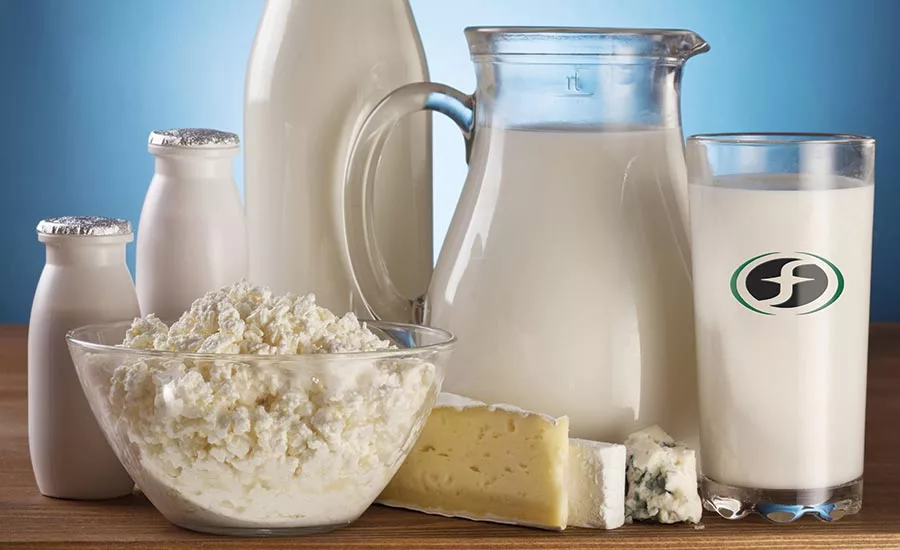
SOURCE: First Choice Ingredients Inc. (www.fcingredients.com)
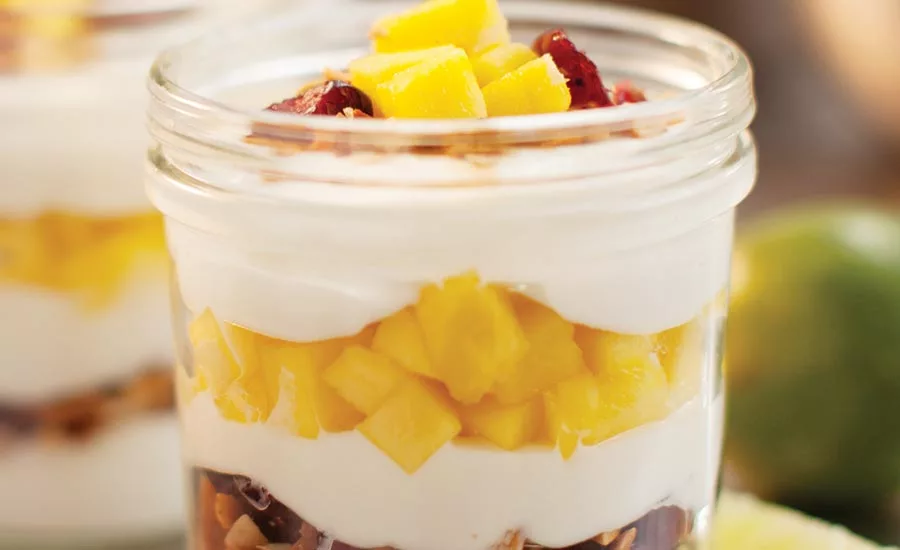
The probiotic trend presents multiple opportunities for dairy, with cultured milk such as yogurt the primary delivery vehicle for healthfully beneficial microbes.
SOURCE: Danone Food Co./Dannon Inc. (www.dannon.com)
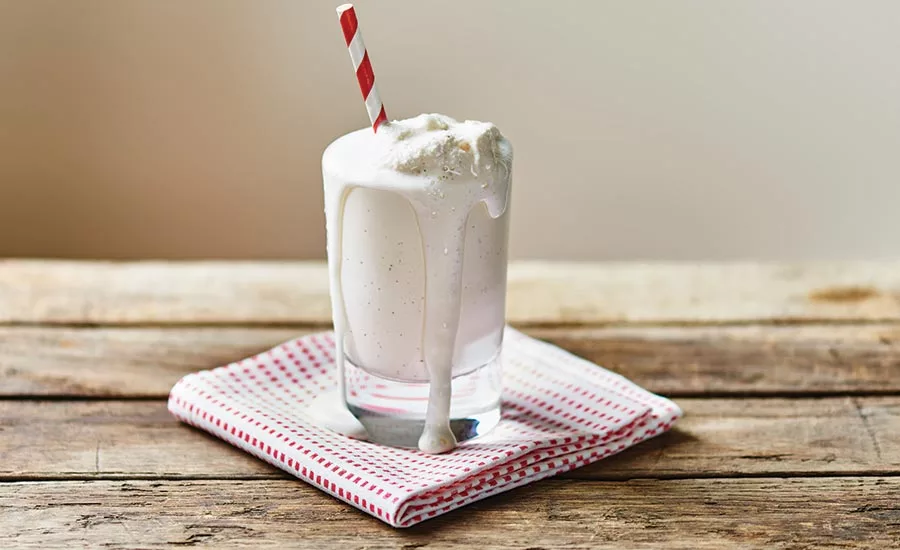
According to research group Euromonitor, artisanal ice creams are a hit with consumers, featuring exotic flavors such as “Tres Leches Brigadeiro” and “Applewood Smoked Caramel Almond.”
SOURCE: Salt-n-Straw LLC (www.saltandstraw.com)
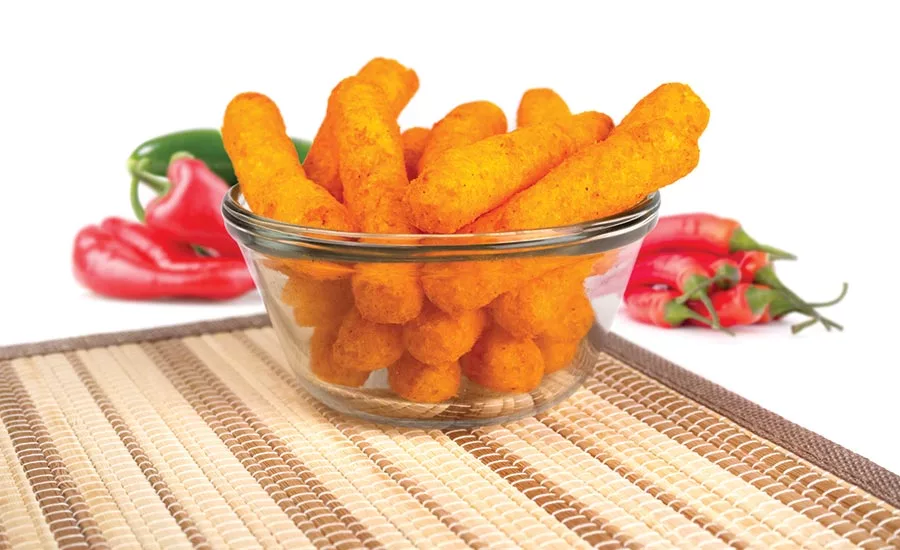
“The use of real cheese powders and dairy-derived seasonings provides a strong competitive advantage in a marketplace driven by healthy, clean-label ingredients.”
SOURCE Land O’Lakes Ingredients Inc. (www.landolakes-ingredients.com)
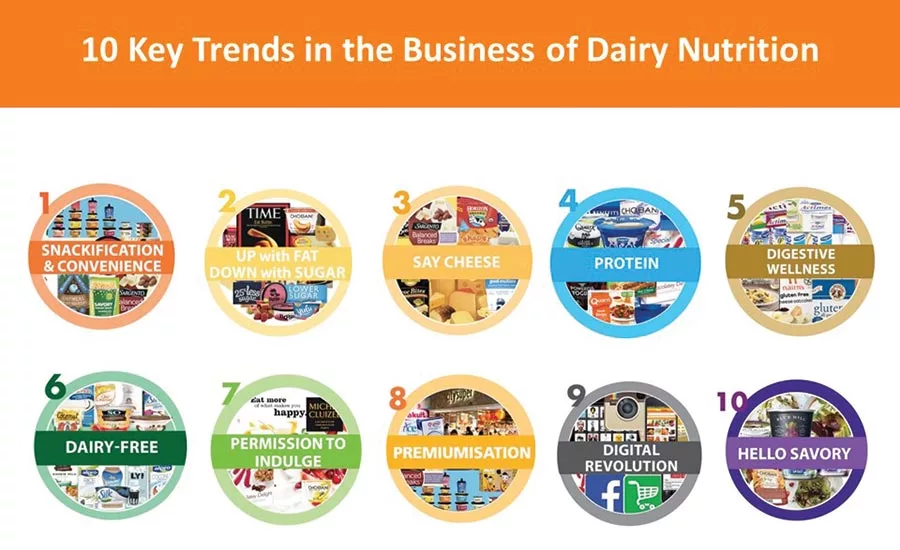
SOURCE: The Centre for Food & Health Studies/NNB (www.new-nutrition.com)
Milk and milk products, such as yogurt, cream, and cheese, are known for their nutritional value. The dairy ingredients derived from them also offer incredible value. The diversity of dairy products—from nutrition and taste, to functionality and texture, to their stand-alone attraction for consumers—continues to be discovered.
Cheese is perhaps the foremost representative of dairy and dairy flavor in prepared products today. Millennials have been helping drive cheese innovations with their interest in variety, bolder flavors, snacking and authenticity. “Companies are creating new varieties of cheese by combining different types of cheese, such as Parmesan with Gouda, or Parmesan and Romano,” said Bill Graves, PhD, senior vice president of product research at National Dairy Council.
“By using culture technology, combined with the ‘make’ procedure for a specific cheese, it’s possible to deliver a lot more of a particular characteristic of a cheese, for example, caramel and pineapple notes in a hybrid Gouda-Parmesan cheese. Or, they can enhance the nuttiness or floral notes of a particular cheese,” explains Graves.
While artisanal cheeses and their hybrids are generating strong interest among consumers, one of the more interesting trends in cheeses of late involves whole cheeses flavored with inclusions or other ingredients. The concept is not exactly new—think Sage Derby or truffled Pecorino. However, “In addition to products that encompass ingredients derived from dairy, there are also innovative new products in the market that showcase whole dairy foods as an ingredient to create products from savory to the sweeter side,” says Sarah Minasian, applications lab coordinator and research chef with the Wisconsin Center for Dairy Research.
For example, this past summer, Milk Truck Cheese Co. launched a shelf-stable cheese and meat combo snack called Cherky. Aged Wisconsin cheese is the primary ingredient, flavored with pieces of hickory-smoked bacon and bits of jalapeño. It provides 6g of protein per 1.5oz stick.
Cottage cheese is enjoying mixing it up in similar fashion. SmithFoods Inc.’s Artisa brand launched two savory, artisan-style cottage cheese snacks, “Black Bean and Corn Salsa” and “Cucumbers and Cream.” Both provide 15g of protein per 5.3oz serving. Artisa slow-cooks its fine-curd cottage cheese to achieve a smooth and creamy texture, allowing the company to market it as suitable for use as a dip or topping as well as a savory snack.
Another example of cheese innovation Minasian points to is Lotito Foods Inc.’s line of lightly baked cheese sheets, called Folios. Available in all-natural part-skim Cheddar, Parmesan or Jarlsberg, the 12g protein cheese sheets can be used as a wrap, bowl (formed into a taco shell or an edible soup or salad bowl), or topper, such as an individual pot pie topper. With their lacy appearance, Folios are attractive as is, or slightly warmed and draped over a bowl of French onion soup, for example.
Consumers are more proactive than ever when it comes to improving their health and many believe fermented foods and probiotic supplements can make a difference. While yogurt and fermented milks such as kefir have boomed in popularity in the past few years, many types of soft cheeses, fermented cheeses, and raw milk cheeses are good sources of beneficial, probiotic bacteria as well. (Note: In the US, raw-milk cheeses, whether imported or domestic, must be aged for a minimum of 60 days.) While most consumers have yet to make that association, some savvy marketers are beginning to promote that specific health connection. It should be noted that consumer beliefs can sometimes jump ahead of the emerging science and FDA-approved claims.
“The probiotic trend, rooted in perceptions of health and wellness, presents an opportunity for dairy, because dairy has long been a key delivery vehicle as a cultured or fermented food,” says Brian Sambor, MS, a dairy scientist with global innovation partnerships at Dairy Management Inc. “Given dairy’s wholesome perception, its high level of consumer acceptance, and its ideal environment for cultures, new product innovations can readily deliver probiotic benefits across various eating occasions.”
Sambor further notes that dairy comes in such an extensive variety of formats, including milk, yogurt, cheeses, frozen products, value-added beverages, and even cottage cheese and butter, that, “in the long term, the trend will only be reinforced as science unravels the microbiome, and dietary recommendations become customized to the needs of the individual.”
Better with Butter
Butter is another dairy ingredient that always has worked well as a carrier of flavor-enhancing ingredients. Compound butters have come in and out of fashion for decades, but new twists and greater interest in world flavors are bringing them back into the spotlight. Also helping is the re-evaluation of butter in the diet. Specifically, research that shows that, calorie for calorie, butter is no more of a nutritional concern than oil-based butter substitutes. In fact, natural butter has other benefits, both in nutrition and in processing.
Minasian highlighted Samba Flavor Inc.’s ChimiButter Herbed Butter, winner of a 2015 World Dairy Innovation Award. The product starts with a base of organic butter into which the popular Latin American chimichurri herb mixes (parsley, garlic, oregano, and pepper) are folded, and then finished with white or red wine. The butters are available in 3oz logs. “These butter-based spreads can be used to finish off cream sauces or top baked potatoes, or they can be tossed with pasta or vegetables or spread on toast or bagels,” says Minasian.
“Butter offers a lot of exciting opportunities for product development, according to Rachel Weber, MS, dairy scientist for global innovation partnerships at Dairy Management Inc. “Beyond having a preferred flavor, it has a simple ingredient statement consumers recognize.” Butter has been around for thousands of years,” she explains. But after several decades of butter being replaced with non-dairy ingredients, the trend is now moving strongly toward butter.
Butter is highly versatile ingredient in food applications. It is used across the kitchen in food service settings and product manufacturing, playing roles in both flavor and texture. Many chefs and food developers are now embracing butter’s potential. “McDonald’s restaurants, for example, now are using butter to cook eggs and to enhance the flavor of muffins and biscuits,” adds Weber.
The Protein Fraction
Whey comprises 80 to 90% of the total volume of milk, and contains about half of milk’s nutrients—specifically, soluble protein, lactose, vitamins, and minerals. Whey permeates, also termed “dairy product solids,” are deproteinized whey or modified whey. Although they are co-products of whey protein concentrate and whey protein isolate production, they are also valuable ingredients in their own right. Whey permeates have good solubility, and a flavor described as “sweet,” “pleasant,” and “milky.”
Delactosed whey permeates contain about three times as much mineral content as permeates, according to the US Dairy Export Council, with calcium, potassium, and magnesium available in amounts that can enhance a product’s overall nutritional profile. Whey permeates have many applications, but “two diverse attributes are noteworthy when it comes to health and wellness—it can be used to help bring out the natural sweetness of a product and used to help lower sodium,” says Graves. “Permeates may be labeled as ‘dairy product solids,’ which also helps support clean label demands.”
For consumers, dairy’s protein benefit is gradually becoming more apparent, although still not at the recognition of calcium. But this is why dairy protein can be seen as an opportunity for processors. Consumers want more protein, but have less awareness that dairy can be a way to get it.
Milk, cheese, yogurt, and dairy ingredients (i.e., whey and casein) contain highly bioavailable, high-quality protein, including all the essential amino acids. An increasing body of research indicates that higher-protein diets provide benefits in weight management, healthy aging, and muscle health among athletes and active individuals.
To reap the benefits of protein, many consumers strive to increase their protein intake to expert-recommended acceptable ranges and are seeking foods and beverages to accomplish this with convenience, not to mention enjoyment. This is an opportunity for food and beverage companies to create products to meet those consumer demands, and dairy proteins offer distinct formulation advantages. In addition to flavor and texture improvements, dairy proteins can increase product yields, depending on the application.
“Pedigree is important when picking a protein for food and beverage formulation,” says Mickey Rubin, PhD, vice president of nutrition research at National Dairy Council. “Milk’s protein is about 80% casein and 20% whey. Slight differences in amino acid composition and rate of digestion set them apart to meet different needs.” Membrane filtration has made it possible to more efficiently separate milk proteins into micellar casein and whey proteins with greater purity.
“Casein has a slower rate of digestion, thus a gradual release of amino acids to muscle,” Rubin explains. “Scientists have hypothesized that consuming casein before bed could help maximize muscle rebuilding, repair, and recovery after exercise, as its slow release of amino acids could help cover the body’s needs until breakfast.”
Two studies in healthy young men performing resistance exercise have shown improved recovery (muscle protein synthesis) and greater gains in muscle mass when casein was provided prior to sleep, as compared to no protein after exercise.
Whey protein, on the other hand, has a rapid, transient release of amino acids to the muscle, according to Matt Pikosky, PhD, RD, vice president of nutrition science and partnerships at National Dairy Council. Pikosky cites a recent review paper that suggests whey protein can increase the rate at which the body makes lean muscle. This is because it is one of the best sources of leucine, a key amino acid in promoting muscle protein synthesis. Whey provides about 2.5g of leucine per 20g of protein.
A study released last September involving intense cycling training among athletes found that a carbohydrate beverage containing whey protein given during intense exercise, and chocolate milk immediately after intense exercise, had favorable effects on skeletal muscle function as well as on constant-load heart rate during heavy endurance training and recovery.
In addition to dairy protein ingredients, there also are opportunities to enhance the protein content of new food products or recipes through adding milk, cheese, and yogurt to other foods and ingredients. Many people do not evenly spread out protein-containing foods over the course of the day, instead getting the majority of their protein at dinner.
Having a better balance of protein throughout the day to help improve satiety (the feeling of fullness) is an important consumer concern. Greek or Icelandic yogurts, and cottage-type cheeses, provide significant promise for those looking for convenient and tasty ways to boost protein at breakfast, lunch, and snack time.
Flavor Only
Dairy ingredients in the form of natural flavors serve a number of functions in both dairy and non-dairy products. They can be used to boost the flavor profile of a product, mask certain bitter or acidic flavor notes, or even to enhance savory flavors. The latter is something chefs have known for decades, such as when finishing a meat or tomato sauce with butter.
By using dairy flavors, more costly whole-dairy ingredients can be extended for savings. Another way dairy flavors can help reduce costs is by providing consistency in flavor. Dairy is especially susceptible to flavor variations based on sources, seasons, and regions. Milk from a Jersey cow munching on spring grasses in Iowa will have a different flavor profile from milk taken from a Guernsey cow nibbling at fall hay in California.
Dairy flavors can be used to redress flavor loss from fat reduction in a formulation, too. Restoring butteriness or creamlike flavors to a low-fat item can be effectively accomplished with its naturally derived flavors from real cream or cheese. Such flavors are typically customizable and conform to a need for clean labels.
Dairy Sweet
Heavy consumer interest in products lower in sugar and sodium is driving food and beverage makers to create products to meet that demand. Whey permeates can be used to help reduce the sodium of a product without losing salty flavor.
Research indicates reduced-lactose permeates provide the most intense salty flavor. To maximize the salty attribute, a product with high lactic acid and potassium chloride is ideal (i.e., acid whey from Greek yogurt or cottage cheese).
Sugar reduction is of special interest to makers of dairy milk products. “Foods and beverages with higher amounts of sugar are often a concern for parents and many people, but artificial sweeteners are often met with skepticism despite proven safety,” says Rubin. “Lactose hydrolysis provides one solution for making flavored milk with desired sweetness, but with less added sugar and no artificial sweeteners.”
Lactose hydrolysis involves splitting lactose into its simpler sugars, galactose and glucose. This process is generally done enzymatically, and produces a sweeter taste—useful for formulating flavored milks and drinkable yogurts where sweetness is desired, but without artificial sweeteners. If increased sweetness is desired, additional dry lactose or permeates can be added and hydrolyzed.
It should be noted that this is not a calorie-free option, so depending on the level of sweetness required, the calories can add up. This application has potential for other foods and beverages where there is a demand for more sweetness that also meets consumers’ desire for natural and clean label products. The bonus for parents who are trying to satisfy multiple family needs is that not only can lactose hydrolysis help result in a product with less lactose, but it also contributes natural sweetness.
Some consumers don’t want the sweeter taste a lactose-free milk can have if it was created via lactose hydrolysis. Another method to create lactose-free products is through membrane filtration technology, which allows for reduction or elimination of lactose without sweeter tastes.
Membrane filtration technology also allows companies to add more or less of any of milk’s nutrients—such as calcium or protein—or to manipulate characteristics such as texture or taste. This technology essentially lets a food developer separate milk into its components. These can then be recombined in a number of ways to create new value-added products. Several dairy-based, higher-protein beverages are available or are being developed with this methodology. They are designed to meet the needs of sports enthusiasts as well as those desiring higher-protein foods and beverages for healthy aging, weight management, and more.
Milk Plus
“Milk and dairy impart great taste and texture with a clean label,” says Emil Nashed, senior vice president of research and development for global innovation partnerships at Dairy Management Inc. “Adding dairy to drinks such as coffee has long been a mainstay and continues to see innovations with products such as cold brew coffee and premium coffee creamers.”
Dairy combined with fruit juices is another emerging innovation area, and includes both milk- and yogurt-based products. Over the past decade or so, the occasional milk-plus-juice product has been introduced, and there have been the more familiar drinkable yogurts/kefir and yogurt smoothies. However, the current marketplace has been rapidly expanding, with new product launches that revisit this combination area. These refrigerated and shelf-stable products carry contemporary taste profiles and feature a range of textures, with some even employing inclusions.
Capitalizing on the popularity of recent banana-flavored milk combinations, White Wave Foods Co. has launched Sir Bananas, an ultra-pasteurized milk beverage made with 20% banana purée. “Sir Bananas comes in two flavors–Bananamilk and Chocolate Bananamilk—each offering 7g of protein from reduced-fat milk,” says Minasian.
Milk-plus-coffee and milk-plus-tea products also have been increasing in the marketplace. Most of the products come sweetened and make use of various stabilizers, such as natural gums and starches, to keep the dairy from separating and to ensure longer shelflife.
Convenience and snacking have certainly been an innovation sweet spot across the food and beverage industry, and dairy is no exception. Since many dairy products are limited by the need for refrigeration and have a short shelflife, on-the-go and single-serve format offerings have been limited and often received mediocre consumer interest. But that’s changing. “Thanks to emerging, novel packaging and food pasteurization techniques, higher quality dairy-containing innovations could be possible, allowing dairy to more effectively deliver on convenience and customization,” says Nashed.
Products with fewer heat treatment-related off tastes, and more vibrant and diverse flavors, are possible. Combined with clever and sustainable packaging formats, these innovations could propel dairy into more eating occasions. Such developments also will establish a wider consumer base without the limitations of short shelflife and need for refrigeration.
Processes like fractionation and recombination can further drive dairy innovation. And although these processes are not new to the dairy industry, the future of improved efficiency, selectivity and expanding application is more novel. These factors can enable more customized products to enter the marketplace as nutrition recommendations evolve from being for the masses to targeted to the individual based on their need state.
“In addition to the research spearheaded by National Dairy Council, the Innovation Center for US Dairy and the Dairy Research Centers, we also seek insights from students through National Dairy Council’s annual New Product Competition,” says Graves. “This year’s competition called on food science undergraduate and graduate students to develop dairy-based prototypes that would meet the public’s desire for benefits in terms of helping provide physical or mental energy.”
The 2016 winning prototype was from the student team at North Carolina State University. They created “Panikotta,” a vanilla- and honey-flavored Greek-style dessert made with whole milk, reduced-fat Greek yogurt, and cultured non-fat dry milk. The result was a high-protein sweet treat. “When it comes to innovations with dairy, says Graves, “the horizon is vast.”
Originally appeared in the January, 2017 issue of Prepared Foods as Working with Dairy.
Package Deal
The milk protein casein can be used to create edible, biodegradable packaging that is similar to plastic wrap. USDA researchers have found that milk-derived packaging can be up to 500 times more efficient than plastic at keeping oxygen from food. This is due to the tight network of proteins that results from the polymerization process. Researchers also discovered that the packaging is more effective than other edible packaging materials made from starches, plus it can protect contents from light damage. The applications are unlimited, from boosting nutrition to helping the environment.
Full-fat Dairy
With the emerging research on fat, and dairy fat in particular, there is an increased potential for whole milk and whole-milk dairy products to evolve.
“Consumer acceptance of full-fat dairy products is growing, and so is the research on dairy foods such as milk, cheese, and yogurt—regardless of fat level—and an association with reduced risk of cardiovascular disease and type 2 diabetes,” states Mickey Rubin, PhD, vice president of nutrition research at National Dairy Council. “More products are being formulated, and more recipes created, using whole milk and whole-milk dairy foods. In many cases, the benefit extends to lower carbohydrates per serving, as well, since fewer starches and other viscosifiers would be necessary. This can result in a cleaner and simpler ingredient statement. Additionally, the taste and texture of such products often see a major improvement in overall liking and desirability among consumers.”
Butter by Any Other Name
Until relatively recently, butter had a reputation as dairy’s “bad boy” when it came to health. Decades of misunderstanding of the relationship between dietary saturated fats and disease states in healthy persons had dairy fat on the “no fly” list. But as science has peeled back layers of complexity, dairy fats are being revealed as not only largely neutral when it comes to disease risks, but might actually be beneficial in some cases. As an example, recent research has discovered potential benefits attributed to what is called the “milk fat globule membrane” (MFGM).
As a major component of dairy fat (such as is in butter and buttermilk), MFGM holds promise for food innovators because emerging research indicates that this is another component that differentiates dairy fat from other sources of saturated fat. Additionally, MFGM and the phospholipids that make up its structure might have value as nutraceutical ingredients. “The emerging scientific evidence on milk phospholipids suggests a potential role for these compounds in human health,” says Moises Torres-Gonzalez, PhD, director of nutrition research at National Dairy Council.
Phospholipids constitute 40% of the total lipids in the MFGM. Their potential benefits have attracted great attention within the scientific community. “In animal studies, phospholipids have been associated with inhibition of colorectal cancer and reduction of blood cholesterol levels,” notes Torres-Gonzalez. For example, a randomized human clinical trial revealed that “whipping cream enriched with MFGM attenuated the effects of saturated fat on low-density lipoprotein (LDL) cholesterol levels when compared with butter, which normally has very low content of MFGM.” Another recent clinical study showed that MFGM improved resistance to E. coli infection in adults.
Sphingomyelin (SM), one of the most abundant phospholipids in the MFGM, plays a vital role in the structure of the brain cell membrane. A pilot study conducted in Japan found that “a formula fortified with a higher level of SM and a different overall phospholipid profile improved some determinants associated with positive neurodevelopment in preterm infants at 12 and 18 months of age.”
Torres–Gonzalez points out that “more research is needed to confirm preliminary findings on phospholipids to help determine the potential applications in food products to support health,” but he predicts that such research will “continue to grow and spark future innovation.”
Looking for a reprint of this article?
From high-res PDFs to custom plaques, order your copy today!


