Functional Foods for Bone & Joint Health
New functional new foods and beverages can help consumers alleviate bone and joint aches and pains

PHOTO COURTESY OF: Gelita USA Inc. (www.gelita.com)
“Osteoporosis and low bone mass are currently estimated to be a major public health threat for almost 44 million US women and men aged 50 and older,” according to the International Osteoporosis Foundation.
The group further notes that the 44 million people “with either osteoporosis or low bone mass represent 55% of the people aged 50 and older.” There can be a lot of things to look forward to when it comes to getting older—but joint pain isn’t one of them.
Meanwhile, the US Centers for Disease Control and Prevention reports that nearly 15 million Americans suffer from joint pain. This figure represents nearly a 50% increase over the number identified a decade ago.
With aches and pains on the rise, many Americans are looking to incorporate inexpensive and accessible ingredients into their diets that may alleviate some of these problems or prevent these pains from starting at all.
Osteoporosis, a condition in which the bones become brittle and fragile, can occur in old age as a result of not consuming enough vital nutrients, although there is also a genetic component predisposing the onset, progress, and severity of the condition. The pains and problems associated with this condition typically begin in late middle age or later, but the dietary choices that affect them begin at a young age.
Osteoporosis is most common among post-menopausal women, and it can put quite a strain on everyday life. Fortunately, there are measures that can be taken preventively, as well as later on in life.
Bone Nutrient Basics
When it comes to preventing bone, joint, and muscle pain, there are some key vitamins and minerals that food and beverage makers should include. Vitamins K, D, and C are among the most important for promoting strong bones.
Equally important are the minerals that form the bones and joints themselves, especially magnesium, calcium, potassium, and phosphate. Consuming the right amounts of these key nutrients is the best way to alleviate joint and muscle pain.
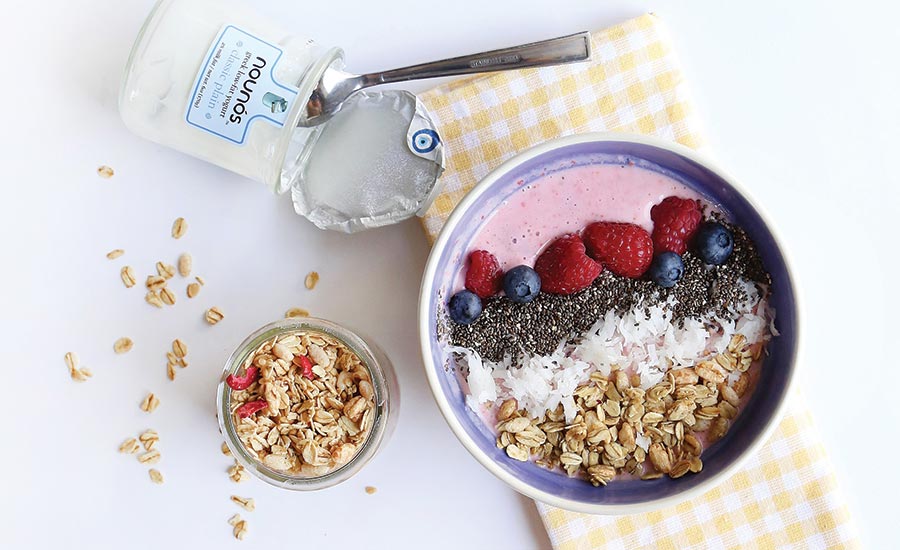
Active culture dairy yogurt brings vitamin D, healthy fats, and probiotics to the bone and joint health table.
PHOTO COURTESY OF: Nounos Creamery Inc. (www.nounoscreamery.com)
Calcium is widely known as one of the most important minerals in promoting bone health. And ensuring that the diet contains enough calcium is especially important for those over 50. Yet it can be tricky. It is recommended that the average person consume 1,000mg of calcium each day. For women, 1,200 mg are recommended, since women are particularly susceptible to bone and joint maladies such as osteoporosis.
Calcium can be easy to incorporate into nearly any product. Usually, it is in the form of calcium carbonate, which is in nearly half of the products boasting added calcium. However, calcium citrate, too, is a common form added to products, as are calcium gluconate and calcium phosphate. These last two forms are harder to absorb, however.
Another method for incorporating calcium into foods and beverages is through the use of leafy green vegetables. Spinach and kale have become increasingly popular, and both can be a significant source to promote healthy bones. The drawback, from a metabolic standpoint, is that the calcium in leafy greens is much harder for the body to absorb and oxalic acid, high in raw greens, can interfere further with calcium absorption.
Calcium isn’t the only mineral needed to increase bone density and overall wellness. Phosphorus, iron, and potassium also are needed. So, too, are the trace minerals selenium (an antioxidant mineral) and copper. Dietary deficiencies of these minerals have been shown to negatively impact skeletal integrity.
Another important trace mineral for bones and joints is magnesium. In a recent study, magnesium consumption was found to have a positive correlation with hip and femoral neck bone density. The study demonstrated that magnesium intake can actually help alleviate some of the most common and intense types of pain, especially in seniors.
K Rations
Dark leafy greens also contain vitamin K. While recognized primarily as critical to the coagulation process, a couple of decades ago the role of this fat-soluble vitamin in bone development began to become more clearly evident.
By the 2000s, it had become well-understood that the form known as K2, menaquinone, can be highly beneficial in ameliorating osteoporosis—preventing fractures, regulating the laying down of bone minerals, and preventing or even reversing bone loss.
As good a source as are dark leafy greens for calcium, vitamin K, and even vitamin C, they still are limited as to the formulations into which they can be incorporated. Ingredient technologists, however, have created microencapsulated forms that allow these nutrients to be used across a comprehensive range of foods and beverages, including clear beverages.
Big D
In order for your body to absorb calcium, vitamin D is indispensable. While it is called the “sunshine vitamin” due to the unique ability of the body to make vitamin D from that glowing source, dairy products remain a primary source of vitamin D in the American diet.
However, in recent years, the decline in dairy milk intake, combined with decreased exposure to the sun—secondary to a combination of overall lower physical activity and worries over UV-induced skin cancer—have led to an overall reduction in the population’s vitamin D intake.
Yogurt Triple Shot
Cultured dairy is not only a good source of calcium and vitamin D, it appears that in addition to those bone-and-joint health ingredients the probiotic content could be of benefit. Recent studies have shown that probiotic bacteria, most popular for boosting digestive health and immunity, might help alleviate strain on bones and joints. In adults over age 65, helpful colony forming microbes in the gut have been shown to increase the production of anti-inflammatory agents. These could in turn help reduce the swelling and pain in arthritic joints.
Another factor impacting acquisition of vitamin D is the growing adherence to vegan diets that preclude dairy products like milk, yogurt, and cheese, which are classic sources of vitamin D. For vegans and persons with dairy restrictions due to allergies or intolerances, vitamin D-enhanced dairy analogs have become available more widely and in greater variety than ever.
Technological breakthroughs have brought to the market milk substitutes, cheeses, and yogurts in abundance from sources such as nuts, coconut, legumes, flax, grains, and seeds. In texture and nutrition, these products can meet and even exceed the performance of their traditional counterparts.
The Soft Stuff
The soft tissues of the bones and joints include the cartilage that covers the interacting surfaces of the bones, the ligaments that connect the bones, and the tendons that connect the bones to muscle, thus allowing for the operation of the joints themselves.
Tendons, cartilage, and ligaments are made up of collagen, a structural protein that accounts for between a quarter and a third of all the protein in the body. While humans are adept at building these tissues from dietary protein of all sources, adding collagen peptides to formulations has been shown to help build and maintain these vital tissues.

Eggs are one of the best sources of choline, a vitamin-like compound that helps joints form lubricating layers of cartilage and synovial fluid.
PHOTO COURTESY OF: The American Egg Board (www.aeb.org)
In a 2015 overview of the science published in the journal Nutrición Hospitalaria, the authors concluded that collagen hydrolysate—collagen peptides or gelatin—can help to “reduce and prevent joint pain, bone density loss, and skin aging.” The authors also noted that the results of the study indicate that the high level of tolerance and safety make collagen hydrolysate ingestion attractive for long-term use in combatting bone and joint degenerative diseases and in the fight against skin aging.
Vitamin C is another nutrient helpful for building collagen, as it is critical to collagen synthesis. Skin also benefits from vitamin C in two ways. First, the vitamin helps maintain collagen microstructures that preserve skin integrity. Second, the antioxidant property of the vitamin helps protect skin from damage wrought by UV light and environmental insults.
Back to Soy
Soy has also been making waves when it comes to increasing bone density. Legumes in general are excellent sources of most, if not all, of the aforementioned minerals needed for bone and joint health. A recent Columbian interventional study reported in the Journal of Dietary Supplements confirmed that a daily soy protein supplement for children could help “ensure harmonious and adequate bone health and development.”
Soy’s bone benefits reach beyond their mineral content. Soy also contains phytoestrogens, plant-based mimics of estrogen. While soy phytoestrogens recently generated concern in regard to women who have an estrogen-sensitive predisposition for breast cancer, typical intakes of soy have not demonstrated a significant risk.

Collagen peptides, created from gelatin, can be readily incorporated into trendy bone broth formulations to make a comforting, "better for you" mid-morning pick-me-up.
PHOTO COURTESY OF: Nitta Gelatin NA (www.nitta-gelatin.com)
Phytoestrogens, along with other soy isoflavones, have demonstrated an ability to be beneficial for increasing and maintaining bone-mineral density. It should be noted, however, that soy and other legumes, as well as nuts, seeds, and some grains, are high in phytic acid (phytate). This compound inhibits mineral absorption.
There’s another positive side to nuts, seeds, and grains when it comes to caring for our skeleton. These plant foods not only are high in the minerals described above but also contain essential fatty acids, especially omega fatty acids.
Evidence suggests that, in addition to their myriad other health benefits, these oils can help alleviate bone and joint pain in some forms of arthritis and osteoporosis, having both analgesic and bone-sparing properties.
Omegas from other sources, too, are beneficial. In fact, one randomized, double-blind study found that the gamma linolenic acid (GLA) fatty acid in borage oil, when coupled with marine-sourced omega 3s, yielded long-term improvements from a nine-month regimen for the treatment of rheumatoid arthritis (RA).
Another botanical recently demonstrating possible benefits for people with RA is Andrographis paniculata—a bitter herbaceous plant used in traditional Chinese and Ayurvedic medicines. Its method of action is supporting a healthy inflammatory response. By doing this, it inhibits bone erosion and stimulates increased production of osteoblasts, the cells that become bone. Studies of the botanical ingredient indicated it was influential in diminishing swelling in joints and in decreasing rheumatoid factor.
When it comes to dealing with pain, figuring out what your best options are for fighting it can be overwhelming. While it can feel as if there are a daunting number of drugs and other aggressive interventions, the foods and beverages we enjoy can make the biggest difference at the end of the day.
Originally appeared in the May, 2018 issue of Prepared Foods as Skeleton Crew.
Looking for a reprint of this article?
From high-res PDFs to custom plaques, order your copy today!


