Trends | Sugar Reduction
Sugar, Salt Reduction Drives New Formulation Strategies
Consumer health goals, policy pressure and ingredient innovation are reshaping approaches to sugar and sodium reduction.
For years, people have been told to cut back on sugar and salt as a step toward better nutrition and health. Sugar and salt reduction is so anchored in global public health initiatives that many countries use front-of-pack labeling systems to alert consumers regarding a product’s high sugar or salt content.
However, since both sugar and salt impact the sensory properties of food and beverage products, reduction is not as simple as limiting their presence in a formulation. Furthermore, we often see a mismatch between consumer intention regarding sugar and sodium reduction and consumer action, especially when taste is compromised.
Innova trends for 2026 touch on several aspects related to sugar and salt reduction. Our global ingredient trends for 2026 identify three key strategies regarding ingredients:
- Add the good (naturally sweet ingredients)
- Keep it natural (think natural rather than artificial sweeteners and natural sources of flavor enhancement in place of sodium)
- Cut the bad (sugar and salt)
One highlighted 2026 trend, "Vitality and Longevity," highlights how consumers are highly focused on taking action today to ensure good health in the future. Our trends surveys find consumers highly influenced by "low sugar," "no sugar," and "reduced sugar" claims on beverages.
The "Layers of Delight" trend highlights the multidimensional, multisensory nature of food and beverage indulgence. Sugar and salt are key players in the sensory experience, and foods and beverages that delight tend to have one or the other.
The fourth trend, "Beverages with Purpose," is particularly relevant to sugar and sugar reduction. Beverages are at the forefront of innovation for wellness and often contain sweeteners that take the place of sugar. "Sugar-free" is a prominent claim in today’s beverage launches.

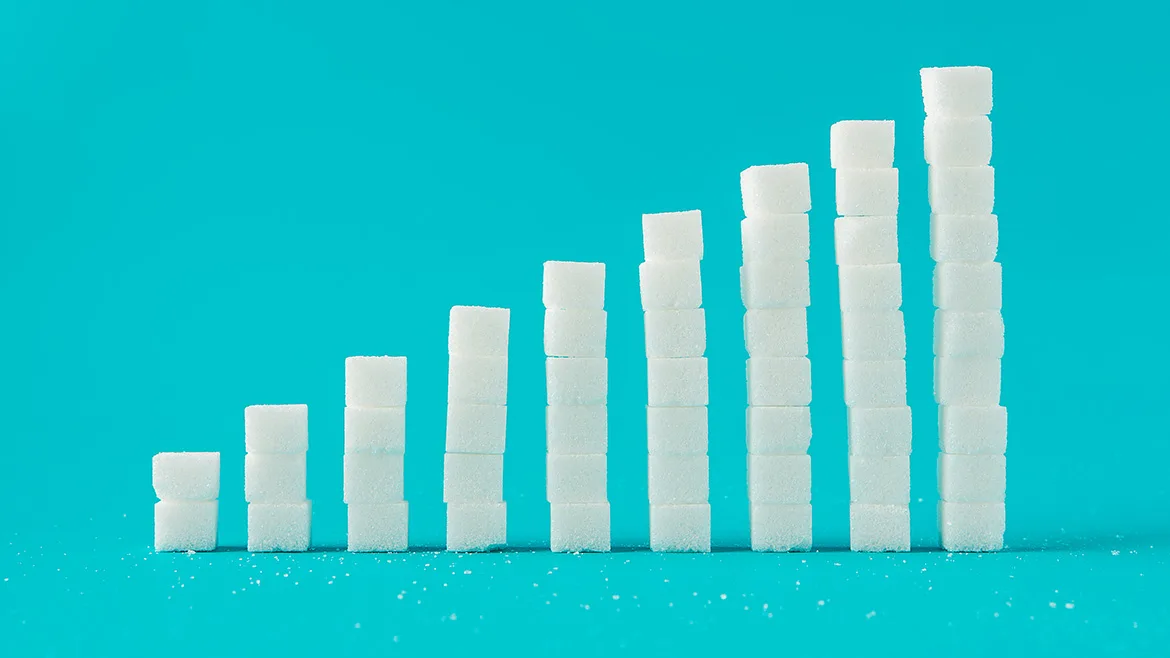
Image credit: Elizaveta Antropova / Getty Images Plus via Getty Images
Great Intentions
Despite their pursuit of food and beverage experiences that appeal to multiple senses, consumers also recognize the need to apply health considerations to their choices of indulgent food and beverage products. The U.S. is experiencing expanded awareness of healthier eating, with increased emphasis on sugar and salt reduction. Furthermore, the newly released and highly publicized Dietary Guidelines for Americans and the "Make Americans Healthy Again" campaign shine a spotlight on potentially unhealthy ingredients, such as sugar and salt.
Innova surveys show consumers both in the U.S. and globally look at food product labels more often, and many are declaring their intention to actively limit consumption of specific ingredients, including sugar, salt, and fat. In the 2025 Innova "Health & Nutrition" survey, at least one-quarter of U.S. consumers report limiting both sugar and salt. They also limit artificial sweeteners. Fewer report limiting natural sweeteners and naturally sweet ingredients like honey and maple syrup. Natural sweeteners like stevia, monk fruit, rare sugars, and sweet proteins will also play a growing role in sugar replacement.
U.S. consumers report seeking healthier options across food and beverage categories, including those positioned for indulgence. A notable proportion of U.S. consumers surveyed by Innova say that indulgent foods could be healthier if they had fewer negative or artificial ingredients and more natural components. Many U.S. consumers also state that they are willing to compromise on a product’s level of indulgence, including the amount of sugar or salt, to have a healthier experience.
Sugar and salt reduction are particularly important to older consumers facing health conditions like diabetes, high blood pressure, and heart disease that could benefit from sugar and/or salt reduction. U.S. baby boomers, in particular, are highly concerned about both added sugars and artificial sweeteners, followed by Generation X and then millennials. U.S. Gen Z consumers have the lowest level of concern, likely because they have not yet developed diet-related health problems.
Consumer perception of sweeteners is quite interesting. Earlier Innova surveys have found that while consumers name "added sugar" as their top ingredient to avoid, they also rank cane sugar as the most natural and healthy sweet ingredient. This highlights one of the challenges in moving consumers away from traditional sugar, as they view it as a natural ingredient.
Policy-Fueled Formulation
FDA has proposed mandatory front-of-pack food and beverage labels depicting levels of sodium, added sugar, and saturated fat per serving as low, medium, or high. The goal of these labels is two-fold: to help educate consumers regarding healthier foods and to push companies to reformulate their products with lower amounts of these nutrients. The mere presence of these labels might move companies toward reformulation, just as requiring the listing of added sugars on the Nutrition Facts panel helped push manufacturers to lower the amount of added sugars in products.
In the U.S., as well as globally, public health efforts toward reducing sodium intake are falling short. The World Health Organization (WHO) goal for a 30% reduction by 2025 was not achieved. However, the U.S., along with 42 other countries, received a score of 3 out of 4 on the WHO's sodium country scorecard for having at least one mandatory sodium policy and including sodium content on the label for packaged foods. In the U.S., launches of new products with a sodium reduction claim have remained stable over the past five years.
Ingredient Innovations
Innova’s tracking of new product launches shows a negative compound annual growth rate between 2021 and 2025 for launches with sweeteners, compared to stability in launches with sugar. Compound growth rates are highest for rare sugars and negative for bulk sweeteners like sugar alcohols.
Innovation in natural non-nutritive sweeteners is evolving rapidly. Companies are replacing sugar with combinations of natural sweeteners such as stevia and monk fruit, sugar alcohols like erythritol, allulose and other raresugars, brazzein and other sweet proteins, and soluble fiber ingredients to replicate the functional properties of sugar and its sweetness. U.S. consumers, who display preference for natural ingredients, will likely accept these natural sweeteners on labels.
Ingredient suppliers are producing sweet proteins such as monellin and brazzein, along with allulose, using fermentation. These ingredients confer sweetness, do not affect blood sugar, and are promoted as climate-friendly. Other new natural sweeteners, including one derived from honey truffle mushrooms, are expected in the near future.
New Product Launches
In 2025, 5% of U.S. food and beverage launches carried a "no added sugar" claim or a "sugar-free" claim, and 2% had a "low sodium," "no sodium," or "reduced sodium" claim. Compound annual growth for products with a sodium-reduction claim is particularly slow, at about 1% per year over the past five years.
In a recent report, Innova looked at the top categories where manufacturers are reformulating, under the assumption that reformulations could be targeted toward an improved nutrition profile. The four top categories for reformulation were sports nutrition, bakery, soft drinks, and dairy. "Sugar-free" is among the most common and fastest-growing health claims on reformulated products. "No added sugar" claims are declining, and reformulated launches with sodium reduction claims are stable.
Manufacturers also are focusing on health claims beyond sugar or sodium reduction. The most common health claims accompanying sugar and salt reduction include gluten-free, low/no/reduced fat, high/source of protein, and no additives/preservatives. This approach represents movement toward a more holistic approach to nutrition and health.
The No and Low Outlook
Sugar reduction has a bright future, with the rapid innovation around natural sweeteners and combinations of ingredients that replicate the functional and sensory properties of sugar. Fermentation promises to bring a broader range of sweetener ingredients to the marketplace as long as price, performance, and supply meet expectations, and formulations offer sensory features satisfy consumer desire for sweet tastes.
Salt reduction is harder to predict. While formulators have successfully reduced sodium, gradually and stealthily, in products such as canned soups and frozen meals, broader introduction—and acceptance—of reduced-sodium products will require astute strategies to maintain desired flavor profiles.
Looking for a reprint of this article?
From high-res PDFs to custom plaques, order your copy today!


