Fine tuning cheese for customized flavors and textures
Foremost Farms USA's top cheesemakers reveal how they transform beloved cheeses into functional, flavorful ingredients for food products.
Cheese has always been a favorite food and traditionally lands at the top of US consumers’ favorite savory flavors. Demonstrating that is a recent USDA report showing that cheese consumption continues to break records, with per capita cheese consumption having almost doubled since 1980.
While cheeses such as Brie, Gouda, Asiago, Gruyere, and other more exotic types have been enjoying popularity in the US, Americans also continue to turn to familiar, traditional cheeses they associate with comfort and consistency. These are cheddar, Monterey Jack, brick, Swiss, and mozzarella. Demand for domestic cheeses remains high. This popularity among consumers translates into using cheese in food formulations.
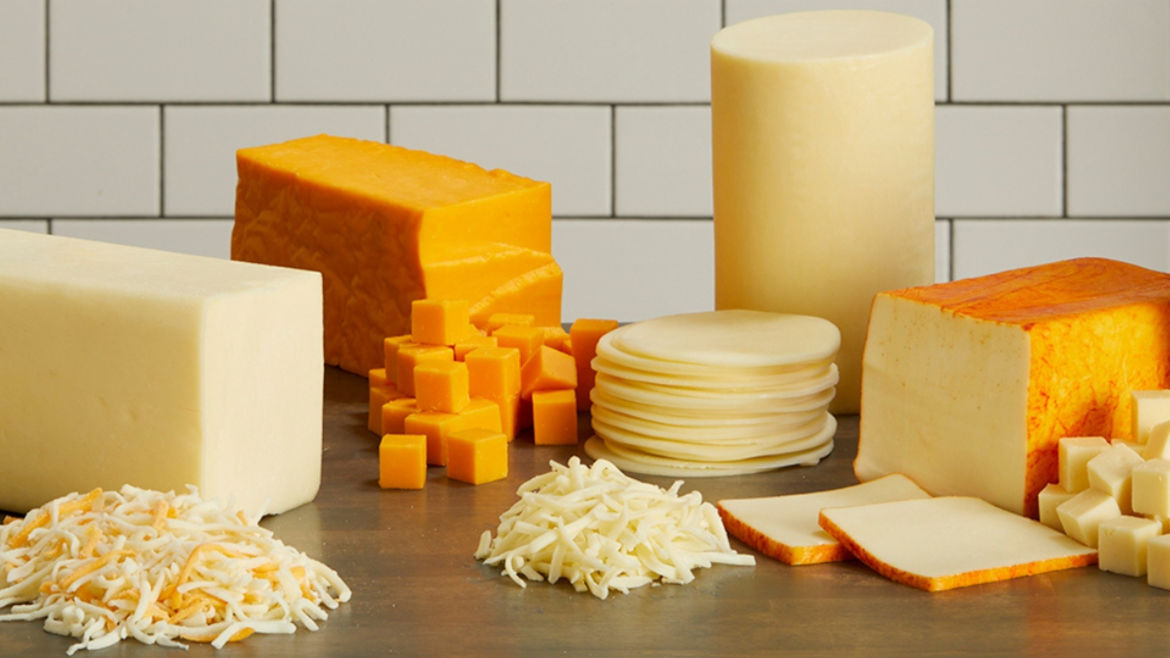 Photo courtesy of Foremost Farms USA, Inc.
For a deep dive into the crafting of food products that use cheese as a key ingredient, Prepared Foods’ Executive Editor–Technical David Feder moderated an informal webinar with the top cheesemaking team of the Foremost Farms USA dairy co-op. Participants included Katie Kolpin-Gustafson, Senior Director of Product Innovation & Technology; Matt Zimbric, Principal Scientist for Product Innovation & Technology; Dana McCurdy, Senior Scientist for Product Innovation & Technology; Greg Reeter, Senior Scientist for Product Innovation & Technology; and Bethany Johnson, Dairy Product Technologist for Product Innovation & Technology.
Discussing how they transition a cheese from a table treat to a main ingredient, the Product Innovation & Technology group starts with the initial cheese formulation and then precision-customizes it to create an optimal product for each specific type of product or application. While adjustments can be made in protein to fat ratios or in the microbial culture used to ferment the milk. Culture also can be manipulated to customize browning capabilities, stretch, and flavor production, as can the ability to age the respective cheese.
The group also noted that there are “many different ways to incorporate traditional cheeses in new and exciting ways.” Turning to pizza as a classic example, it was noted that simply adding a provolone or brick cheese to the standard mozzarella can be used to create different flavor and texture profiles. But when changing a primary cheese component, flavor is not the sole parameter to consider. Continuing with the pizza example, such a reformulation would need to provide the expected stretch, melt, and browning. Cheddar and Monterrey Jack were suggested as cheeses that can change the flavor profile while maintaining those desired textures and performances. Cheddar has an added advantage of adding color. In a pizza, cheddar even lends a novel appearance.
Stretching the creative aspects of cheese can work through crafting culinary fusions in classic products. Some examples noted in the Foremost farms webinar included Asian-Italian or Mexican-Italian pizzas; different cheeses in quesadillas; etc. And, cheeses typically used for their melting capacity can actually be used as salad toppers for a surprisingly different texture and flavor.

Fine tuning cheese for customized flavors and textures
Explore how classic cheeses like cheddar and mozzarella are being reinvented for modern food innovation with experts from Foremost Farms USA.
Listen to more from The Prepared Foods Podcast.
“Cheese must have great dairy notes, flavor, and mouthfeel,” noted Bethany Johnson, Dairy Product Technologist for Foremost. “But food scientists —or in this case cheese scientists—know it’s equally important to have a cheese that melts, browns, stretches, and cooks best in every dish or cheese board prepared with cheese.”
As Johnson points out, at its core, cheese is a simple food, composed of milk, which itself is made of water, fat, protein, minerals, and lactose, converted via enzymes. “The ratios of these key ingredients also affect how the cheese will function in different applications,” she says. “With all of these characteristics in mind, it is crucial to match the right cheese with the right application.”
Looking for a reprint of this article?
From high-res PDFs to custom plaques, order your copy today!


