Article: Sugar-free Foods and Beverages -- January 2008
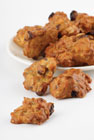
Sugar-free baked goods, such as these cookies made with sunflower seeds and raisins, are well-suited to diabetes sufferers. They allow sugary foods to be replaced with those containing sugar substitutes.
Mintel’s exclusive research shows diabetes influencing the purchase decisions of more than a third of respondents: 34% of those purchasing sugar-free products for themselves do so for a diabetes-related reason, as do 39% who purchase sugar-free items for another household member. Sugar-free products are well-suited to sufferers of the disease, as they allow sugary foods to be replaced with those containing sugar substitutes.
Overweight and obesity also influence purchase decisions. More Americans are overweight or obese than at any other time in the nation’s history. According to the 2003-2004 “National Health and Nutrition Examination Survey” undertaken by the CDC, 66.3% of U.S. adults aged 20 years old or older are overweight (having a Body Mass Index—BMI—of between 25.0 and 30.0) or obese (having a BMI greater than 30.0).
Controlling weight through dieting provides an opportunity for manufacturers of sugar-free foods. According to Mintel’s exclusive research, 29% of respondents are extremely or very interested in sugar-free or low-sugar products as a form of diet plan or part of a regulated diet program. Sugar-free foods provide a way to assist consumers in making diet choices that could lead to weight loss or control.
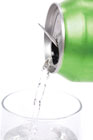
Pleasing the consumer is a challenge for sugar-free carbonated beverage manufacturers—often, a new flavor or product will enjoy a boost during its inaugural year, only to stagnate later. It is not clear what manufacturers can do to sustain the popularity of specific sugar-free products. PHOTO COURTESY OF istockphoto.com
Few Innovations in Ingredients
According to industry experts, no new sweetener is driving the market to the heights seen in the early 2000s. When the FDA granted permission for sucralose to be used as a sweetening ingredient, it hit the market at a “perfect storm” moment: a new sweetener, given a “healthier” profile than other sugar substitutes, was launched around the time that the low-carb fad was at its height, and the combination of factors led to a rush on products made with sucralose. The sweetener became the sugar-free ingredient of choice in a wide array of product classes, from cereal to ice cream to carbonated beverages.However, the low-carb fad faded, and low-carb eating has become one of many strategies consumers use (often simultaneously) to watch their weight and sugar intake. As a result, sales of sucralose (as a tabletop sweetener and as an ingredient) have slowed noticeably.
Innovations in sweeteners have not netted a new “star” ingredient, as yet. Erythritol, a bulk sugar replacer (or polyol), has been launched in Japan, but it has not gained global acceptance, in part because of technical constraints and price. A number of “miracle sweeteners” have come and gone from the market (e.g., Just Like Sugar, Shugr, Beyond*Sugar and Oh!SoSweet). These products have met with resistance or disappointment from consumers, as they have not always delivered on taste or have failed to live up to industry, regulatory or consumer standards.
Stevia: The “Natural” Alternative
Stevia, a natural plant-derived sweetener, does not yet have approval as a food ingredient in the E.U. or U.S., although it is poised for approval in Australia and has acceptance in 12 countries, including Japan, Brazil and China. Stevia is sold in the U.S. as a nutritional supplement, and it has found its way to the tabletop market through that circuitous route. However, growing acceptance may make this natural sweetener the focus of the next “sweetener battleground.”Cargill and Coca-Cola launched a “stevia” incentive in 2007: according to the Wall Street Journal, Coca-Cola has filed 24 patent applications for the product, which has been given a tentative brand name. The company plans to use the sweetener in some of its beverages. Cargill may also use the sweetener in certain food products.
While stevia’s potential entry to the market could pose a threat to sucralose, a number of issues surrounding it still are under review. A major issue is that stevia (a plant related to the daisy family) is a natural product. Experts question whether the product can perform consistently: will the source of the stevia affect its flavor and performance? Will the product’s sweetness be consistent, if the plant comes from different climates, soils, elevations and so on?
If the companies exploring the product can find a way to deliver consistent taste and performance, and if the product can gain approval as a food ingredient in some of the major markets in Europe or North America, stevia may be poised to take on sucralose—and to do so from a platform of a “natural sweetener,” which could gain it an even greater following, not only among those seeking an alternative to cane or beet sugar, but also to those who want an alternative to artificial products.
Market Trends: Sugar-free Gum
Gum is being used as a delivery system for vitamins and minerals—most commonly, for vitamins C and D and calcium. These added health benefits strengthen sugarless gum’s platform as a “healthy treat.” Many—if not all—of the products being developed in this sub-category are sugar-free, tying in with the concept that sugar-free gum is a “healthy choice.”Gum products are also being used as appetite suppressants. It has become common for consumers to chew sugar-free gum instead of eating a more calorie-laden treat, and since weight loss is seen as a functional benefit of consuming gum, manufacturers are building on the trend by using Garcinia cambogia and karaya, two natural ingredients known for their strong filling effect and often used in weight-loss products, as gum ingredients in sugar-free products.
Market Trends: Sugar-free Carbonated Beverages
Pleasing the fickle consumer is a challenge for carbonated beverage manufacturers, and there seems to be no “crystal ball” to foretell if a carbonated beverage—or a non-carbonated beverage, for that matter—will have “staying power” among consumers. Often, a new flavor or product will enjoy a healthy boost during its inaugural year or two. After the initial buzz, however, sales may stagnate, either because consumers have moved on to the next new thing, because they did not deem the product worthy of repeat purchases, or because the high level of promotional activity for the product was not sustained.It is not clear what manufacturers can do to sustain the popularity of specific sugar-free products. The whole carbonated beverage industry is under pressure from multiple new competitors whose products are not carbonated, not overly sugared and not boring.
So great is the competition that major manufacturers have adopted an “if you can’t beat them, buy them” approach. In May 2007, for example, Coca-Cola purchased Glacéau vitamin water for $4.1 billion as a way of bolstering its portfolio of non-carbonated beverages, especially the bottled water, flavored water and energy drink segment. Glacéau, positioned as an “enhanced water,” has a regular version (vitaminwater, which contains fructose, a form of sugar) and a “diet” version (fruitwater, which contains glucose, a “simple sugar”). Glacéau’s smartwater, an unflavored enhanced-water product, is the only SKU that is truly sugar-free, but the other varieties are positioned as functional or energy drinks, and the sugar content is relatively low.
Market Trends: Sugar-free Candy
Sugar-free chocolate confectionery had a major following during the height of the low-carb years in 2003 and 2004, but the current trend favors sugar-free, non-chocolate products, sales of which are moving at a pace considerably faster than their chocolate counterparts. Rapid increases in the incidence of type II diabetes is seen as the major driver behind the sugar-free, non-chocolate confectionery trend and, indeed, the diabetic market has always been a major target for these products. Increased numbers of diabetics suggest a growing market for sugar-free hard candy.Major developments in sugar-free candy revolve around the following issues:
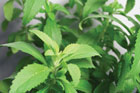
Stevia, a natural sweetener derived from a plant related to the daisy, does not yet have approval as a food ingredient in the E.U. or the U.S. It is, however, sold in the U.S. as a nutritional supplement and has found its way to the tabletop market through a circuitous route. PHOTO COURTESY OF istockphoto.com
The Future of the Sugar-free Market
Sugar-free brands have the opportunity to position themselves as tools for the diabetic community, and as the Baby Boom population ages, this will become an extremely important relationship, since diabetes and aging are related. A savvy brand will build an ongoing relationship with these consumers by providing not only food, but also health information and the support of a community.Many sugar-free products provide other benefits meaningful to the consumer (tooth whitening, weight control, vitamins, energy, etc.). This trend is likely to continue and begs the questions: how far can the fusion of sugar-free and added benefits go? What other health trends might show up in the sugar-free arena?
Finally, concerning the relationship between sugar and diets, a review of online weight-loss chat-rooms and diet blogs reveals a desire among many consumers to cut sugar intake. Much of the dialogue is good for the sugar-free industry, because Internet users who are dieting often will recommend their favorite sugar-free foods to other online dieters—foods they believe are great tools to satisfy and beat sweet cravings in a low-calorie way. However, some of the online chatter is detrimental to the industry. There is a small (but vocal) group of dieters who seem to think that sugar-free foods actually make a person crave more sweets.
In general, this theory is not well known. According to Mintel’s research, fewer than two in 10 have heard of and believe this theory. However, the percentage increases to more than a quarter among those aged 18-34. The data suggest that while this issue is not currently a major threat, the sugar-free industry should be prepared to deal with inquiries about the effects of consuming their products.
Increased ingredient options in the way of diabetic-friendly, new sugar sweeteners are another opportunity for the sugar-free industry. Recent entries into the marketplace, such as the polyol isomaltulose, offer manufacturers of sugar-free foods and drinks additional options in the formulation of their products. This sugar-replacing ingredient releases fully digestible energy in the form of glucose into the bloodstream during a longer period of time than conventional sugar. Long-term release avoids the “sugar rush” associated with the consumption of conventional sugar. The substance is said to provide a “low insulinemic response,” making it a potential sweetener for use among diabetics. The company also says it does not promote tooth decay. However, sugar-free products will maintain one advantage over products that might be made from isomaltulose: it has the same calorie count as conventional sugar.
This article contains information from the Mintel report “Sugar-free Foods and Beverages, U.S., June 2007.” Please visit http://reports.mintel.com for more information or call Mintel at 312-932-0400.
Looking for a reprint of this article?
From high-res PDFs to custom plaques, order your copy today!


