How to Solve the Cocoa Challenge
New ingredients, angles, options to extend or replace chocolate
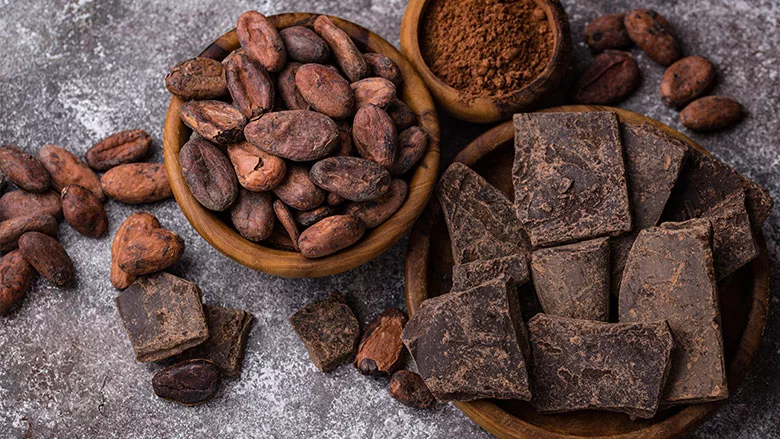
Replacing cocoa—partially or entirely—requires a deep understanding of cocoa’s complex characteristics and multifaceted role in formulation and processing.
PHOTO COURTESY OF: T. Hasegawa USA, Inc./ Adobe Stock
Two-thirds of the world’s cocoa, derived from fruit of the cacao tree (Theobroma cacao) comes from two equatorial West African countries, Ivory Coast and Ghana, a precariously narrow geographic region. This leaves the global supply of chocolate’s key ingredient highly vulnerable to a multitude of impacts including climate change, disease, political strife, and outdated agricultural practices, blight, and supply chain disruptions.
These challenges already have caused lower cocoa yield and supply instability, leading in turn to quality and safety concerns, with heavy metal and pesticide contamination from archaic farming and handling practices. Meanwhile social and environmental issues including child labor, economic inequity, and high-carbon-emission transportation methods tied to unsustainable farming practices are compounding these interconnected issues.
All these challenges underscore the need to stabilize the cocoa supply through enforcing sustainable practices, equitable supply chains, and science-backed innovations that ensure stability and affordability without compromising quality. In response, the food industry is exploring innovative solutions to address all these challenges and their associated rising prices.
This “perfect storm” is spurring efforts to extend, enhance, or replace cocoa while preserving the distinct qualities that make chocolate the premier globally loved ingredient. The cocoa crisis forces suppliers and manufacturers to innovate or adapt. Suppliers are prioritizing competitive, lower-cocoa content products to maintain market share, while manufacturers are recalibrating their strategies to mitigate costs and meet consumer expectations.
Key approaches include: optimizing cocoa use and adjusting formulations to use less cocoa without compromising quality; reprioritizing portfolios by focusing on high-performing brands and discontinuing underperformers; and developing alternatives by exploring cocoa replacements via extenders, enhancers, or eliminating cocoa entirely (creating analogs).
Innovation and Recalibration
Replacing cocoa—partially or entirely—requires a deep understanding of cocoa’s complex characteristics and multifaceted role in formulation and processing. Cocoa contributes flavor, texture, viscosity, and sensory experiences, all of which must be replicated as precisely as possible for successful outcomes.
Emerging solutions address these challenges with one-to-one cocoa replacements suitable for full chocolate bars, and customized solutions designed for smaller format products such as chocolate chips or syrups in applications where chocolate is a secondary sensory component. This dual approach enables seamless market integration while minimizing consumer focus on novelty, thereby encouraging faster adoption.
The bulking and texture functionality from cocoa solids add viscosity and moisture absorption. But cocoa also carries aromatic diversity, containing more than 400 aromatic compounds that contribute to its distinctive aroma and flavor. The rich sensory eating experience of finished chocolate derives from how its fat content influences mouthfeel and flowability. Most specifically, cocoa butter has a melting point similar to human body temperature. These qualities give it an almost addictive mouthfeel.
Making a product that looks, tastes, and has a mouthfeel like chocolate without using cocoa involves matching these functionalities through fermentation, roasting, blending, and bioengineering techniques. Innovators have made great strides with ingredients such as grapeseeds, fava beans, pomegranate, and others, and technologists are now exploring other sources such as acorns, jackfruit seeds, oats, and upcycled plant streams to replicate cocoa’s various qualities.
Holistic solutions are being developed to maintain the desired mouthfeel, richness, and overall characteristics of products like chocolate chip cookies by using cocoa extracts, natural or artificial flavors, and other tailored ingredients customized to the cost and formulation goals. Such an approach can help replace as much as a third of the cocoa in bakery products like cookies and brownies.
Strategic Reduction
Reducing cocoa in products, such as pivoting to milk or white chocolate, is another strategy. While dark chocolate manufacturers justify higher price points due to health benefits, artisanal chocolatiers face challenges in balancing costs and quality.
Supporting the search for an ideal cocoa substitute are both traditional and novel approaches. The Olmecs, Mayans, and Aztecs valued cacao for energy as well as bioactive and medicinal properties. Similarly, indigenous societies have relied on diverse local plants rich in bioactives. Today’s ingredient crisis highlights the opportunity to expand beyond a narrow range of crops to untapped plants abundant in phytochemicals and nutrients, offering immense potential for sustainable innovation. High-tech innovations leverage historical literature and traditional practices to offer valuable possibilities.
Although largely ignored in the US, acorns are traditionally featured in global cuisines for bread, cakes, porridge, soups, coffee-like drinks, and desserts. With a cereal-like composition (31-51% carbohydrates, 8-9% protein, 7-9% fat) and high nutritional value (magnesium, calcium, B vitamins, dietary fiber, unsaturated fatty acids, and polyphenols), acorns are used to create cocoa powder substitutes suitable for sweet baked goods.
Carob powder, from the pods of the locust bean (Ceratonia siliqua), is a common cocoa replacement. Carob is rich in antioxidants and minerals (potassium, calcium, sodium, and magnesium) and stimulant free making it ideal for gluten-free, dairy-free, and low-fat applications. The flavor has not proven sufficiently close enough to cocoa for it to have wide consumer acceptance as a true substitute.
A cousin of cacao, cupuaçu (Theobroma grandiflorum), makes an excellent chocolate-like substance, although its flavor is closer to mocha—chocolate with a faint back note of coffee. The texture and mouthfeel of chocolate bar substitutes made from it are virtually identical to true chocolate, but they have a light rose-brown color. Still, this chocolate substitute has high acceptance among consumers. It is an expensive ingredient however and hard to cultivate.
Dark malted flours are a way to bring both richness of flavor and color into a chocolate formulation to replace up to 25% of cocoa, depending on the product. So, too, dark sweet syrups from sources such as sorghum, corn, rice, barley, and even dark caramel can add sweetness, color, and depth of flavor that can fill in for smaller percentages of cocoa. All these require careful incorporation, as consumers will be unforgiving if a formulation deviates more than the slightest from expected cocoa and chocolate flavors.
Bioinformatics and Biotechnology: New Frontiers
Chocolate does not grow on trees. It is the product of careful fermentation and roasting of the cacao pod beans in order to bring out the characteristic aroma, flavor, and overall texture so favored by consumers. Innovators are exploring ways to produce a similar product by fermenting and roasting other raw materials such as the aforementioned acorns, oats, jackfruit seeds, and apricot pits as well as olive kernels and even potato peels.
The underlying objective for this approach is to remove reliance on a single crop or a single region and to take advantage of a variety of crops, as well as potentially, food waste. Through technology, the goal is to convert molecules biochemically similar to those in cacao into a cocoa-like ingredient using the traditional methods of fermentation, roasting, and blending and further biotechnology.
Advances in bioinformatics and synthetic biology are transforming how alternatives are developed. For example, one biotechnology company is using a registered AI-powered platform that explores the so-called “dark matter” (unexplored biochemical components) of the plant kingdom to identify bioactives and map their potential human health benefits. This pioneering company has mapped more than four million compounds, offering unprecedented insights into viable cocoa alternatives.
Other companies, such as the Israeli biotech enterprises Circe Bioscience, Ltd. and Kokomodo, Ltd., are leveraging synthetic biology to convert gases such as hydrogen and carbon dioxide into cocoa-like ingredients (Circe) and employing microbes in cellular agriculture (Kokomodo) to make cocoa isolates, presenting a sustainable and scalable solution. Another Israeli biotech, Celleste-Bio, Ltd., is “using a three-pronged model” of biotech, agritech, and AI to produce 100% natural cocoa ingredients at scale.
As climate change-related risks and more elementary disruptions persist, the food industry’s ability to innovate and embrace alternatives will determine how it navigates the cocoa crisis. Fortunately, intrepid ingredient experts are using—and even creating—next-generation technology to ensure that chocolate’s future will remain as rich and satisfying as its past.
Want to know more about chocolate? Check out the following articles and multimedia offerings:
● “How to Boost Chocolate Flavor, Reduce Cocoa, and Cost”
● “Formulating With Chocolate”
● “Sweet & Green: Plant-Based Chocolate”
● “Sugar Reduction's Ultimate Test: Chocolate”
● “New Applications for Chocolate and Vanilla Ingredients”
● “20 Degrees of Flavor: Chocolate and Vanilla”
● “Chocolate, Chocolate, Vanilla!”
Cocoa Power
Cocoa powder—celebrated for its many sensual qualities, nutritional properties, and neurostimulant effects—is challenging to replace entirely. However, a combination of bioinformatics, fermentation, roasting, and blending techniques offers promising avenues. The current ingredient crisis also highlights the opportunity to expand beyond cocoa, tapping into a broader diversity of crops abundant in bioactives, phytochemicals, and nutrients.
Chocolate-Free Voyage
Voyage Foods, Inc. added chocolate-free, dairy-free, and nut-free “chocolate-hazelnut” spread to its line of allergen-free peanut butter analogs. The company uses cocoa-free chips and melting wafers it crafted through proprietary technology. Derived from ingredients such as sunflower seeds, chickpeas, and upcycled grapeseeds the spread is identical in flavor and texture to popular chocolate-hazelnut spreads on the market—a boon to those with nut and dairy allergies.
From Alt-Cocoa to the Future of Chocolate
Much of the flavor and functionality of chocolate comes not from the cocoa bean itself, but from how it is processed (fermented, roasted, blended). Some cocoa analog companies are relying on applying this technology to other plant sources, while others are combining these classic methods to cutting-edge methods such as cellular fermentation and cellular agriculture. Examples include the following.
● California Cultured, Inc. extracts and grows cells from cacao in condition-controlled tanks that replicate their natural ‘rainforest’ environments in just three days months for cacao harvesting, but without the precariousness, carbon footprint, or reliance on deforestation.
● Nukoko, Ltd. uses a scalable biotransformation technology replicating the fermentation process that typically used to transform cocoa beans into chocolate but with fava beans native to the U.K. instead of cocoa beans. The technology could be adapted to other regional raw materials globally, eliminating the need to ship ingredients across countries.
● Planet A Foods, GmbH uses precision fermentation with yeast, oats, and sunflower seeds to emulate cocoa flavor and functionality and produce cocoa-free chocolate, plus cocoa-free/palm-free lipid to replace cocoa butter in chocolate applications.
● W!nWin Food Labs, Ltd. applies traditional fermentation techniques to spent barley and carob to produce vegan, caffeine-, palm-, gluten-, and cocoa-free analogs of chocolate bars and chocolate chips for consumers. The products also are lower in sugar and manufactured more sustainably than their true chocolate counterparts, generating significantly lower carbon dioxide emissions.
Looking for a reprint of this article?
From high-res PDFs to custom plaques, order your copy today!