Spray-Dried Probiotics Show Promise for Sustainable Agriculture
NC State researchers develop a scalable microencapsulation process that keeps beneficial bacteria viable for soil health, livestock feed, and beyond
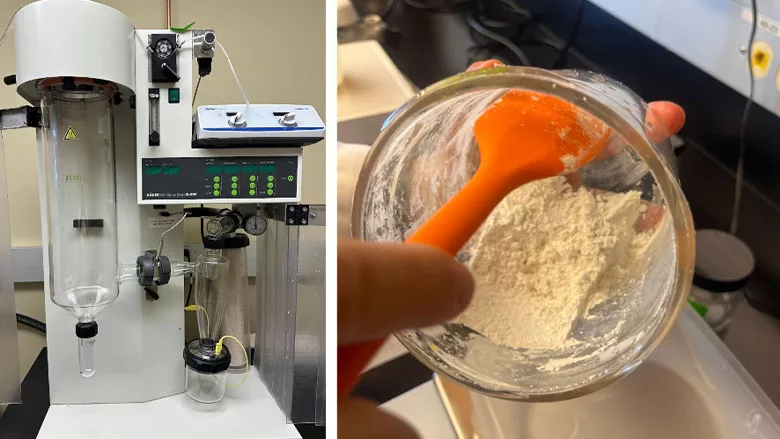
An innovative manufacturing technique developed in the lab of Marvin Moncada, PhD, at NC State University, may allow the benefits of these microbes to be formulated to support soil and livestock health. A major challenge to probiotic use is that the bacteria must be alive at the time of application to the target system. After 18 months of experiments, testing more than 20 combinations of carrier materials and multiple spray-drying conditions, the Moncada lab team identified the optimal parameters for producing a stable, high-viability probiotic-rich powder providing a practical solution for more sustainable agricultural practices.
Probiotics that support the beneficial microorganisms naturally found in soil, plants, and animals are gaining attention as concerns rise over the rising costs and environmental impact of synthetic fertilizers. Probiotics potentially offer production systems enhanced soil biodiversity, increased nutrient availability, and improved livestock health. In collaboration with Agroindustrias Successo S.A., the Moncada Lab at the Plants for Human Health Institute developed a microencapsulated, spray-dried powder containing the beneficial bacteria, Azospirillum brasilense.
The team’s goal was to create a cost-effective, scalable, and easy-to-handle powder that preserves probiotic viability. They demonstrated that even heat-sensitive strains survive the spray-drying process using proprietary carrier blends, maintaining high colony counts. Spray-drying is a rapid, industrially scalable process that converts liquids into low-moisture powders with an extended shelf life.
“The main challenge was turning promising laboratory concepts into scalable, commercially viable solutions while meeting performance expectations, regulatory requirements, and tight industry timelines,” says Moncada. “Success required flexibility, rapid iteration, and close collaboration with our industry partners.”
The research optimized a carrier system that produces a free flowing, highly soluble powder with exceptional storage stability. The process achieved a 90+% recovery rate while maintaining probiotic counts above 10⁷ CFU/mL, confirming that the micro-encapsulation platform is technically robust and commercially viable. The resulting easy-to-apply powder can be applied as a soil biofertilizer to enhance soil quality or incorporated into animal feed, helping reduce reliance on synthetic inputs.
Beyond agricultural applications, this platform has the potential to be adapted for human health probiotics, providing a pathway to develop shelf-stable, high-viability probiotic powders for dietary supplements or functional foods. By combining fermentation, microencapsulation, and industrial drying technologies, the innovation demonstrates a versatile, scalable approach to creating practical solutions that support productivity, environmental stewardship, and global food security, while also offering opportunities to expand into nutrition and human health markets.
Looking for a reprint of this article?
From high-res PDFs to custom plaques, order your copy today!


