PREDICTIONS 2025
The Protein Revolution: Trends Shaping Consumer Choices in 2025
There are more sources of protein than ever, yet the consumer focus on that primary nutrient remains strong
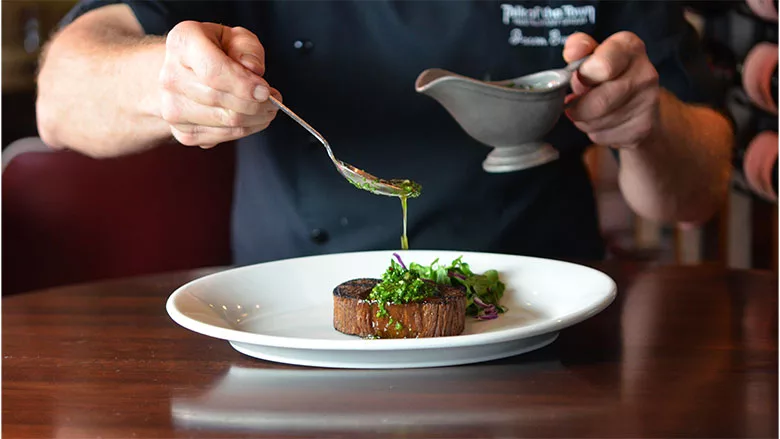
A key hurdle recently overcome by food scientists has been the replication of the texture, flavor, and experience of full cuts of beef with plant-derived proteins.
PHOTO COURTESY OF: Chunk Foods, Inc.
Consumers continue to prioritize protein in their diets, and as a result, demand for protein-rich foods is expected to continue rising in 2025. Data from Innova Market Insights suggest that the growing interest in plant-based protein sources and expanding awareness of protein’s importance for health and wellness are fueling the demand. This continuing trend has manufacturers seeking novel ingredients and pathways to provide protein to satisfy the demand.
Purely Plant-Based
It’s been a rough couple of years for plant-based meat and seafood alternatives as the market evolves. And after several years of a new plant-derived protein coming out seemingly every month, such efforts seem to be slowing down as ingredient makers shift to improving product flavor and texture.
Additionally, CPG companies are focusing on cleaner label products with fewer ingredients, further raising the bar. According to Bill Aimutis, PhD, co-director and COO of the Bezos Center for Sustainable Protein at North Carolina State University, the market should not expect to see many novel plant-based proteins enter commercialization over the next couple of years.

2025 FOOD & BEVERAGE PREDICTIONS
Aimutis believes supply chain improvements are the emerging focus for many of the novel plant-based and hybrid proteins already on the market. Agricultural research looking at genomic traits of heirloom and wild strains of specific plants (e.g., soy, chickpea, canola, and others) continues to identify more robust and better-tasting varieties.
David Block, PhD, director of the Integrative Center for Alternative Meat and Protein (iCAMP) at the University of California, Davis, provides an additional perspective. He notes that plant-based meat alternatives still have flavor and texture challenges that are the main factor that has kept mainstream consumers from fully embracing them, in spite of continuing efforts. “If [the processors] are trying to mimic conventional meat, and the cost is still higher than conventional meat… I think for someone who’s not compelled to have a plant-based diet for whatever reason, having a product that’s maybe not as good as the conventional product but is more expensive is problematic.” It’s well known that cost-for-value is a primary factor driving consumer acceptance.
Fermentation Forward
Precision fermentation is a fast-emerging method for producing proteins and nutrients that can be used in food formulations. In contrast to cell culturing technology, precision fermentation is a well-established technology, having been developed in the 1980s for use in biopharmaceuticals. This means many of the hurdles to scaling up production have already been addressed. “The main difference is food material is going to have to be cheaper than a medicine, but other than that, the technology and the fermenters are going to be similar,” notes Block.
Aimutis does see cost as an impediment to effectively producing proteins through precision fermentation. “I think there are questions about whether we can affordably produce proteins for commercialization at the margins we have typically observed in the food industry. Again, medium, formulae optimization, and cost reduction will be essential for this industry.”
Another important consideration in this burgeoning technology will be increased concentration of desired protein end products. “Limited synthesis levels will not adequately address the issue of cost parity,” adds Aimutis. “Perhaps a larger issue is informing consumers why they need proteins from this particular manufacturing method. The average consumer understands the necessity for insulin produced using precision fermentation, but few will understand why alpha-lactalbumin, beta-lactoglobulin, or egg albumin is needed in their diet.” For market success in the coming years, Aimutis believes that “consumer education will be imperative.”
As to other challenges coming in the immediate future, Aimutis points to issues with post-translational modification. “The attachment of phosphorus or carbohydrate compounds to proteins after they are assembled in the cell is essential for both physical and physiological functionalities with some proteins.
While there has been progress in this area, it is still rather limited. The scientific community still has to address if these proteins are nutritionally bioavailable and safe for consumption at levels higher than typically seen in our diet. Most likely, these questions will be answered in a positive manner, but the research needs to be conducted.”
The Foodservice Angle
Over the past few years, foodservice has proven to be a safe space for novel protein makers to “test the waters” with consumers in formats from plant-based meat alternatives to cell-cultured meats. Diners feel comfortable trying new foods in restaurants they like and trust. Here is a preview of what diners are expecting to see on menus in 2025 when it comes to protein by Maeve Webster, president of Menu Matters, LLC, a company providing menu strategy, product concept development, opportunity assessment, trend prioritization, and other services to the foodservice industry.
“Consumers continue to place an emphasis on protein as a key healthful ingredient,” Webster reports. “As a result, they are seeking dishes that feature protein across dayparts. This is going to be more prevalent during the breakfast and lunch hours when consumers are most likely to engage in healthier eating patterns.”
As for plant- vs. animal-based proteins, Webster notes that most consumers will continue to eat meat, poultry, seafood, and other animal-derived protein products to some degree, even while many consumers are seeking either to cut back on their animal-based protein consumption or to augment it more with plant-based protein. “I don't see the interest in plant-based protein subsiding at all,” she says, “but rather, continuing to grow at a steady pace going forward.”
Webster adds a caveat, however: “Hyper-processed food product options will continue to face challenges in the next year, largely because consumers are both skeptical about the health claims on such products and are not happy about the lack of transparency of the ingredients or production.”
Webster also predicts a renaissance in whole ingredient options. “Think the original black bean burgers, but updated.” Such items are becoming significantly more interesting to diners now due to the simplicity of the products’ makeup. “Such inherent transparency also addresses the consumer demand for increased sincerity and trust in the foods they’re buying,” she says.
While consumers lean more toward plant-based options that are made with few and recognizable ingredients, more complex processed options aren't going away. “Companies will continue to improve products, as well as their production processes and communication,” Webster asserts. ”Plant-based seafood alternatives especially have a significant opportunity due to consumer concerns regarding seafood sustainability, handling, prep at home, and allergen concerns.”
2025 and Beyond
Webster predicts that seafood analog popularity is likely to expand, while the substitutions focused on more popular animal protein sources—chicken, beef, and pork—will face slower growth until products that better match the full eating experience come along. They also will have to become more transparent in both ingredients and production.
Asked about the future of cell-cultured meats, Webster states, “I think it's inevitable we will eventually see these options on menus and at retail, but I still think that will be a ways off—2026 at the earliest.” Curious consumers will try these options, particularly if they are first offered by restaurants they trust. “The next hurdle will be whether the products meet expectations, provide a value, and are satisfying enough to become part of regular eating patterns—at a price point that allows it.”
“I think in the coming year we will see more regulatory approvals of novel proteins, especially cell-cultivated varieties, than we have seen to this point,” Webster continues. “Unfortunately, it may be too late for several companies, and we will be observing a Darwinian ‘survival of the fittest’.”
Looking even further into the future, Block remarks, “The only thing I would say is, all projections suggest that there is going to be a real lack of supply to meet the demand for protein-rich foods over the next 25 years or so. There will continue to be a large demand for conventional meat, poultry, and seafood, but I don’t know that the supply of these protein sources can fill the extra demand projected by 2050.
Consumer Pulse — from “Protein Puzzle: Analyzing Ingredients and Top Food Categories – Animal Protein vs Plant Protein in the US,” by Innova Market Insights
Protein is Highly Desired by Consumers. Protein captures the interest of consumers surveyed globally by Innova Market Insights. One in six of those surveyed had changed to a high-protein diet in the past year. Also, more than 80% are interested in having protein in the foods and beverages they consume.
In most categories, more than one-third of US adults consume both animal-based and plant-based foods and beverages. Animal protein foods continue to be highly popular—more than 60% of adults say they consume only animal protein foods. When consumers were asked by Innova about protein powders, one quarter of users of protein powder consume only plant-based protein powder.
Innova asked consumers about whether they have enough choices in the plant protein market. A noticeable proportion—one-quarter—say that the plant-based milk market and plant-based meat substitutes market need to offer more choices. Consumers gave two reasons for desiring plant-based meat alternatives and plant-based dairy alternatives: additional plant-based protein in their diet, and digestive/gut health. And, at least half of US consumers say that they are willing or somewhat willing to buy plant-based meat alternatives that are made with plant-based protein from potato, beans, almonds, and corn.
Mushroom for Improvement
Mycoproteins cultivated for mycelial protein-based meat analogs are produced through precision fermentation. It’s possible to grow a lot of biomass in such a microbial system. In the case of mycoproteins, rather than inducing the cells to produce a specific protein, the goal is simply to get as many cells as possible. While mycoprotein has been around for decades, the coming year should see advances in the technology. Companies are already coming up with newer processes, new strains of fungi, and new feedstocks for the growth media. A bonus is that even with just the discovery and development of inexpensive feedstocks, it will be likely that processing through existing technology can still be employed with reasonable confidence that it will work.
Looking for a reprint of this article?
From high-res PDFs to custom plaques, order your copy today!


