Editor's Note
A Rising Tide Lifts All Proteins
Growing consumer focus on health, fitness and functional nutrition continues to fuel innovation and demand across animal- and plant-based protein markets
In a 1960 speech at the Tennessee State Fair, when President John F. Kennedy used the phrase “a rising tide lifts all boats,” he helped popularize an old fisherman’s aphorism, giving it new life within the context of economics (Kennedy was implying that as the overall national economy improves, the economic reality of all of its citizens will likewise improve, a doctrine he called “the interdependence of the American economy”).
Since then, the phrase has remained within the American vernacular. Today, given the broad popularity of the macronutrient, I think we can logically say, “a rising tide lifts all proteins.”
The food industry has a strong history of fortification and enrichment, with understanding of protein’s importance dating back to the mid-1800s. Baron Justus von Liebig, the legendary German organic chemist who made instrumental contributions to agriculture and food processing, was an early proponent. In his landmark 1842 text “Animal Chemistry,” he analyzed protein metabolism, subsequently commercializing an inexpensive meat extract to fortify protein intake for improved human health (a product eventually brought to market as Oxo, still in production today).
We were learning that we need protein in our diet every day. In the wake of the Great Depression and World War II, nutrition science sought to help improve dietary habits. Officials found the men reporting for military service displayed nutritional deficiencies, and that it was time to try to right the ship. Therefore, the newly formed U.S. Food and Nutrition Board issued the first protein recommendation in 1943.
Fast-forward a few decades, and protein begins to build momentum. In tandem with the popular rise of health and fitness in the 1990s, followed by research in the 2000s connecting a high-protein diet to weight loss, protein as a building block for functional foods finally began to gain widespread acceptance.
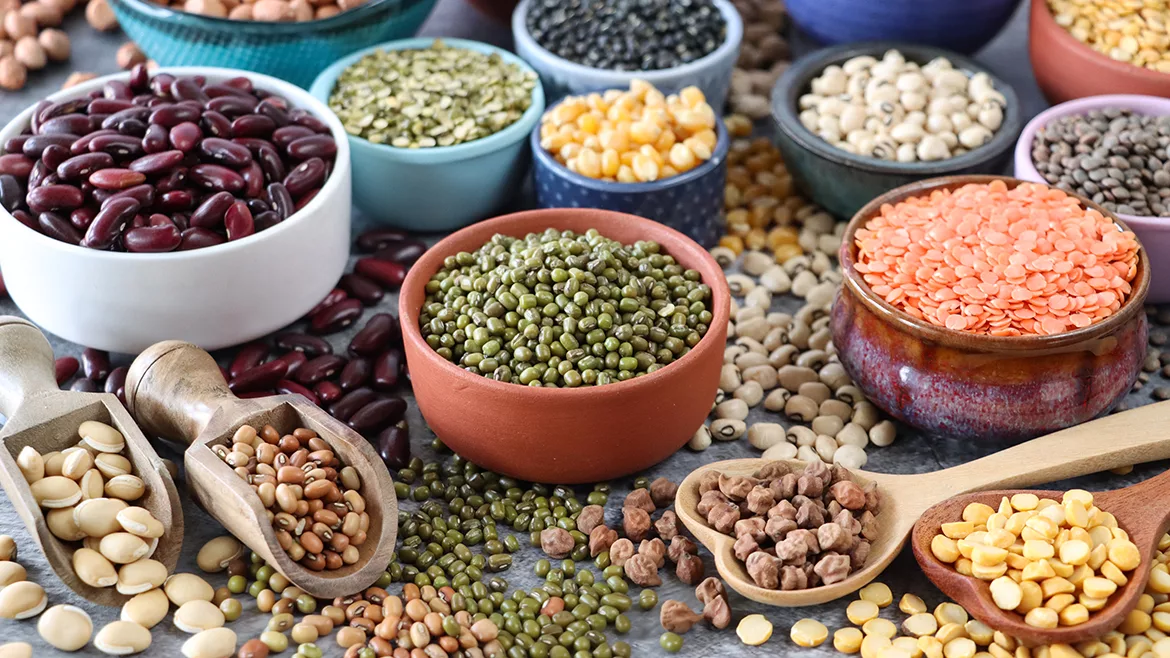
Since then, our food industry has streamlined protein ingredient processing, availing the opportunity to fortify a very wide range of functional and better-for-you foods, with the range of plant-based protein options still growing. The current Dietary Guidelines for Americans, released this past January, even includes a section entitled “Prioritize Protein at Every Meal,” listing protein sources like “eggs, poultry, seafood, and red meat, as well as a variety of plant-sourced protein foods, including beans, peas, lentils, legumes, nuts, seeds, and soy.”
The water was already at a healthy level, but can you feel the tide still rising?...
Market outlooks predict protein demand will continue to grow over the coming decade. Global Market Insights predicts a CAGR of 7.9% for the plant protein market, growing from $20.3 billion in 2025 to $40.1 billion by 2034. Future Market Insights valued the whey protein market at $22.6 billion in 2025, estimating a 7.5% CAGR, growing to $43.3 billion by 2034.
Given the lively state of protein, we can expect a strong influx of new products boldly featuring the macronutrient. We’ve already seen a strong influx of protein innovation this year. But repeat purchase will always hinge on how effectively formulators can integrate protein into the food or beverage matrix, mitigating any sensory challenges and maximizing organoleptics. After all, even when we try to make the right choice for better health, we still appreciate an enjoyable eating or drinking experience.
Looking for a reprint of this article?
From high-res PDFs to custom plaques, order your copy today!


