Hydrocolloids, Enzymes Key to Texture in Plant-Based Foods
From dairy alternatives to meat analogs, ingredient systems help formulators improve stability, mouthfeel and protein functionality to meet rising consumer demand
The global demand for plant-based foods has surged in recent years, driven by a convergence of consumer interest in health, sustainability, and ethical sourcing. Once considered a niche market, plant-based alternatives have become a mainstream choice for health-focused consumers following a flexitarian or vegetarian diet, as well as for a growing number of consumers in general.
Hydrocolloids, natural fibers, or enzymes combined with plant-based proteins are potent tools for product developers in this space. Advances in protein extraction and ingredient innovation have enabled the development of plant-based dairy and meat analogs that closely mimic the flavor, texture, and functionality that consumers expect from traditional products.
Protein Challenges
One of the primary challenges formulators confront when creating a plant-based meat or dairy product is replicating the nutrition and functionality of animal proteins. Nutritionally, animal proteins are considered “complete” proteins—that is, they provide all nine essential amino acids in sufficient quantities. For example, fresh milk contains approximately 3.3% protein, comprised of a variety of caseins and whey proteins.
The caseins are spherical, range in diameter from 100-200nm, are porous, and contain calcium and phosphate. Whey proteins are globular proteins that range from 3-6nm and are soluble. Meat proteins are comprised of actin and myosin-based fibrous structures. These structures are generally highly digestible when the meat is cooked and eaten.
Plant-based proteins from seeds and legumes (soy, pea, or beans) also are globular. The extracted proteins can range in size from 100-1,000 nm, depending on processing methods. These proteins often have a highly dense, tightly folded tertiary structure. For many plant-based proteins, this structure is maintained even in the acidic environment of the stomach, making them less digestible. This inhibited digestibility makes achieving nutritional parity with traditional animal products challenging, although soy protein-based products can often come close.
Additionally, plant-based protein globulins pack into globular protein bodies and do not form fibrous networks on their own. These plant protein molecules also contain starch, which make them hard to work with in beverage applications since viscosity is crucial.
One of the primary hurdles to formulating plant-based foods with these proteins is that the proteins differ significantly from traditional animal-based products. Plant proteins often lack the inherent structure and cohesion of animal proteins. For dairy products, the globular proteins intermingled with starch make it nearly impossible to add sufficient protein to reach the level naturally found in dairy products.
The globular nature of plant proteins also makes it difficult to use them to replicate the fibrous texture and binding properties of meat protein. Issues such as water retention, emulsion stability, and bite characteristics often end up falling short, resulting in products that can either end up too dry and crumbly or too wet and mushy. Either outcome will lack the satisfying mouthfeel consumers expect.
Texture Tools
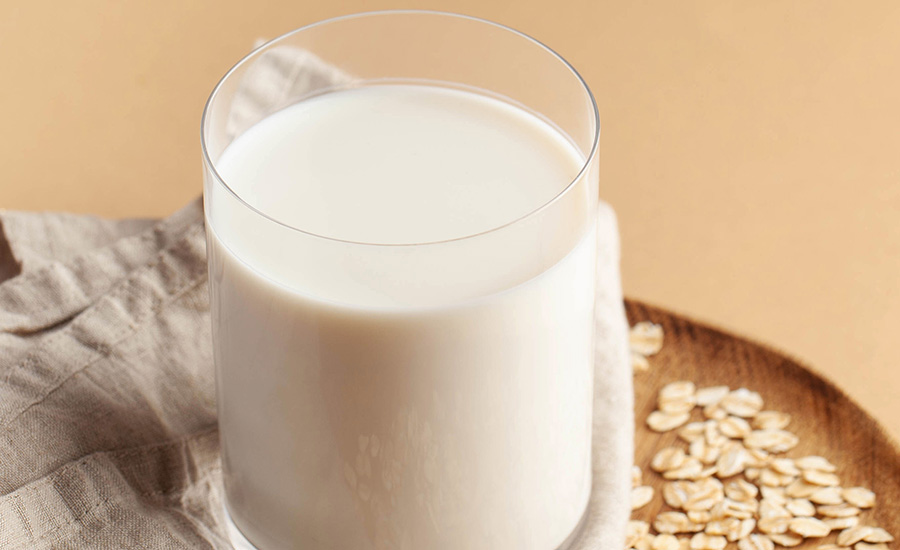
Replicating the textures of neutral-pH dairy requires a look at dairy proteins themselves. The size and shape of dairy proteins make them more prone to stability than plant-derived proteins during the shelf life of the liquid. Dairy milks are also homogenized, which breaks apart large protein and protein/fat aggregates. Homogenization ensures that the average particle size is around 1µm.
To achieve similar organoleptics with almond, cashew, or other nut-based milk, the plant-based formulation is typically produced by soaking ground nut meal in water, then filtering and homogenizing the resulting liquid. The result is essentially flavored water with little protein or fat—and little resemblance to dairy milk. Formulators then add vitamins, minerals, protein, and possibly a small amount of fat.
Most of these ingredients will either sink to the bottom or float to the surface of the bottle. Therefore, plant-based milks generally require the addition of hydrocolloid systems, such as gellan gum, and galactomannans. These include guar gum, tara gum, or carob (locust) bean gum. This hydrocolloid system is nearly ubiquitous in commercial products.
High-acyl gellan gum, used at a concentration of 0.03-0.035%, is primarily employed to suspend vitamins, minerals, and any added protein. Gellan gum has a very clean mouthfeel, so galactomannans are often added, at levels of less than 0.1%, to enhance texture. For products containing added fat, citrus fiber may be an effective addition to help stabilize the oil.
Enzyme Action
New enzyme technology also looks promising for plant-based creamers. Protein glutaminases are a popular example. They open the tightly packed globular protein, making it more “fluffy” and able to remain suspended in liquid. Hydrocolloids work by physically altering the water phase by thickening or suspending particles.
Enzymes act biochemically, modifying proteins, polysaccharides, or lipids at a molecular level. They have the advantage of not needing to be included on the ingredient declaration. However, enzymes need to be added and held at 55°C/131°F for one hour before processing. Dairies that produce lactose-free milk are set up to handle these processing guidelines, but many beverage processing facilities are not.
Better-For-You Texture
by David Feder, Executive Editor–Technical
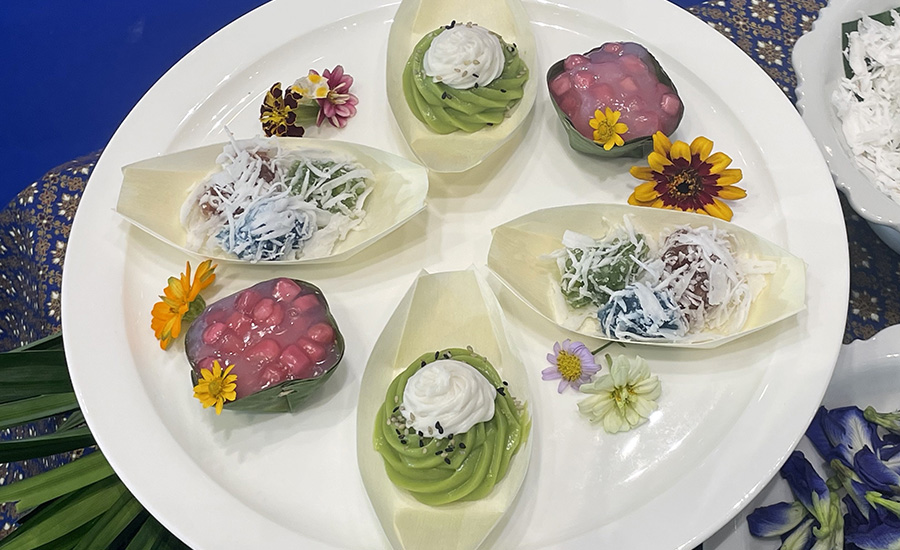
Tapioca—also known as cassava—is experiencing a functional ingredient renaissance due to its versatility, its variety of forms, and its health properties. One form, called variously tapioca starch or tapioca flour, works particularly well as a texturizer in gluten-free formulations, adding the elasticity and structure provided by gluten in conventional baked goods. Both tapioca starch and tapioca fiber—another cassava derivative—create particularly smooth textures necessary for high-quality dairy products, sauces, and soups.
As a binder and thickener, tapioca helps retain moisture, imparts gloss, and improves spreadability. Tapioca syrup, which retains some of the fiber and minerals of the tuber, is highly hygroscopic, adding a velvety smoothness and improving shelf life. Also, at about two-thirds the sweetness of sucrose but just a little more than half the calories, it imparts a health component as well.
Tapioca fiber is primarily isomalto-oligosaccharide (IMO), a short-chain, resistant prebiotic fiber also known as “resistant dextrin.” It’s non-cariogenic, has a low glycemic index, and is less likely than some other fibers to cause digestive issues. Between those attributes and its versatility as a texturizing agent, tapioca can be an ideal ingredient for better-for-you foods and beverages.
Cold Comfort
Creating plant-based analogs to ice cream presents a technical challenge. Many consumers have noted that plant-based frozen desserts actually feel colder in the mouth compared to dairy ice cream. Formulators can match solids at 34%-45% for hard pack, or 28-35% for soft serve, with the same stabilizers and emulsifiers as used in dairy versions. However, they also can encounter organoleptic challenges if they’re attempting to match the protein or fat content of dairy products.
Since the larger plant proteins are often 10 times bigger than dairy proteins, they create oddly shaped globules intertwined with residual starch. For example, adding 3.3% pea protein to a frozen dessert significantly impacts flavor and raises the mix viscosity beyond what most equipment can feasibly process. This makes it difficult to reach protein levels comparable to dairy formulations.
A systems approach is optimal. Using blended plant-based proteins, such as pea, soy, and cashew proteins, combined with blended fats—typically coconut fat mixed with other liquid fats—helps formulators achieve better flavor and produce products closer to consumer expectations for a frozen dessert.
Cellulose gel, and cellulose as microcrystalline cellulose and carboxymethyl cellulose (CMC), at 0.3% have been shown to be among the most effective hydrocolloids for crafting plant-based ice creams. These agents suspend solids during processing and help slow ice crystal growth in the final product. However, consumers might be less accepting of these ingredients on the label. Blends of guar gum, tara gum, and carob bean gum are also commonly employed, typically at levels of 0.1-0.3%.
Low-pH beverages, such as protein-fortified juices and plant-based cultured non-dairy beverages are gaining popularity among consumers. Protein-fortified juices have a pH level well below the isoelectric point of most proteins (around pH 4.5). Unstabilized, the protein in a low-pH beverage will coagulate and sink to the bottom of the bottle. In these products, formulators have a few protein-stabilizing options to choose from. Specialty soy or pea fiber will stabilize protein in low-pH beverages and maintain a very light, refreshing mouthfeel. Pectin or CMC will also stabilize protein with a thicker, more luxurious mouthfeel.
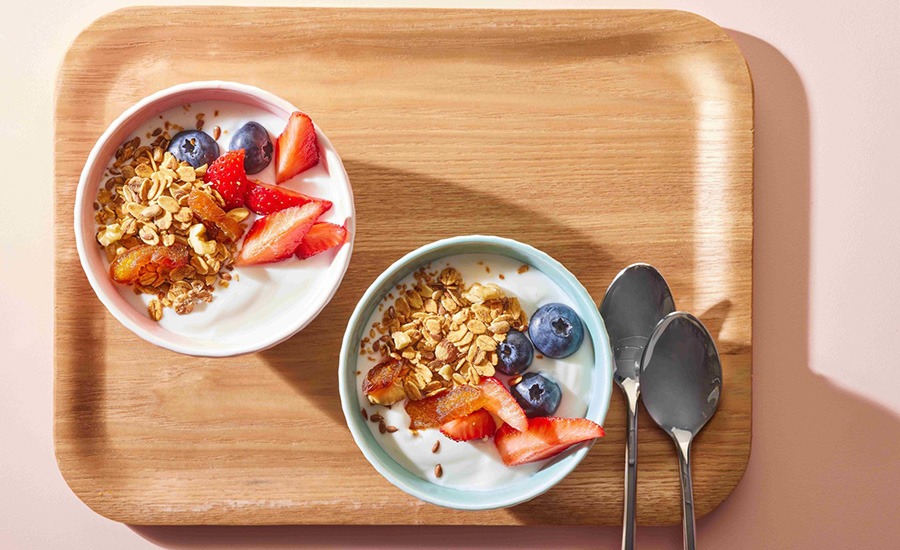
Cultured products rely on coagulated protein for texture. Unfortunately, plant-based versions of these products often lack sufficient protein to achieve the desired structure and texture. Hydrocolloids play a significant role in these products by gelling or texturizing the water in the formulation. Pectin is one of the primary hydrocolloids in non-dairy yogurts. It is often combined with carob bean gum to help control syneresis. And tapioca starch is nearly essential to provide the texture that consumers expect from yogurt. (See “Better-For-You Texture,” above.)
Old Favorite Yields New ingredient
by David Feder, Executive Editor–Technical
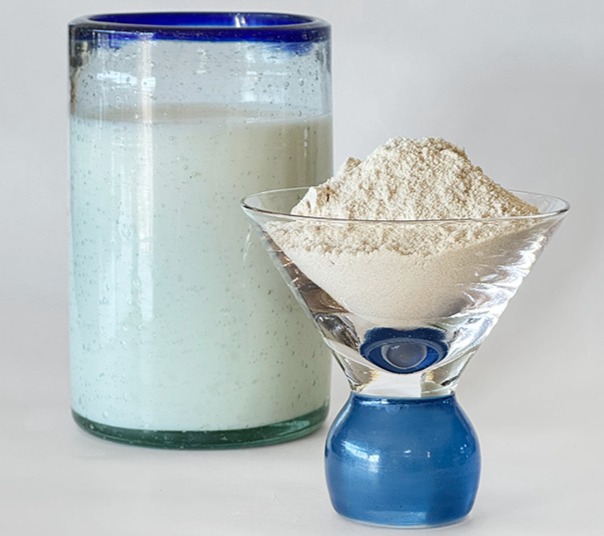
Guar gum has been a well-respected natural texturizer in food and beverage production for many decades. Yet recently, guar protein has exhibited excellent texturization capacities, especially when it comes to plant-based analog formulation. Guar, also known as the cluster bean, is high in protein—more so than soy—averaging 40-55% or greater (dry weight). It boasts a remarkably well-balanced amino acid profile with a clean flavor and impressive satiety. Moreover, due to the firmly established guar gum market, guar protein also can present an economic advantage. As a non-GMO, highly sustainable protein source, guar protein isolates and concentrates have demonstrated potential in various food and beverage products, especially in plant-based dairy products, where their emulsification properties can be ideal for attaining desired textures.
Plant-based Meat
From cold cuts to sausages, from nuggets to burgers, hydrocolloids play a vital role in the formulation of plant-based meat products. Hydrocolloids help formulators mimic the texture, juiciness, and mouthfeel of animal-derived products. These functional ingredients help bind plant proteins, retain water, and create the fibrous structure characteristic of traditional meat products.
For example, 1-2% methylcellulose (MC) forms thermal gels that provide the firm bite found in cooked meats. When the meat cools, the MC melts and provides juiciness. Another system, a combination of konjac gum and xanthan gum, provides a cohesive texture and enhanced moisture retention. By controlling viscosity and water activity, hydrocolloids also extend shelf life and improve cooking stability—critical attributes for consumer acceptance.
In addition to texture, hydrocolloids contribute to the sensory experience and overall quality of plant-based meats. MC and curdlan, a beta-glucan polysaccharide, can encapsulate fats and oils, enhancing flavor release and mouthfeel and helping to replicate the succulence of animal fats. Konjac or curdlan also are used in creating plant-based shrimp or scallop analogs.
Hydrocolloids such as xanthan gum also support freeze-thaw stability and reduce syneresis in refrigerated or frozen products. As consumer demand for cleaner labels and allergen-free alternatives grows, formulators are increasingly exploring multifunctional, label-friendly hydrocolloids such as citrus fiber, carrot fiber, and clean-label starches to meet both performance and transparency goals.
Looking for a reprint of this article?
From high-res PDFs to custom plaques, order your copy today!


