Purdue’s Consumer Food Insights Report reveals a gap between consumers’ nutrition goals and their actual eating habits, highlighting taste and affordability as key barriers
The survey-based report from Purdue University’s Center for Food Demand Analysis and Sustainability(CFDAS) assesses food spending, consumer satisfaction and values, support of agricultural and food policies, and trust in information sources.
The transformation is directly shaped by insights from Sam’s Club’s Member’s Mark Community, with 72% of members surveyed actively seeking minimally processed foods and 90% stating they either live or aspire to live a healthier lifestyle. These preferences have guided the brand’s formulation, sourcing and packaging standards — ensuring Member’s Mark products evolve in step with modern consumer values.
"Consumers aren't giving up on good food, but they are getting smarter about how to afford it," said Yuni Baker-Saito, co-founder and CEO. "We're seeing recipe content boom in popularity, and it may come as a surprise to some brands and retailers just how much they guide purchases and shopping habits."
The food industry is bracing for impact to supply chains as President Donald Trump increased steel and aluminum tariffs to 50% on Wednesday. Food and beverage packaging supplies across categories could be affected by the tariff jump. Elevated duties could prompt pricing shifts among metal packaging manufacturers who produce caps and closures as well as foil products.
Nearly half (48%) of respondents correctly believe these labels signal when a product begins to decline in quality. Another 29% see them as an indication of food safety risk, while 17% interpret them as the exact day the food should be discarded.
The 2024 Sustainable Market Share Index shows CPG products marketed with sustainable attributes increased market share by 2.6 percentage points since last year
the price premium in he US market has stabilized, largely unchanged throughout the recent inflationary period. Moreover, the average price premium across all categories is at or below 5% in the European markets studied.
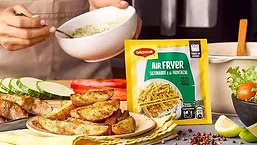
Nestlé’s recent expansion of its air fryer range in the US, Chile and Mexico builds on the success of its global modern cooking portfolio, already present in the UK, Australia, New Zealand, Malaysia, Singapore and China.
Most Americans (70%) say they are extremely or very worried about rising grocery prices, and 78% said they are at least somewhat concerned about the impact of tariffs on the cost of imported food and ingredients.
In November 2024, Cargill surveyed more than 4,400 US consumers—including teens and adults—to uncover the “why” behind snack choices—and not just the what. Zeroing in on the conventional side of snacking, the survey unearthed three core snacking personas — “Guiltless Grazers,” “Impulse Munchers,” and “Emotional Snackers.”
Leveraging the world's largest consumer data lake, with 61 billion global data points collected in real-time from social media, e-commerce, and foodservice menus, the AI platform delivers powerful insights into emerging flavors and ingredients, as well as category opportunities.
 RSS
RSS